This old study aid for math turns out to have a scientific basis

Study shows simply tracing over what you’re learning about makes it easier to remember.

Since the early 20th century, teachers at Montessori schools have taught reading and math by having kids trace letters and numbers with their fingers. This trace-to-learn idea, which has become semi-legendary among students, now appears to have some scientific basis. A group of Australian researchers found that kids who learn mathematical formulas while tracing the outlines of shapes are able to understand and recall their lessons more easily.

University of Sydney educational psychologist Paul Ginns worked with 279 students between the ages of nine and 13, teaching them algebra and geometry by asking them to trace over practice examples with their fingers while reading about the underlying math. Students might trace a triangle while learning the Pythagorean Theorem, for example. After tracing, students recalled the math more easily and gave correct answers about it more often than students who did not trace.

Ginns, who studies memory in learning, believes that the physical act of tracing may give the task "processing priority" in the brain.

Read 2 remaining paragraphs | Comments

The book series that brought space opera into the 21st century

The Ancillary novels made interstellar war as complicated as conflict in the real world.

Cover detail from the Ancillary novels. (credit: John Harris)

Ancillary Justice was published with little fanfare in 2013. Its author, Ann Leckie, had never published a novel before and was a relative unknown outside the world of science fiction book fandom. But then, word started to get around on the blogs—Ancillary Justice was something special, a galaxy-spanning epic with characters and conflicts that took a tired genre in mind-blowing new directions. The buzz reached a fever pitch when the book won both the Hugo and the Nebula for 2013, the two top US awards for science fiction.

Leckie followed up rapidly with two sequels, Ancillary Sword (October 2014) and the New York Times bestseller Ancillary Mercy (October 2015), which surprised readers by abandoning many conventions of trilogies. There is no giant spherical object in space that must be destroyed; there is no bad guy with a singular purpose; there's not even a good guy whose journey offers us an arc of transformation or redemption.

The series will no doubt be remembered as one of the most exciting and confounding developments in space opera of the past several decades. Without question, it has changed the way the science fiction book world thinks about space opera.

Read 21 remaining paragraphs | Comments

Why leafcutter ants evolved into sophisticated farmers

Ants move between different agricultural jobs to balance the colony’s energy budget.

Leafcutter ants tend their fungus comb. (credit: Alex Wild)

Humans are not the only farmers on Earth. The many species of leafcutter ants that inhabit the region stretching from Argentina to the southern United States are incredibly sophisticated food growers. They spend most of their lives harvesting and processing leaves, turning them into a well-tended substrate for growing a nutritious fungus that feeds all the colony's young. A new study reveals why these ants may have evolved their complicated systems of cooperative agricultural activities in the first place.

A complex farming society

A group of researchers at the University of Oregon studied leafcutter ants in their lab colony, as well as wild ants in Colombia and Ecuador. In a paper published today in Royal Society Open Science, the scientists describe the widely studied agricultural feats of leafcutter ants.

The many behaviors of leafcutter ants when they are farming.

Previous observations have revealed that some of the ants venture forth from their colonies to gather leaves that serve as food for adult ants—and as agricultural fodder for the fungus. Inside the colony, another group of ants cuts the leaves down into what the researchers call "fragments." The ants use prehensile, finger-like leg tips called tarsi to manipulate the leaves.

Read 11 remaining paragraphs | Comments

The caste system has left its mark on Indians’ genomes

A group of researchers has identified exactly when Indians stopped intermarrying.

Lord Parshuram with Brahmin settlers commanding Lord Varuna to make the seas recede and allow Brahmins to make their homes in Kerala. (credit: Drshenoy)

Over 1,500 years ago, the Gupta emperors ruled large parts of India. They helped consolidate the nation, but they also popularized India's caste system, making it socially unacceptable for people to marry outside their castes. Now, a new analysis of genetic variation among contemporary Indians has revealed that this social shift left a distinctive genetic signature behind.

A group of researchers in India conducted this analysis by comparing the genomes of hundreds of Indians from throughout the country. As they write in a paper published today in Proceedings of the National Academy of Science, samples came from "367 unrelated individuals drawn from 18 mainland and two island (Andaman and Nicobar Islands) populations selected to represent geographic, linguistic, and ethnic diversities." Previous studies had suggested that today's Indians came from two ancestral populations, but the new analysis revealed four distinct "haplotypes," or bundles of genetic elements that travel through generations in a package. People with the same haplotypes likely came from the same ancestral groups. The researchers also found a fifth haplotype among people of the Andaman archipelago.

Careful examination of the variations between these haplotypes, compared with haplotypes of other people throughout the world, revealed that India's ancient populations probably came first from Africa. Later waves of settlement came from people who shared genetic similarities with populations in South Central Asia and East Asia. These groups remained genetically distinct, and the linguistic history of India suggests they spoke languages with dramatically different origins. Nevertheless, it appears there was a good deal of intermarriage, which shows up in genomes of people who possess genetic sequences typical of two or more haplotypes.

Read 6 remaining paragraphs | Comments

New study sheds light on what happens to women who are denied abortions

They often have difficulty making and achieving aspirational plans for the future.

Women who are denied abortions set fewer positive goals for their futures.

In the US, there are many laws limiting when and how women can receive abortions. But there is almost no research on what happens to women who seek out abortions and are denied them. Now a team of health researchers at the University of California, San Francisco has completed a longitudinal study of a group they call "Turnaways," women who tried and failed to get abortions due to local laws. The researchers found that women who received abortions were over six times as likely to have and achieve positive life plans than Turnaways.

The Turnaway study

To gather their unusual Turnaway data set, the researchers spent two years interviewing 956 women who sought abortions at 30 different abortion clinics around the US. 182 of them were turned away. All the women were interviewed a week after being turned away or receiving an abortion and then again a year later to assess the longer-term outcomes of their experiences. The team has also just completed interviews with the women that will reveal where they are five years after being turned away or not.

In its first analysis of turnaway data published two years ago, the team found that women seek out abortions for complicated reasons, with the most common being a feeling of financial unpreparedness. This earlier analysis also showed that 86 percent of turnaways chose to keep their children, and 67 percent of them would up below the poverty line a year later. By comparison, 56 percent of women granted abortions in the study were below the poverty line a year later. This finding lent credibility to many turnaways' concerns that being financially unprepared would cause problems down the line.

Read 9 remaining paragraphs | Comments

“Find my phone” apps mistakenly bring dozens of people to this house in Atlanta

Fusion catches up with the couple—so far nobody knows what’s causing the problem.

This house in Atlanta is attracting angry mobile phone users who think their lost phones are here. (credit: Fusion)

It's a network data mystery that needs to be solved, and fast. For the past year, Atlanta couple Christina Lee and Michael Saba have fielded visits from angry strangers—and sometimes police officers—who insist that lost phones are in the couple's house. Sometimes the situation escalates into more than accusations. One time police spent an hour searching the home, looking for a lost teenage girl whose phone they had tracked to the house.

Over at Fusion, Kashmir Hill reports on this unusual problem that currently has no solution. The lost phones are associated with a variety of carriers, including AT&T, Verizon, T-Mobile, Sprint, and Boost Mobile. And there are no agencies, including the FCC, who are responsible for dealing with this kind of issue. So Lee and Saba are stuck receiving pissed off visitors at all hours of the day and night. They've registered their Wi-Fi router's MAC address with Skyhook, a company that provides geolocation data for apps, but that hasn't helped. Filing a complaint with local police hasn't fixed the situation either.

Without more information on the phones and the location apps they used, it's hard to say for sure what might be causing this. Security analyst Ken Weston told Fusion that it sounded like a problem with cell tower triangulation. That's what caused a similar problem for a Las Vegas man last year, whose home was mistakenly identified by Sprint as the location for several lost phones. In the report, iPhone forensics expert Jonathan Zdziarski suggested it might be a flaw in Wi-Fi map data. It's possible that most carriers are licensing the same Wi-Fi maps for geolocation, "and could have had bad data in the database, either someone using the same MAC address at a different location or just bad GPS data."

Read 1 remaining paragraphs | Comments

Star Wars VIII delayed until December 2017

Rumors are swirling about last-minute rewrites to the script and character shuffles.

Rey is dismayed to find herself on a movie set, instead of on Jakku. (credit: Disney)

The eighth entry in the Star Wars saga was supposed to start filming this month, but production has been delayed so that director Rian Johnson can do last-minute script rewrites. That means the movie will hit theaters in December 2017 instead of May 2017 as originally planned.

Rumors are swirling about what has caused the delay, but it seems that it's mostly about reshuffling the movie's focus to give us more screen time with popular characters Rey, Finn, and Poe. Star Wars VIII will also introduce two new female characters, one of whom may be Asian, but their parts are going to become a bit smaller in the rewrite.

The Wrap reporter Jeff Snyder spilled the beans on the Meet the Movie Press podcast this week, explaining the whole kerfuffle over these two unnamed female characters:

Read 2 remaining paragraphs | Comments

10,000-year-old mass killing is still a mystery

The remains of this ancient massacre could be the first evidence of human warfare.

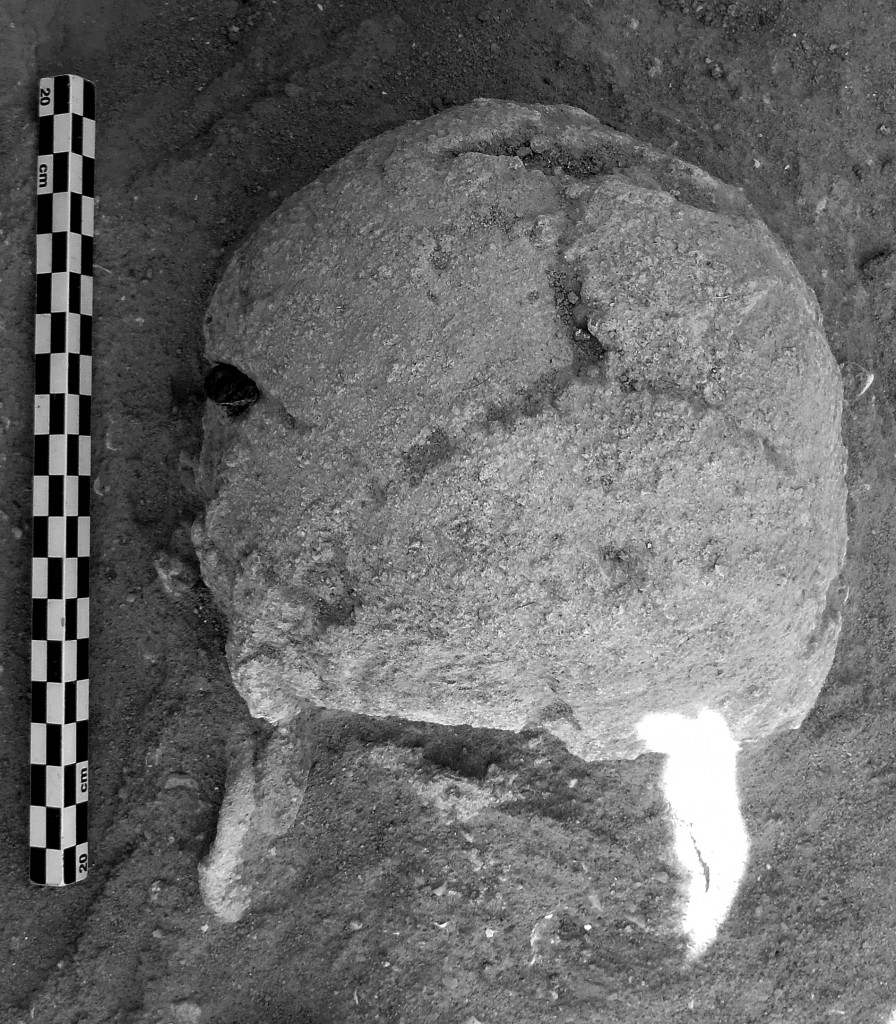
Depending on your perspective, it was a war or just a violent encounter between two groups. Left in the shallow waters of a lagoon in Nataruk, Kenya, the victims' skeletons were preserved for 10,000 years in the positions they held in death. There were 21 adults and six children. Some still had stone weapons lodged in their bones. Their skulls were fractured by blunt force trauma. A pregnant woman appears to have been bound, her hands and feet tied together, and left to die. Another woman's knees were broken, one of her feet fractured, and her hands bound. Her skeleton was surrounded by fish, as if her attackers decided to cover her in garbage.

Due to a fluke of geology, the aftermath of this massacre was preserved in lagoon sediments until 2012, when several of the skeletons were exposed by winds on a long gravel bar running parallel to the dunes that now blanket the area. The victims were killed at the edge of Lake Turkana, whose shores have today shrunk by 30km. In the early Holocene, when these people were still alive, the region was full of hunter-fisher groups living on the bounty of the lake and its surrounding land.

Archaeologists have little evidence of war during this period in human history, when Homo sapiens was still largely a nomadic animal. Many would argue that war is an outgrowth of the settled life, when people began to stockpile foodstuffs in their homes, thus making themselves targets for groups who needed or wanted more. The famous historian Lewis Mumford once argued that cities were originally built as war machines. Conflicts that occurred before we raised city walls and armies, he believed, could not truly be called warfare. But the authors of a new paper in Nature call that assumption into question. They chronicle the violent deaths of these 27 people in ancient Kenya and ask whether it might not be one of the first records of human warfare in history.

Read 4 remaining paragraphs | Comments
Data analysis reveals that US cities are segregating the wealthy

Restrictive land use regulations in cities are associated with income segregation.

San Francisco's Mission neighborhood. (credit: Street Advisor)

Today we're witnessing the rise of a new urban phenomenon: the segregated affluent neighborhood. These aren't gated communities or condo high rises. They are isolated, rich neighborhoods that arise, seemingly spontaneously, from the shifting real estate in city centers. Armed with new data sets and computer-generated models, two urban planning researchers at UCLA have figured out where these enclaves come from and how they are changing our cities.

Income segregated neighborhoods

Urban planning professors Michael C. Lens and Paavo Monkkonen published the results of their research this month in the Journal of the American Planning Association after an intensive analysis of new data on the 95 biggest cities in the United States. Though it's widely known that income inequality has risen in US cities over the past 40 years, very little research has been done on how this affects neighborhoods. Most researchers assumed that income inequality led to segregated poor neighborhoods, or ghettos. But Lens and Monkkonen found it actually led to the opposite: enclaves of the ultra-rich.

Of course, cities have always had rich and poor neighborhoods. What's shrinking out of existence today are mixed neighborhoods that include people from different class and cultural backgrounds. And that's a problem, say economists who have done longitudinal studies of kids who grow up in income segregated cities. Kids who grow up in neighborhoods where everyone is poor tend to stay poor, while kids in mixed neighborhoods enjoy the kind of class mobility that the US prides itself on fostering. There are some obvious reasons for this. In many cities, wealthy neighborhoods have their own local school systems and community centers with abundant resources to prepare kids for college or skilled jobs. In poor neighborhoods, resources are stretched thin. There are few after-school enrichment programs and little support for kids who need help with learning. We can see the same discrepancies when it comes to hospitals, public parks, and other neighborhood amenities.

Read 5 remaining paragraphs | Comments

In NYC, pay phones become free Wi-Fi hotspots—and masturbation stations

What happens in the hotspot stays in the hotspot.

Hot Octopuss, a sex toy company, provides Internet for anyone who wants to relieve a little stress. (credit: Hot Octopuss)

This month will see the first rollout of LinkNYC's free Wi-Fi hotspots in New York City, which are set to replace nearly 7,500 neglected public telephones. Along with this experimental urban upgrade, New Yorkers can also expect to see another pay phone replacement idea: a "GuyFi" booth where men can "relieve stress" with a laptop and chair behind a privacy curtain.

Last week, a sex toy company called Hot Octopuss converted an unused phone booth at 28th Street and 5th Avenue into its GuyFi chamber of self-love by adding a black privacy curtain, a chair, and a laptop with high-speed Internet. Clearly playing on the buzz about LinkNYC's upgrades to New York's pay phone infrastructure, Hot Octopuss sent out a press release explaining that this was all about health:

According to Time Out, a remarkable 39% of New Yorkers ‘self-soothe’ in the workplace to alleviate stress. Hot Octopuss has created the GuyFi booth to take this habit out of the office and into a more suitable environment designed to give the busy Manhattan man the privacy, and the high-speed Internet connection, he deserves.

The company reported that at least 100 men used the booth on its opening day last week. Of course, public masturbation is illegal—and a rep from Hot Octopuss told Mashable, "We may be insinuating that these booths could be used in whichever way anyone would like to 'self soothe,' [but] the brand is not actively encouraging people to masturbate in public as that is an illegal offense." No word on how fast the Internet connection was, or whether there would be any efforts to help women "self soothe" at a rate equal to men in the workplace.

Read 3 remaining paragraphs | Comments