Half of inventions “arise unexpectedly” from serendipity—not direct research

Research institutions are the least likely inspirations for that spark of creativity.

Dr. Horrible invented this Freeze Ray while singing and thinking about a lady named Penny. (credit: Dr. Horrible's Sing-Along Blog)

If you're smashing your face into the keyboard trying to come up with a brand-new invention, you need to stop and go for a walk. You could also try watching a movie about an unrelated topic. A new book on the process of invention, Inventology by Pagan Kennedy, reveals that roughly half of all inventions started as ideas or discoveries that people had while working on something else.

As Kennedy writes in a recent New York Times article:

One survey of patent holders (the PatVal study of European inventors, published in 2005) found that an incredible 50 percent of patents resulted from what could be described as a serendipitous process. Thousands of survey respondents reported that their idea evolved when they were working on an unrelated project—and often when they weren’t even trying to invent anything.

Kennedy's book, which grew out of a series of articles for the Times about unusual inventions, explores how people invented everything from sliced bread to the airport wheelie bag. The thread that runs through all of the inventors' stories is what Kennedy dubs "serendipity," or stumbling across an idea by chance. The question is whether this kind of serendipity can actually be fostered and encouraged or must simply strike like lightning.

Read 2 remaining paragraphs | Comments
Study: Netflix is a major reason people don’t watch network TV

But there are still some broadcast channels that Netflix users watch.

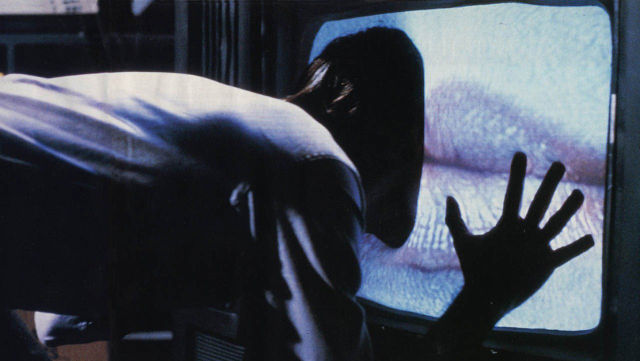
Long live the new streaming media regime. (credit: Videodrome)

There is a growing chasm between people who watch broadcast TV and those who watch streaming shows. Consider that in 2015, Netflix subscribers watched CBS shows 42 percent less than non-subscribers. That means nearly half of Netflix subscribers have just stopped watching CBS. Netflix subscribers also watched Fox 35 percent less, ABC 32 percent less, and NBC 27 percent less.

These numbers come from a new report released by Michael Nathanson of research firm MoffettNathanson. Nathanson is tracking shifts in TV viewership over time, and he estimates that 2015 saw a 3 percent drop in TV viewing. This is part of an overall trend that saw a precipitous decline in TV viewership in 2014, combined with a corresponding rise in subscriptions to streaming services. In an attempt to keep up with these changes, most networks are now using a new Nielsen ratings metric called "live plus 7" or just "L7," which bases audience numbers on how many people watched the show—via DVR or streaming—within seven days after it aired live.

About half of last year's drop in network viewers was caused by Netflix, based on the company's claim that they streamed 29 billion hours of video in 2015. Those hours would account for about 6 percent of overall L7 viewing in the US last year, and it meant that Netflix took a solid bite out of overall viewership numbers. Nathanson predicts that Netflix will account for 14 percent of all TV viewing by 2020.

Read 3 remaining paragraphs | Comments

The ugly truth behind those “cute baby bird” Internet memes

Birds are buying alligator protection using baby bird sacrifice.

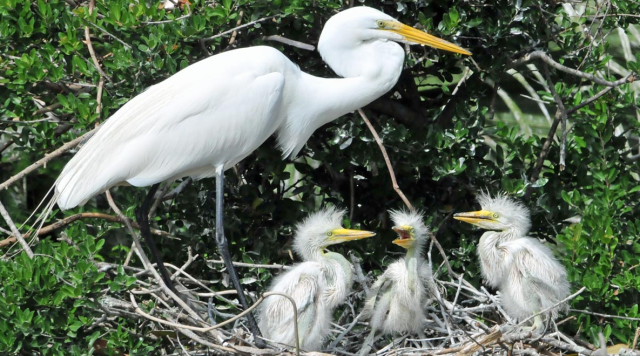
This Florida egret doesn't mind tossing a few of its chicks to the alligators. (credit: Audobon Society)

Everybody loves a cute picture of a baby bird, which is why the Internet is packed with shots of these tiny balls of fluff, watched over by their adoring parents. Nature's reality, however, is a lot less adorable. Many wading birds—including egrets, herons, and storks—actually feed their babies to local alligators in exchange for protection from other predators.

A new study published in PLoS One explores the complicated relationship between colonies of wading birds and alligators in the Florida Everglades. Environmental scientists have known for a lot time that birds and alligators thrive in part thanks to a mutually beneficial arrangement that's called "facilitation." The birds choose to nest in trees right in the middle of alligator territories, and the reason seems obvious. Their nests are high enough to keep the birds out of chomping range, so the alligators focus on killing the raccoons and possums that would normally eat birds' eggs. Alligators keep tropical flooded islands and swamps safe from predators.

Rarely did anyone wonder what alligators got out of this deal. They can get raccoons anywhere, so why stick around bird colonies? Answering that question is the focus of this new study.

Read 12 remaining paragraphs | Comments

The first Ghostbusters trailer has just the right amount of ectoplasmic barf

But will the story be too much of a rehash of the first Ghostbusters movie?

The first trailer for the new Ghostbusters movie reveals... a plot that's fairly recognizable from the first Ghostbusters flick.

We've got our first glimpse of the new Ghostbusters reboot, which takes place 30 years after the last film and gives us a whole new generation of weird scientists battling the ghosts of New York City. So far, it looks promising.

The first Ghostbusters movie became an iconic piece of 1980s pop culture for two simple reasons: the cast was a comedy dream team, and the concept was a new take on the old-school monster hunter story. Plus, it was a horror fantasy set in a city, which was also a relatively new idea in the early 1980s. That decade was a milestone in the popularization of urban (and suburban) paranormal horror, a genre-busting phenomenon that became its own genre. It's going to be hard for the updated Ghostbusters to reinvent a story that was beloved for being a reinvention.

But is it a sequel or a reboot? Here's what's weird. Director Paul Feig and writer Katie Dippold have repeatedly emphasized that this movie is not a sequel. It's a complete reboot, set in a universe where nobody in New York has seen a ghost before and the city was never destroyed by a giant marshmallow. Yet, the trailer absolutely presents it as a sequel by saying that "30 years ago four scientists saved New York." That seems to disagree with Feig and Dippold's interpretation of the movie as a reboot or re-imagining and appears to sell it as a sequel. Or maybe the text is just a reference to the previous movie and not the plot of this movie? Either way, it's a confusing way to introduce the trailer if the creators want us to be clear on the fact this isn't a sequel.

Read 7 remaining paragraphs | Comments

“Problematic” fossil turns out to be oldest known example of life on land

This 440-million-year-old fungus helped life take root outside the oceans.

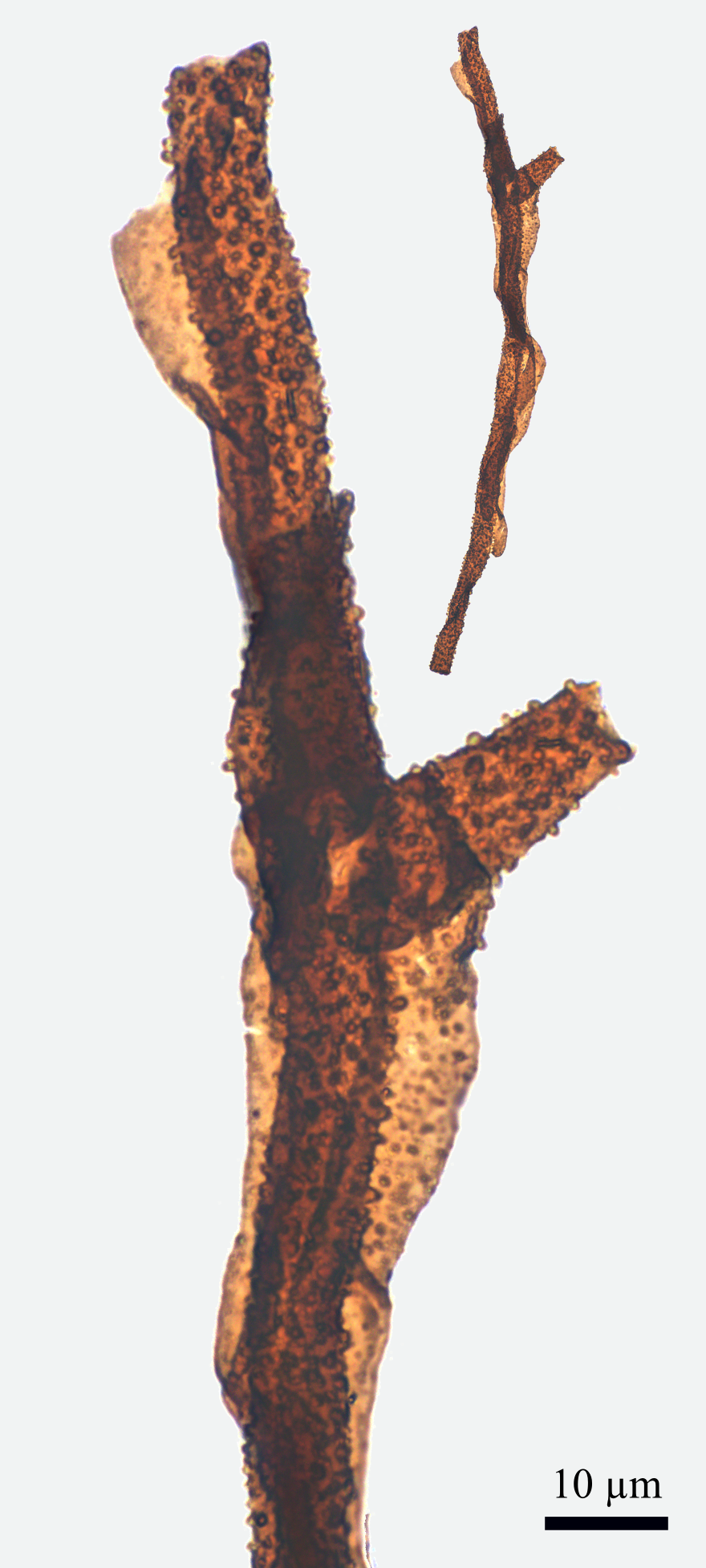
Life oozed out of the seas onto land somewhere between 450 and 500 million years ago, but we have almost no fossils from this period on land. That may be about to change. A scientist in the UK believes he's identified the oldest terrestrial organism yet discovered, after careful analysis of 440-million-year-old microfossils gathered in Scotland and Sweden in the 1980s.

Durham University Earth scientist Martin Smith suggests in a new paper published in the Botanical Journal of the Linnean Society that a few fossilized filaments discovered in Scotland and Sweden are actually part of a root-like system used by fungus to gather nutrients from soil. They were long known as "problematic" fossils because nobody was sure what they were, nor where they fit into fungal evolution.

Smith identified the filaments as part of an ancient fungus called Tortotubus, which bears some resemblance to modern mushrooms—though we have no fossils that could prove that the fungus had fruiting bodies like mushrooms do.

Read 4 remaining paragraphs | Comments
Gods of Egypt is like Beast Wars crossed with bad Internet porn

Review: This could be the most terrible movie ever made.

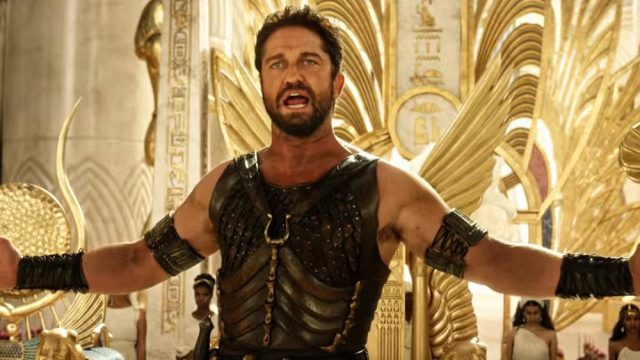
Hey everybody! I didn't have to wear miniskirt armor in this movie, so I count that as a big win! (credit: Gods of Egypt)

By now you’ve heard rumors or seen the reviews, so you know that Gods of Egypt, out this weekend, is quite possibly the most terrible movie ever made. There’s a lot of competition for that dubious honor, so let’s just say it’s ONE of the most terrible. And that’s what makes it so damn fascinating.

On its surface, Gods of Egypt sounds like the premise of a cheesy 1990s fantasy game—or a 1950s B-movie. A young thief named Bek is trying to get by on the skill of his dextrous fingers in Egyptian Mythical Times (sort of like where Xena Warrior Princess is set, except in Egypt). All he wants to do is marry a cute girl but then she’s killed by a bad guy, so Bek decides to rescue her from the underworld. Activate dramatic arc involving an intensely uncharismatic hero and his thrilling ability to do things like jump around and grab stuff (yep his range of abilities is pretty much defined by what you can do with the arrows on a keyboard).

Read 18 remaining paragraphs | Comments

It’s actually easy to force people to be evil

Neurological evidence that people feel less responsible for actions when taking orders.

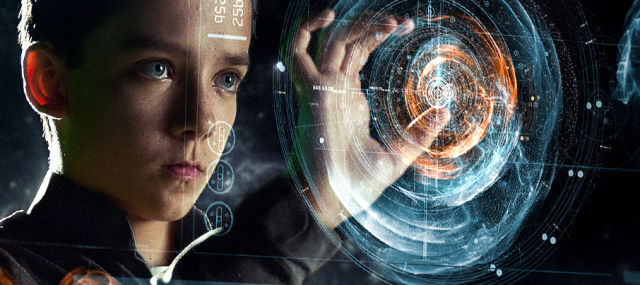
If the military forces you to destroy an alien species in space, your brain won't process it the same way it would if you chose to destroy the aliens of your own free will. (credit: Ender's Game)

We've known for a long time that people will do terrible things under orders—like hurt strangers. But why are we so easily persuaded to do things we wouldn't otherwise choose, even when nobody is holding guns to our heads? A new scientific experiment sheds light on this ancient ethical question.

University College London neuroscientist Patrick Haggard and his colleagues designed an experiment to measure what's happening in the human brain when ordered to do something, versus choosing to do something. In Current Biology, the researchers report on how they reenacted a famous twentieth century experiment to find out.

Back in the early 1960s, a Yale psychologist named Stanley Milgram conducted a now-infamous set of experiments about how far people will go to follow orders. He asked volunteers to deliver an electric shock to a stranger. Unbeknownst to the volunteers, there was no shock—and the people they were shocking were actors pretending to be terribly hurt, even feigning heart attacks. Milgram found that most people would keep delivering the shocks when ordered by a person in a lab coat, even when they believed that person was gravely injured. Only a tiny percentage of people refused.

Read 9 remaining paragraphs | Comments

Facebook is ready to let you express more emotions now

We’re all part of the company’s ongoing experiment with emotional contagion on social media.

Citizens of Facebook, you will now be permitted to express these six feelings. All other emotions are forbidden. (credit: Facebook)

"We know it's a big change," said Facebook product manager Sammi Krug in an announcement today. That's right—Facebook is taking its relationship with you to the next level. From now on, you'll be allowed to respond to posts with reactions other than the ubiquitous thumbs up emoji that means "like."

Your five options (other than thumbs up) will be emoji that mean "love," "haha," "sad," "angry," and "wow."

The dramatic change has been brewing for the past year, while the company carefully considered which emotions it would allow people to express:

Read 3 remaining paragraphs | Comments

Medieval Muslim graves in France reveal a previously unseen history

These 7th-Century graves offer a snapshot of cultural diversity during a tumultuous time.

Enlarge / Three Muslim burials from the seventh or eighth century CE, in the French town of Nimes. The people were buried with great care, using Islamic funeral traditions that persist to this day. (credit: Gleize et al.)

Today, the southern French city of Nimes is known for its beautiful waterways and well-preserved Roman architecture. But back in the seventh century, it was the prize in a battle between Roman soldiers, Gothic tribes, and the well-organized forces of a new political superpower known as Islam. Now, archaeologists have discovered the first evidence that Muslims lived in Nimes during this early phase in Islamic expansion across North Africa and Europe. Three newly discovered graves—the oldest Muslim graves in France—hint at what life was like in a medieval city whose residents were a mix of Christians from Rome, local indigenous tribes, and Muslims from Africa.

A team of French archaeologists describe the three graves in an article in PLoS One, explaining that they were found in an area that was once enclosed by a Roman-style wall from the days when Nimes was a key outpost in Septimania, on the western fringes of the Roman Empire. Taken by the Visigoths in the fifth century, the city remained under that tribe's control in a region called Narbonne until the early seventh century. But then things began to change, as the Umayyad Caliphate army worked its way north.

Though there were great battles during this time, far more common were migrations of people swept up by the cultural changes caused by shifting empires. As the Medieval POC project has been documenting for years, there were many people from Africa and the Middle East in Europe during this time.

Read 6 remaining paragraphs | Comments

Scientists terrify raccoons to reveal inner workings of ecosystems

Slightly weird experiment reveals how to stop a raccoon from wrecking everything in sight.

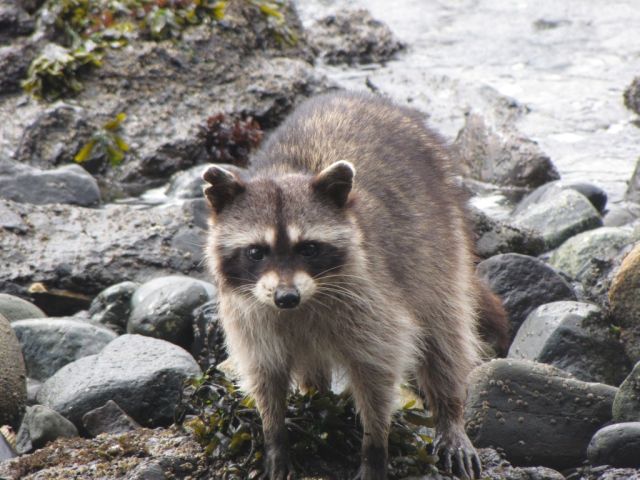
I'm standin' here. Your move. You talkin' to me? You talking to ME? (credit: Marek C. Allen)

Raccoons may be adorable, but they have earned the nickname "trash pandas" for a reason. In cities, they'll knock over garbage bins to find food. In the wild, they take the same scorched-Earth approach to all the local wildlife they can fit in their mouths, wrecking ecosystems. Now, a group of scientists has figured out one way to stop them.

Off the coast of British Columbia, Canada, raccoons have invaded several of the Gulf Islands, with less-than-wonderful results. Though they were once kept in check by local bears, wolves, and cougars, these carnivorous predators have been eliminated by humans who viewed them as dangerous. The only natural predators of raccoons left on most islands are domestic dogs.

As a result, island raccoons are living it up—the nocturnal creatures are even coming out during the day to amble around on shore and eat. Raccoons are wolfing down coastal animals like crabs, worms, and fish at an alarming rate. They sometimes eat just part of a crab and then leave the rest of the body floating in the water. As a result, crab and other raccoon-prey species are being decimated.

Read 12 remaining paragraphs | Comments