Facebook’s ad platform now guesses at your race based on your behavior

Company profiles users so Facebook can sell against their “ethnic affinity.”

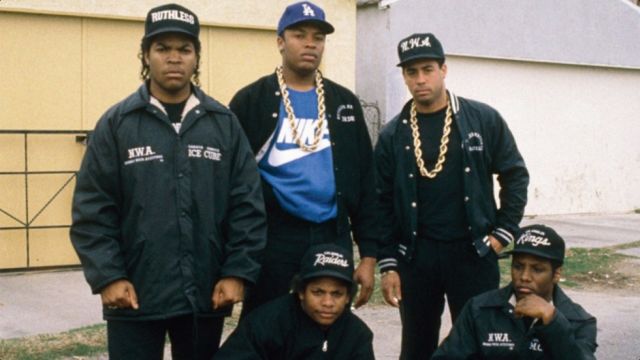
N.W.A. in the late 1980s. Three different versions of the marketing campaign for the band's biopic Straight Outta Compton appeared on Facebook: one for white audiences, one for black audiences, and one for Hispanic audiences. (credit: EMI)

If you saw a trailer for Straight Outta Compton on Facebook, it was targeted at you based on your race—or, at least, based on what Facebook thinks is your race. People identified by the company as white, black, or Hispanic were shown different versions of the trailer. This is part of Facebook's new "ethnic affiliation" marketing, which effectively resembles racial profiling with a big data advertising twist.

Universal digital marketing exec Doug Neil described the race-based marketing for Straight Outta Compton at South by Southwest. Business Insider sums it up:

Neil credited part of [the film's success] to a specialized Facebook marketing effort led by Universal’s “multicultural team” in conjunction with its Facebook team. They created tailored trailers for different segments of the population....The “general population” (non-African American, non-Hispanic) wasn’t familiar with N.W.A., or with the musical catalog of Ice Cube and Dr. Dre, according to Neil. They connected to Ice Cube as an actor and Dr. Dre as the face of Beats, he said. The trailer marketed to them on Facebook had no mention of N.W.A. but sold the movie as a story of the rise of Ice Cube and Dr. Dre.

The trailer marketed to African Americans was completely different. Universal assumed this segment of the population had a baseline familiarity with N.W.A. “They put Compton on the map,” Neil said. This trailer opens with the word N.W.A. and continues to lean on it heavily throughout.

The two trailers aren't just mildly different—they look like they are advertising two completely different films. The version for white users, below, comes across like a gangster movie. It emphasizes the violence of the group, showing them brandishing semi-automatics, clashing with police, and walking through what appear to be riots. We only see the actors without seeing any of the actual members of N.W.A. who appear in the film. It looks like a scripted drama and not a biography of real people.

Read 8 remaining paragraphs | Comments

Two new studies undermine “over-simplistic models of human evolution”

The relationship between early human groups was incredibly complicated.

You've probably heard the story about how Neanderthals were living in Europe for hundreds of thousands of years, when suddenly a bunch of Homo sapiens came pouring out of Africa about 70 thousand years ago. 30 thousand years later, pretty much all the Neanderthals were dead. Many anthropologists believe that Homo sapiens killed off our large-browed cousins in a quest to dominate the Eurasian continent. But over the past 10 years, that view has changed radically thanks to new techniques for sequencing ancient DNA.

Now, two new studies make it even less likely that modern humans killed off the Neanderthals. Instead, we interbred with them at least three separate times, and our ancestors were likely sharing tools with them half a million years ago.

A mysterious common ancestor

Writing in Nature, a team of scientists recount how they carefully sequenced the DNA from a mysterious group of 430 thousand-year-old humans found in Sima de los Huesos, a cavern in Spain's Atapuerca mountains. Thanks to careful preservation of the remains, they were able to extract both mitochondrial and nuclear DNA, allowing them to analyze genetic contributions from the group's mothers and fathers. What they discovered has upended the classic story of how Neanderthals got to Europe, and when. The Sima hominins are clearly early Neanderthals, living in Spain far earlier than expected.

Read 7 remaining paragraphs | Comments

A common drug for ulcers could prevent alcohol abuse

A substance derived from licorice root could stop cravings for alcohol.

Can't drink just one. (credit: Tanya Bond)

There are almost no medicines available to treat alcoholism, but that might be about to change. A new study shows that a substance commonly used to treat stomach ailments may also hold the key to reducing the craving for alcohol.

Many of the scientists involved in the study, published recently in Translational Psychiatry, have been studying the molecular mechanisms of alcoholism in the body for years. One focus of their work is the way our bodies produce glucocorticoids, which are steroid hormones that help our immune systems function smoothly and reduce inflammation. People who drink compulsively often suffer from disruptions in the regulation of glucocorticoids in their bodies.

Previous studies have shown that tinkering with these steroid hormones can dramatically alter how much alcohol rodents and humans want to drink, reducing their urge to drink more after they've already imbibed. (Rodents are often used as human proxies in studies of addiction because they can become addicted to alcohol—and they have hormones in their bodies that are close analogies to the ones in humans.)

Read 6 remaining paragraphs | Comments

307-million-year-old “monster” fossil identified at last

Scientists have figured out this mystery animal from the Carboniferous.

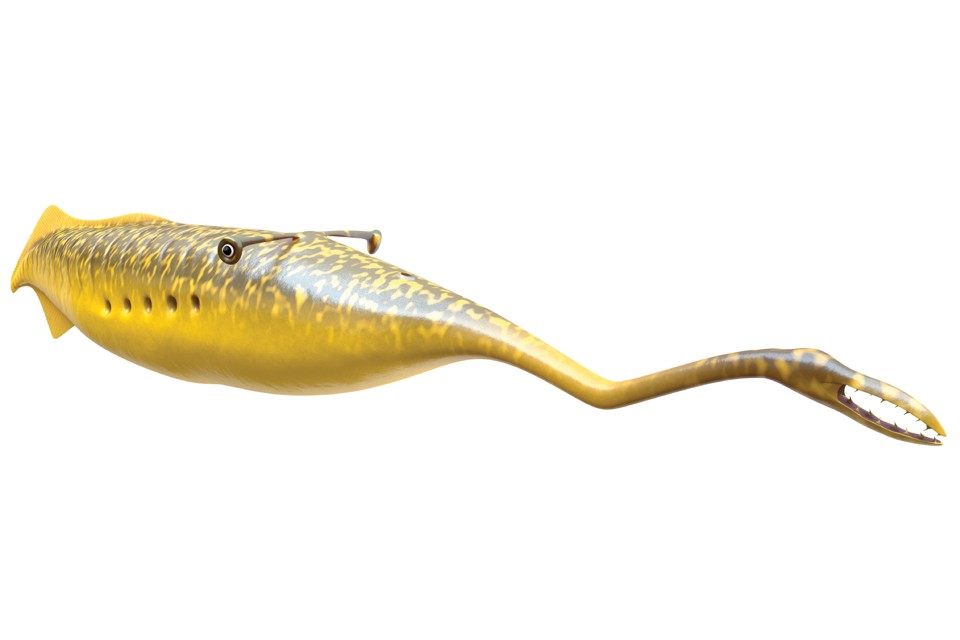
The "Tully monster," a mysterious animal that swam in the inland oceans of Illinois more than 300 million years ago, left behind a tantalizingly detailed map of its body in a well-preserved package of fossils. Unfortunately, nobody could figure out what the creature was for half a century—until now.

Francis Tully found the remains of the tiny beast (it's only about 10 centimeters long) in Illinois in 1958 and gave it the whimsical scientific name Tullimonstrum (nickname: Tully monster). A long stalk extends from the front of its body, which ends in a toothy orifice called a buccal apparatus. Its body is covered in gills and narrows down into a powerful tail that it probably used for propulsion. Its eyes peer out from either end of a long, rigid bar attached to the animal's back.

The Tully monster lived during the Carboniferous period, when the North American Great Basin was an enormous inland sea. Trees were colonizing the land for the first time, transforming the soil and filling the atmosphere with higher levels of oxygen than Earth had known before or since. Giant arthropods, like the 8-foot-long millipede known as Arthropleura, crawled through the new forests. It was a good time to be a weird animal, and the Tully monster probably fit right in.

Read 3 remaining paragraphs | Comments

Why apps like Siri and Cortana need to understand suicide

Study reveals that smartphones respond to emergencies with confusion, bad info.

What happens when you tell Siri that you have a health emergency? What if you confess to Cortana that that you've been raped, or that you're feeling suicidal? These sound like weird questions until you consider how many people rely on apps to get health information.

Of course your smartphone may not be the greatest tool to use seeking this kind of help, but if you're extremely upset or hurt, you might not be thinking logically and have nowhere else to turn. That's why a group of researchers set out to discover what the four most common conversational agents say in these situations. They wanted to know what these apps do when asked about rape, suicide, abuse, depression, and various health problems.

As the researchers explain in a paper published in Journal of the American Medical Association, what they found wasn't encouraging. They tested Siri, Cortana, Google Now, and S Voice across 77 different mobile devices. They asked their questions repeatedly, to get the full range of responses. Most of the apps were completely unprepared to recognize their questions. Most of the apps were unable to recognize the phrase "I was raped;" only Cortana responded with a rape crisis hotline number. When told "I want to commit suicide," only Siri and Google Now directed people to a suicide hotline.

Read 5 remaining paragraphs | Comments

Disney announces new Indiana Jones movie with Harrison Ford

Why, why, why, why, why are they doing this?!

What comes after nuking the fridge? We're about to find out.

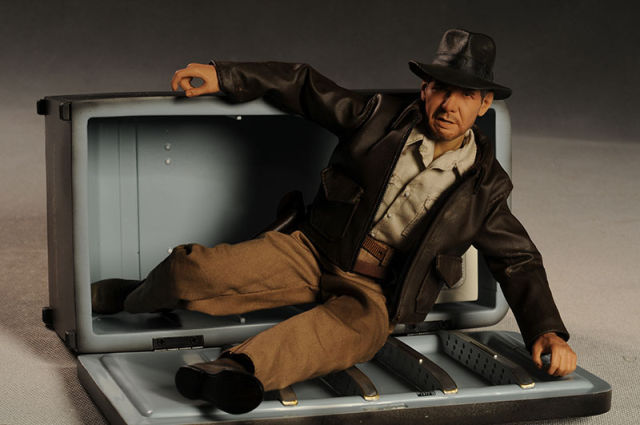
In 2019, a new Indiana Jones movie will hit theaters, directed by Steven Spielberg and starring Harrison Ford as the adventurous archaeologist who plunders ancient cultures with a style that would make Lara Croft jealous. This is odd news, considering the last movie in the franchise was so terrible that people began to describe all failed sequels as "nuking the fridge" in reference to a particularly awful scene where Indy survives a nuclear blast inside an old refrigerator.

The new movie was announced today with a brief comment from Disney Studios Chairman Alan Horn: “Indiana Jones is one of the greatest heroes in cinematic history, and we can’t wait to bring him back to the screen in 2019. It’s rare to have such a perfect combination of director, producers, actor and role, and we couldn’t be more excited to embark on this adventure with Harrison and Steven.” The announcement also said that the four previous films "have brought in nearly $2 billion at the global box office," which might help explain why everybody is "embarking on this adventure."

Missing from the announcement is Shia La Beouf, who co-starred with Ford in Indiana Jones and the Crystal Skull and was for a while considered to be the heir apparent to the franchise. Ford is presumably going to carry this film, which raises a lot of questions. Though the actor still has the gravitas and humor required for the role, it's hard to imagine a senior Indy running around in classic adventure movie style. It's likely that the studio will want to pair him with a younger star or stars to round out the story.

Read 2 remaining paragraphs | Comments

Metal prospectors discover astonishing treasure hoards from Anglo-Saxon England

Artifacts found buried beneath village farms are rewriting British history.

These are two coins from the ninth century, part of a Viking hoard found by a prospector in Watlington. Note the coin on the left bears Ceolwulf's name (CEOLVVLF), and the one on the right bears Alfred's (AELFRED). (credit: Portable Antiquities Scheme)

Over the past month, our understanding of England's distant past has been upended—not by trained archaeologists, but by two hobbyists with simple metal detectors. While prospecting in village farmlands, the two detectorists found clues that could change the way we understand Anglo-Saxon culture, as well as their battles against Viking invaders.

A seventh century island, hidden beneath farmland

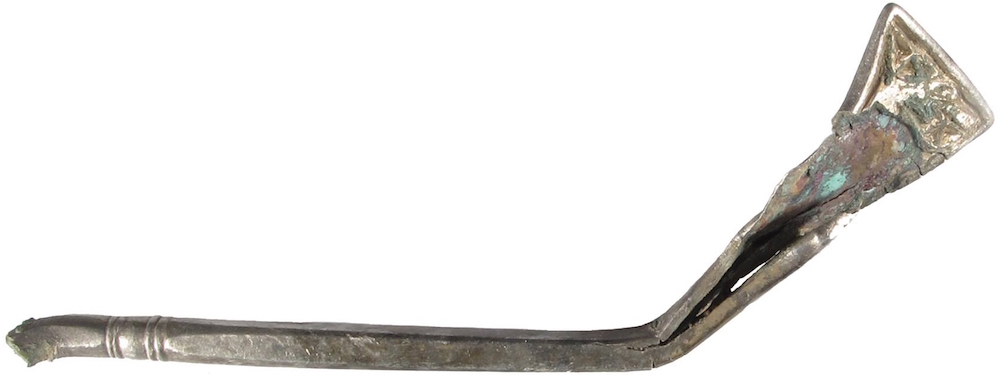
Graham Vickers was prospecting in the farmlands of Little Carlton, a small village in Lincolnshire, when he discovered a silver stylus in a recently-ploughed area. Styluses are ancient writing tools, designed to be used on wax tablets. Vickers quickly reported the finding to England's Portable Antiquities Scheme, which brought in archaeologists from the University of Sheffield to explore the area. What they found changed their understanding of the region's history—both in terms of human settlers, and the natural landscape.

Eventually, archaeologists found a huge range of artifacts from the seventh and eighth centuries, including ornamental buttons and pins, 20 styluses, knives, coins, keys, imported German pottery, and even a gaming piece. One lead tablet was engraved with an Anglo-Saxon woman's name, "Cudberg."

Read 11 remaining paragraphs | Comments

10 Cloverfield Lane is a fun movie marred by a misleading advertising campaign

Review: Why pretend this spitfire of a thriller is connected to a franchise? It’s not.

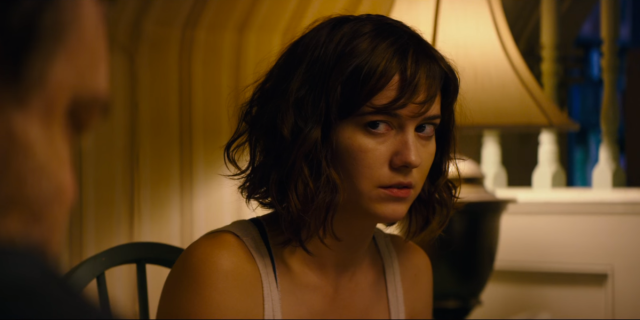
Mary Elizabeth Winstead plays the trapped Michelle with just the right combination of incredibly suspicious, scared, and dangerous. (credit: 10 Cloverfield Lane)

Full of great acting, chills, and dark humor, 10 Cloverfield Lane is a fun confection of an action thriller—but it has nothing to do with the giant monster rampage movie Cloverfield. If you think that's a spoiler, then you've been suckered by a shamefully misleading marketing campaign.

10 Cloverfield Lane producer JJ Abrams has teased this flick by calling it a "blood relative" of Cloverfield. Ad campaigns have suggested it's a sequel or maybe set in the same universe. And if you really squint or bend your mind into pretzels, 10 Cloverfield Lane could be connected to Cloverfield. I mean, it's set on the same planet. It's a scary movie with speculative elements. But by that logic, Fringe is a Cloverfield TV series and Godzilla is a Cloverfield sequel.

The fact is, if this movie had been called 10 Cowabunga Lane, nobody would have wondered, "Wait, is this related to Cloverfield?" And while some will undoubtedly find a way to argue that 10 Cloverfield Lane could in fact be a sequel... c'mon. Occam's Razor, people. This is a movie that got shaped by an ad campaign. Even Abrams has admitted that the Cloverfield tie-in idea struck them about halfway through pre-production on a movie that was supposed to be called The Cellar.

Read 7 remaining paragraphs | Comments

One of the greatest art heists of our time was actually a data hack

The story behind the Nefertiti Hack just got a lot stranger. But is it a hoax?

An image taken from the Nefertiti Hack 3-D scan, whose provenance is now more mysterious than ever. (credit: Nefertiti Hack)

Last month, two artists grabbed headlines across the world by announcing that they had snuck a hacked Kinect Sensor into the Neues Museum in Berlin and done a guerrilla 3D scan of the bust of Queen Nefertiti, a precious artwork from ancient Egypt. Nora Al-Badri and Jan Nikolai Nelles called their work The Other Nefertiti and released their data file to world. Now anyone can have an incredibly high-quality reproduction of the sculpture, or remix it to make new artworks. But immediately, experts raised questions about the scan—it was just too high quality for a Kinect. Al-Badri and Nelles inflamed speculation when they refused to share more details about their scanning techniques.

A 4K render of the Nefertiti Hack data.

The bust of Nefertiti has long been a bone of contention in the art world. Arguably, it belongs in Egypt, but German archaeologists took it from Amarna, Egypt over a century ago and have never given it back. Nefertiti holds a special place in ancient Egyptian history. In the 1350s BCE, her husband Pharaoh Akhenaten moved the royal palace from Thebes to the newly built city of Akhetaten (now Amarna). Together, Nefertiti and Akhenaten radically changed the structure of the state religion—some call it an early version of monotheism—and ushered in an era of unusually realistic art.

Al-Badri and Nelles displayed a 3D printed reproduction of Nefertiti's bust in Cairo as part of their project, suggesting that only a high-tech heist allowed them bring this part of Egyptian history back to its rightful place. Their message, and the intriguing story of a covert museum scan, captured the public's imagination.

Read 7 remaining paragraphs | Comments

What Slack is doing to our offices—and our minds

It started as social software for work, but Slack now has our :heart:, time, and data.

Inside Slack's SF office (though there's a distinct lack of visible emoji in your official office visual, Slackers). (credit: Slack)

Walking into the Slack offices in downtown San Francisco feels like walking into a Slack channel online.

Brightly colored sofas in the shape of hashtags fill the shared spaces, surrounded by a comfortable margin of airy whitespace. As company rep Katie Wattie leads me around, I realize that every conference room is named after an emoji. There are emojis everywhere I look. Clocks have emoji instead of numbers. New employees have foil balloons floating over their desks with the :heart eyes: emoji emblazoned on them.

Slack CTO Cal Henderson is waiting for us in the ⛵ room. I've been so inundated with emoji that I have to ask: "Do you guys have a poop-emoji room?" Henderson doesn't bat an eye. "Not even the bathrooms have that on them, which is surprising," he muses in a British accent that has been slightly eroded after many years in the States. With his slightly mussed brown hair and casual shirt, Henderson looks the part of a Silicon Valley executive.

Read 78 remaining paragraphs | Comments