Thanks to math, we can calculate the benefits of human sacrifice

Complex society may depend on occasionally murdering innocent people.

A group of researchers ran statistical analyses on human sacrifice data gathered from 93 groups in the Pacific Island region. (credit: Jacques Arago)

Most of us would agree that human sacrifice is a bad idea. Yet many ancient civilizations (and some more modern ones) engaged in religious rituals that involved sacrificing people. Why do so many societies evolve a system of human sacrifice, despite the obvious moral drawbacks? A group of social scientists has just published a statistical analysis in Nature that reveals how this grisly practice has fairly predictable results, which benefit elites in socially stratified cultures.

The group examined 93 Austronesian cultures in the Pacific Islands, drawing information from the Pulotu Database of Pacific Religions to determine which groups had human sacrifice and when. Previous analysts have suggested that human sacrifice helps to maintain social stratification. In this new study, the researchers wanted to understand the relationship between human sacrifice and social stratification over time.

To do that, they created statistical models using Bayesian methods, testing to see how human sacrifice affected societies that fit into three buckets: egalitarian, moderately stratified, and highly stratified. They write:

Read 7 remaining paragraphs | Comments
Inside Meow Wolf, the amusement park for people who want a weirder Disneyland

A high-tech storytelling gameworld has just opened its doors in Santa Fe, New Mexico.

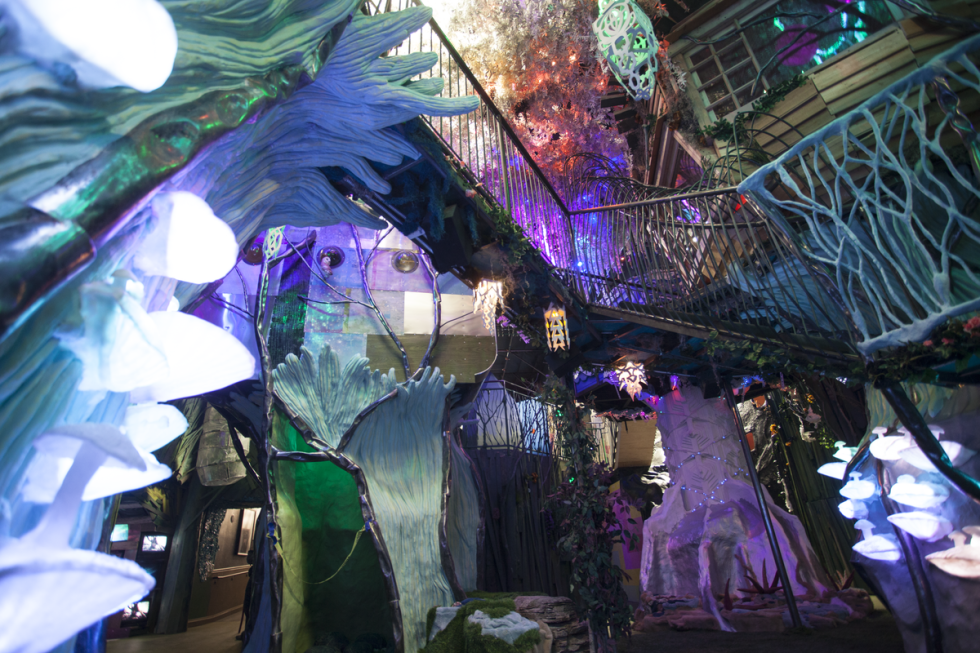
A view from the enchanted forest, showing all the stairs and crawl spaces that you can explore. (credit: Meow Wolf)

SANTA FE, NM—The Meow Wolf art complex looks like a strip mall from another dimension. Located in downtown Santa Fe, its massive main building—a former bowling alley—is covered in zig-zagging lines of explosive color. The parking lot is dominated by towering metal sculptures of a spider and a robot. Its landlord is George RR Martin, author of the Game of Thrones series, and its tenants are a high-tech artist collective called Meow Wolf, known previously for building a full-scale spaceship that visitors could explore.

On March 17, after nearly two years of construction, the Meow Wolf art complex opened its riotously painted doors and invited the public into its first permanent exhibit, called The House of Eternal Return. Think of it as a walk-in science fiction novel built with milling machines, thermoplastic, and Arduinos. Or maybe it's a cross between Disneyland and a massive, multiplayer, IRL game. Built by 135 artists and makers, the result is a 20,000-square-foot dreamworld where your goal is to figure out why an old Victorian house in Mendocino, California, has become ground zero for a rupture in space-time that’s allowing other dimensions to leak into ours.

I took a tour of the Meow Wolf art complex in the final few days before it opened, when dozens of artists and fabricators were working around the clock to finish building what I can only describe as something I never imagined could exist. My tour guides were artist Lauren Oliver, whose magnificent space owl can be found in the dreamscape of Eternal Return, and technology project lead Corvas Brinkerhoff. They fitted me with a hard hat and took me into a building that was once a bowling alley. Now it's another world.

Read 26 remaining paragraphs | Comments

Midnight Special is an intense fantasy about faith and surveillance

Review: This moody thriller will rip your mind apart but might leave you unsatisfied.

Midnight Special wastes no time getting to the point. From the very first scene, we're in the middle of the action, as two men and a little boy race their car down a quiet road somewhere in the American South. Immediately, small details give away that this is no ordinary getaway. In the driver's seat, Lucas (Joel Edgerton) is wearing night goggles so he can drive with the lights off. Roy (a crazy-eyed Michael Shannon) has a look of tight-lipped insanity as he listens to police chatter on their radio. And in the back seat, a little boy wearing swim goggles and giant headphones is calmly reading a comic book.

What the hell is going on here? That question propels the film with growing urgency as we learn more about Roy's son Alton (Jaeden Lieberher), who is wearing those goggles for very good reason. We follow Roy and Lucas as they dodge the police—their faces are popping up on every news show as dangerous kidnappers—and try to shelter with friends who make oblique references to late-night sermons in a compound. Slowly, we piece together where the trio has come from, partly by watching more and more weird incidents coalesce around Alton and partly by watching NSA agent Paul (Adam Driver, in soulful non-Kylo mode) try to figure everything out. There's a great, spine-tingling moment where Paul asks his colleagues why satellite imagery shows a nuclear explosion hovering over Alton's location at all times.

A metaphysical mutant

What's made this flick from indie favorite Jeff Nichols (Take Shelter, Mud) a favorite among critics is how the mystery of Alton's preternatural powers is woven into a human-scale story. We discover that Alton was born in what seems to be a charismatic Christian cult, whose leader took the boy away from his parents when he began to manifest bizarre abilities. Like a metaphysical X-Man, Alton can shoot a beam of light from his eyes into other people's, sending them otherworldly images and a sense of peace. There are hints that members of the cult are addicted to his gaze. It has even inspired a frantic devotion in Roy and Roy's friend Lucas, who are willing to do almost anything to protect the boy and bring him... somewhere.

Read 7 remaining paragraphs | Comments

Creepy experiment uses implanted electrodes to make beetles run faster

This “biobot” is half-computer, half-beetle, and you can control how fast it runs.

Just in case you were craving an army of beetle minions to do your bidding, a group of engineers in Singapore has invented a new kind of "biobot." Fitted out with a microcontroller and electrodes implanted in the muscles of its legs, it's a cyborg beetle that can be made to run faster or slower at the whim of its human master.

Similar kinds of biobots have been built before—the last few years have seen the invention of everything from ratbots to mind-controlled cockroaches—but this is the first variable-speed model. That's because the engineers are directly controlling the insect's leg muscles rather than driving it by manipulating signals in its brain or antennae.

The engineers, who report on their creation in Journal of the Royal Society Interface, admit that there are a few drawbacks to making robots out of living animals. "There are demerits and disadvantages in insect platform due to living organism including limited lifespan, relatively narrow operation temperature range," they write. That said, the team is convinced the good outweighs the bad.

Read 6 remaining paragraphs | Comments

Rare example of lost language found on stone hidden 2500 years ago

This could change our understanding of the mysterious Etruscan civilization in Italy.

The ancient Etruscan civilization, whose great cities dotted the west coast of Italy between 2800 and 2400 years ago, was in many ways the model for ancient Greece and Rome. Etruscans lived in city states with sumptuous palaces, beautiful art, and a complicated social structure. But we know almost nothing about their daily lives, in part because most of their writing was recorded on perishable objects like cloth or wax tablets.

For that reason, a new discovery made by the Mugello Valley Archaeological Project could be revolutionary. At a dig outside Florence, a group of researchers have unearthed a massive stone tablet, known as a stele, covered in Etruscan writing. The 500-pound stone is 4 feet high and was once part of a sacred temple display. But 2500 years ago it was torn down and used as a foundation stone in a much larger temple. Hidden away for thousands of years, the sandstone stab has been preserved remarkably well. Though it's chipped, and possibly burned on one side, the stele contains 70 legible letters and punctuation marks. That makes it one of the longest examples of Etruscan writing known in the modern world.

Scientists believe it will be full of words and concepts they've never encountered before. Almost all the writing we have from Etruscan civilization is from necropolises, massive tombs that the wealthy elites used to bury their dynastic families for generations. So a lot of the vocabulary we've gleaned comes from what are essentially gravestones, covered in rote phrases and praise for the dead. This new stele could reveal a lot about Etruscan religion, and possibly the names of the god or goddesses worshipped at the city.

Read 6 remaining paragraphs | Comments

The “Pacific Extreme Pattern” predicts heat waves up to 50 days in advance

Anomalies in the Pacific Ocean indicate extreme summer temperatures in the eastern US.

Scientists have just discovered a bizarre pattern in global weather. Extreme heat waves like the one that hit the eastern US in 2012, leaving at least 82 dead, don't just come out of nowhere. A new study, published today in Nature Geoscience, reveals that heat waves arise in a predictable pattern roughly 40-50 days after an event called the Pacific Extreme Pattern.

During a Pacific Extreme Pattern, a large area of the Pacific north of Hawaii experiences unusual temperatures both at the water's surface and far above it in the atmosphere. Specifically, the southern part of the region gets far hotter than is typical, and the northeastern part of the region gets much colder. These unusual temperature patterns create a wave of weather effects that sweep over most of the US, then stop over the humid inland eastern region, creating a high pressure zone that brings clear skies and oppressive heat. The effect is intensified if there has been little rain in the east as well.

The researchers examined weather data from sensors in both the Pacific and throughout the eastern US between 1982-2015, finding that the Pacific Extreme Pattern was a strong predictor of heat waves. When the pattern emerges, there is a 1 in 4 chance that the eastern US will experience extreme heat in 50 days. There's a 1 in 2 chance that they'll experience it in 40 days. Given that the eastern US has a high population as well as many agricultural regions that are breadbaskets for the nation, this kind of long-range prediction could be lifesaving.

Read 4 remaining paragraphs | Comments

Medieval monks invented King Arthur’s grave as an attraction to raise money

The economic history of Glastonbury Abbey is far more intriguing than the myth.

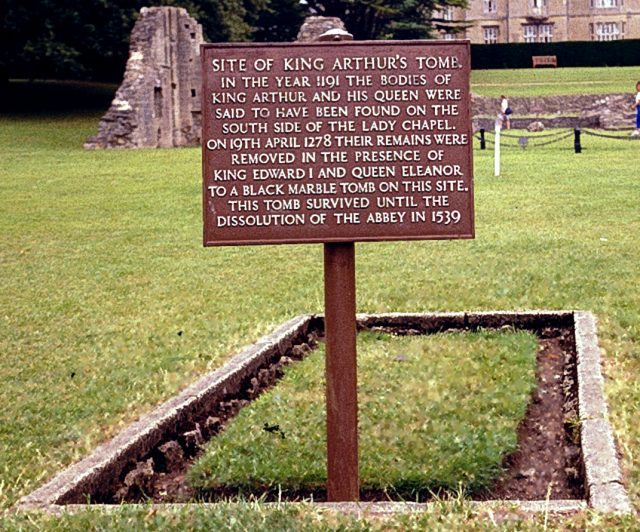
The site of King Arthur and Guinevere's grave. The grave was brought into the abbey just a few years after the place burned down and the monks were desperate for money to rebuild. (credit: Tom Ordelman)

Glastonbury Abbey in Somerset, England, is the legendary resting place of King Arthur and Guinevere, and for centuries people have visited to see the grave of the mythical fifth-century King of the Britons and his bride. But the reality behind the abbey's claim to fame had little to do with early monarchy. It was mostly about economics.

Archaeology magazine's Jason Urbanus reports on new findings from University of Reading archaeologist Roberta Gilchrist, who heads up the Glastonbury Archaeological Archive Project, an intensive reexamination of 75 years' worth of excavations and discoveries from Glastonbury Abbey, many of which have been stored for decades without any scientific analysis. Gilchrist and her colleagues have found evidence that occupation of the Glastonbury site may indeed date back to the purported year of Arthur's reign in the fifth century, but not due to any mystical connection with the king.

We know for certain that Glastonbury was a thriving community in the seventh century, where Saxon villagers created large furnaces to melt down and recycle Roman glass. Gilchrist's project has confirmed that the glassworks predated the abbey, possibly by centuries, and was one of the largest glass production facilities in England at the time.

Read 9 remaining paragraphs | Comments

Man arrested for tweet about “confronting” a Muslim woman

The British PR exec demanded that the woman “explain Brussels.”

A man in Croydon, England, was arrested for "incitement to racial hatred"—a crime under UK law—after tweeting about accosting a Muslim woman in the street. He demanded an explanation from her for the Brussels attacks, and her response didn't satisfy him. So he took to Twitter to rant about it.

According to The Guardian:

He is understood to be Matthew Doyle, a partner at a south London-based talent and PR agency, who tweeted earlier in the day: “I confronted a Muslim women [sic] yesterday in croydon. I asked her to explain Brussels. She said “Nothing to do with me” a mealy mouthed reply.”

Doyle is not the first Brit to be arrested for this kind of crime on social media. After people reacted negatively to his first tweet, Doyle continued his tirade by tweeting, "Who cares if I insulted some towelhead ?? Really." Before he was arrested, he tweeted, "Thanks all you tweeters for proving I can still do PR."

Read 3 remaining paragraphs | Comments

Researchers use synchrotron to read ancient, burned scrolls from Rome

Scientists used high-energy beams to make an incredible archaeological discovery.

The ancient Roman resort town Pompeii wasn't the only city destroyed in the catastrophic 79 AD eruption of Mt. Vesuvius. Several other cities in the area, including the wealthy enclave of Herculaneum, were fried by clouds of hot gas called pyroclastic pulses and flows. But still, some remnants of Roman wealth survived.

One palatial residence in Herculaneum contained hundreds of priceless written scrolls made from papyrus, singed into carbon by volcanic gas. It was long believed that these scrolls would never be readable. But now, a massive X-ray microscope at the European Radiation Synchrotron Facility has allowed researchers to see what was written on these ruined documents.

The trick was discovering that the ink used by scribes over 2,000 years ago actually contained fairly large traces of metals, including lead. This came as a surprise to a group of researchers experimenting with the scrolls at the synchrotron, and they subsequently published their discovery in Proceedings of the National Academy of Sciences. These papyri contain the oldest examples of metallic ink in the Greco-Roman world; previously, archaeologists dated the Roman use of metallic ink to the fifth century, though the Egyptians had been known to use it long before. This is a welcome discovery for students of ancient Greco-Roman scrolls, because it means that other scientists can use a technique called scanning X-ray fluorescence (XRF) to see wisps of lead in the outlines of letters.

Read 3 remaining paragraphs | Comments

Facebook explains that it is totally not doing racial profiling

It just wants to assign you an “ethnic affinity” based on what you do and like.

Cookie Lyon is not impressed. (credit: FOX)

On Friday, we reported that Facebook has a marketing tool that targets groups based on what the company believes your race is after assessing your activity. Today, Facebook reps explained to Ars how this targeting works—and why it isn't really about race or ethnicity. Instead, they say it's about ethnic activities and interests.

It sounds confusing because Facebook is trying to do two contradictory things. The company wants to offer advertisers access to multicultural communities, but it also wants to claim that it isn't identifying users by their races. So how exactly do you become part of an "ethnic affinity" target group without being targeted as an ethnicity? Reps say Facebook never looks at census data, names, photos, or private information. Instead, they focus on what language you speak, where you're from, and what interests you declare. Let's say you are a fan of BET and have shown an interest in #BlackLivesMatter—well, then, you might be categorized as part of an African-American ethnic affinity.

That doesn't mean that Facebook has identified you as a black person, Facebook reps hasten to say. It just means that you seem like you would be interested in black culture or activities. "They like African-American content," one rep told Ars. "But we cannot and do not say to advertisers that they are ethnically black. Facebook does not have a way for people to self-identify by race or ethnicity on the platform."

Read 6 remaining paragraphs | Comments