What Deep Space Nine does that no other Star Trek series can

This show isn’t just a good story; it’s a beacon of hope for people living in dark times.

Enlarge / Deep Space Nine is on the wormhole front in the Dominion Wars, yet its main characters remain fundamentally humane and strive for peace. (credit: Star Trek: Deep Space Nine)

We all have people in our lives who are so important that their deaths would be tragic at an existential level. Recently, one such person in my life almost died. It wasn't one of those things where he narrowly escaped from sniper fire in a starship fight and we could raise a glass of synthahol in Ten Forward afterwards. He was plugged into life support machines for over a week, unconscious, with doctors shaking their heads and urging us to "be patient." Medical staff said completely terrifying things like "I think he'll probably make it."

I had plenty of time to imagine how my life would be utterly different without him. He's part of the family I've found with my circle of nerdy friends, and losing him would be like losing, well, part of my family. Part of me. Every night when I came home from the hospital, there was only one thing I could do that didn't make me want to cry. I watched Star Trek: Deep Space Nine.

I never really thought of ST:DS9 as a comforting show, or even a particularly brilliant one. I grew up on Star Trek: The Next Generation, so DS9 is definitely still "my" era in Star Trek, and I have hazy memories of enjoying it in college. Still, I never really loved DS9 the way I loved Data and Picard and TNG's ongoing wonky obsession with maintaining the Prime Directive on what Guinan called a "ship of peace." Yet in my darkest emotional hour, DS9 was what did it for me. I think that's because the show combined everyday stories of awfulness and political meltdown with an aggressive hopefulness about the future. Call it Utopia ex machina.

Read 9 remaining paragraphs | Comments

Bizarre ant colony discovered in an abandoned Polish nuclear weapons bunker

Scientists describe workers trapped for years in “a hostile environment in total darkness.”

For the past several years, a group of researchers have been observing a seemingly impossible wood ant colony living in an abandoned nuclear weapons bunker in Templewo, Poland, near the German border. Completely isolated from the outside world, these members of the species Formica polyctena have created an ant society unlike anything we've seen before.

The Soviets built the bunker during the Cold War to store nuclear weapons, sinking it below ground and planting trees on top as camouflage. Eventually a massive colony of wood ants took up residence in the soil over the bunker. There was just one problem: they built their nest directly over a vertical ventilation pipe that leads into the bunker. When the metal covering on the pipe finally rusted away, it left a dangerous, open hole. Every year when the nest expands, thousands of worker ants fall down the pipe and cannot climb back out. The survivors have nevertheless carried on for years underground, building a nest from soil and maintaining it in typical wood ant fashion. Except, of course, that this situation is far from normal.

Polish Academy of Sciences zoologist Wojciech Czechowski and his colleagues discovered the nest after a group of other zoologists found that bats were living in the bunker. Though it was technically not legal to go inside, the bat researchers figured out a way to squeeze into the small, confined space and observe the animals inside. Czechowski's team followed suit when they heard that the place was swarming with ants. What they found, over two seasons of observation, was a group of almost a million worker ants whose lives are so strange that they hesitate to call them a "colony" in the observations they just published in The Journal of Hymenoptera. Because conditions in the bunker are so harsh, constantly cold and mostly barren, the ants seem to live in a state of near-starvation. They produce no queens, no males, and no offspring. The massive group tending the nest is entirely composed of non-reproductive female workers, supplemented every year by a new rain of unfortunate ants falling down the ventilation shaft.

Read 6 remaining paragraphs | Comments

New fossil suggests life during the late Cretaceous was not quite what we thought

Animal gives us a better picture of life’s diversity over 66 million years ago.

When we imagine the world of the Cretaceous period, millions of years before the Chicxulub meteorite smashed into the Gulf of Mexico, usually we think of gigantic animals. Dinosaurs smashed through the forests, and giant flying reptiles called pterosaurs ruled the skies with their 10-meter wingspans. But a new discovery of a small pterosaur, with a wingspan of only about a meter, has overturned this popular idea.

This unnamed pterosaur, likely related to the much larger azhdarchid pterosaurs of the same period, is described in a paper published in Royal Society Open Science. Two fragments of its skeleton were discovered on Hornby Island, British Columbia, providing just enough material for scientists to verify that it was not simply an adolescent version of a larger animal. Based on the telltale shape of its vertebrae, the researchers are convinced it's not a bird, but they don't have enough remains to say for certain where this new species would fit into the evolutionary tree. Study lead Elizabeth Martin-Silverstone told Nature, "It’s quite different from other animals we’ve studied. There hasn’t really been evidence before of small pterosaurs at this time period." This finding is a surprise, because many paleontologists believed that pterosaurs evolved to be larger and larger as the Cretaceous wore on.

These small pterosaurs probably lived alongside the first birds. This revelation overturns one hypothesis about why the pterosaurs died out, which is that birds out-competed the small pterosaurs—leaving only the big pterosaurs, who went extinct in the aftermath of the same bolide impact that wiped out the large, non-winged dinosaurs. If birds and small pterosaurs co-existed for millions of years, it seems unlikely that the story was as simple as birds out-competing them.

Read 3 remaining paragraphs | Comments

Doubts about whether ancient hominin Lucy fell to her death 3.18 million years ago

Did she actually fall from a tree, or were her bone fractures the byproduct of fossilization?

One of the most famous fossils in human evolutionary history is at the center of a new scientific debate. The fossilized skeleton dubbed "Lucy" was part of an extinct species called Australopithecus afarensis, an early relative of Homo sapiens who was among the first hominins to walk upright. She died 3.18 million years ago, and her remains were discovered in the early 1970s in Ethiopia. Her skeleton is complete enough to give us a good picture of her anatomy, which is part of what led to the current controversy. A study published in Nature this week suggests that a careful analysis of her bones reveals how she died—by falling to her death from a very tall tree. But other scientists say the evidence is thin at best.

University of Texas-Austin anthropologist John Kappelman and his team did a complete X-ray CT scan on Lucy's bones, allowing them to create high-resolution 3-D renders as well as 3-D printouts of her skeleton. By comparing the way her bones had fragmented with contemporary X-rays from people who fell, they came to the conclusion that the fragmentation of her leg bone was "green," that is, it took place right before she died.

Kappelman and his colleagues write, "Although the fractures in Lucy’s humeri provide evidence that she was conscious when she stretched out her arms in an attempt to break her fall, the severity of the numerous compressive fractures and presumed organ damage suggest that death followed swiftly." It appears that the joint in her leg suffered from extreme compression of the type you'd expect in somebody who fell on their feet from a great height, out of a local tree where nests might be as many as 23 meters off the ground. (They estimated this height based on the typical heights of chimpanzee nests today.)

Read 4 remaining paragraphs | Comments

Facebook fires human editors, algorithm immediately posts fake news

Facebook makes its Trending feature fully automated, with mixed results.

Enlarge / This morning, Trending promoted this as its top story related to the trending topic "Megyn Kelly." The story was up for several hours, and is completely false. (credit: Washington Post)

Earlier this year, Facebook denied criticisms that its Trending feature was surfacing news stories that were biased against conservatives. But in an abrupt reversal, the company fired all the human editors for Trending on Friday afternoon, replacing them with an algorithm that promotes stories based entirely on what Facebook users are talking about. Within 72 hours, according to the Washington Post, the top story on Trending was about how Fox News icon Megyn Kelly was a pro-Clinton "traitor" who had been fired (she wasn't).

The original accusations of bias came from a disgruntled ex-editor at Facebook, who leaked internal Trending training materials to Gizmodo. The training package offered tips on, among other things, how to curate news from an RSS feed of reputable sources when the stories provided by Facebook users were false or repetitive. Though the human editors were always expendable—they were mostly there to train the Trending algorithm—they were still engaging in quality control to weed out blatant falsehoods and non-news like #lunch. And after Trending latched on to the fake Kelly scoop, it appears that human intervention might still be required to make Facebook's algorithms a legitimate source of news after all.

In a post about the changes, Facebook said the early move to eliminate human editors was a direct response to "the feedback we got from the Facebook community earlier this year," an oblique reference to the raging controversy unleashed by the Gizmodo revelations. Facebook explained that the new, non-human Trending module is personalized "based on a number of factors, including Pages you’ve liked, your location (e.g., home state sports news), the previous trending topics with which you’ve interacted, and what is trending across Facebook overall." Instead of paying humans to "write topic descriptions and short story summaries," the company said "we’re relying on an algorithm to pull excerpts directly from news stories." Which is why millions of Facebook readers this morning saw the "news" that Megyn Kelly is a traitor who has been fired.

Read 2 remaining paragraphs | Comments

Study shows one way that scientific progress is broken

Virtually nobody reads or understands rebuttals to scientific findings

The classic model of scientific progress is that the field advances when new findings contradict or supersede old ones. But a new study reveals that this process isn't working today—at least, not in scientific journals, where most data is shared with colleagues. Indeed, the researchers found that "rebuttals scarcely alter scientific perceptions about the original papers."

For the study, a group of researchers looked at the citation rates on seven marine biology papers about fisheries. Citation rates are often used as a proxy for the "importance" of a scientific paper, with the notion that the more a paper is cited, the more influential it is. Each paper had been the subject of a rebuttal, also published in a scientific journal. The researchers wanted to know whether these rebuttals affected citation levels on the original papers—and, perhaps more importantly, whether they convinced people to question the interpretation of data in the original papers.

It turns out that rebuttals don't seem to affect the scientific community's understanding of the original papers in any way. "The original articles were cited 17 times more frequently than the rebuttals, an order of magnitude difference that overwhelms other factors," write the study authors in Ecosphere. "Our test score results emphasize that rebuttals have little influence: even the rare few authors who happened upon the rebuttals were influenced only enough to move from whole-hearted support of the original article (a score of five) to neutrality (a score of three), despite the fact that all of the rebuttals argue that the interpretations of data in the originals were incorrect. Astonishingly, 8 percent of the papers that cited a rebuttal actually suggested that the rebuttal supported the claims of the original article, an observation which may give pause to those contemplating writing a rebuttal in the future."

Read 3 remaining paragraphs | Comments

The new season of Halt and Catch Fire is about the origins of McAfee

In season 3, our heroes try to compete with Compuserv and a creepy antivirus company.

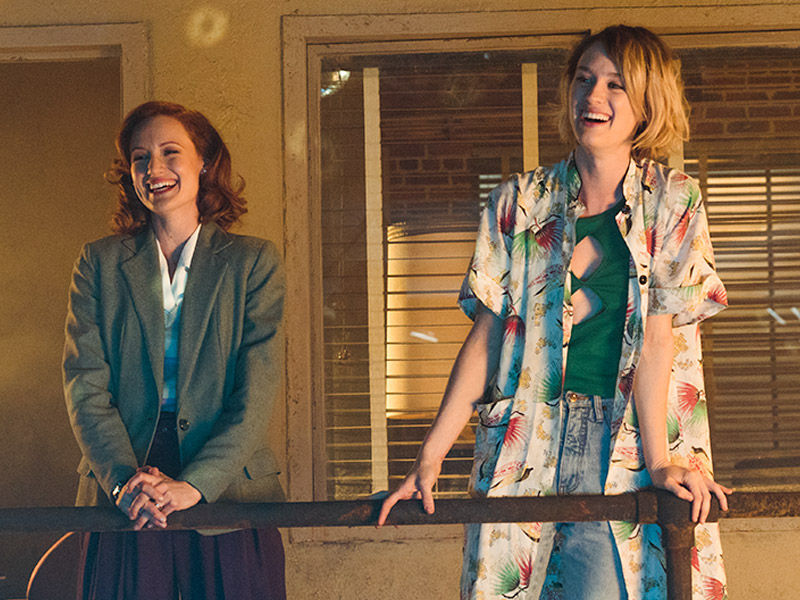
Enlarge / Donna (Kerry Bishé) and Cameron (Mackenzie Davis) are the founders of Mutiny, an online community startup that is about to morph into a 1980s version of eBay. (credit: AMC)

Halt and Catch Fire is a fascinating AMC series about the 1980s computer industry, and its intense characters and nostalgic evocations of classic startups have made it a cult favorite over the past two years. Each season explores one aspect of the nascent tech scene—first in Austin, then San Francisco—by re-imagining key moments in the early days of personal computing. Season 1 brought us the drama of creating the first PC clones, season 2 was a tale of early online gaming and chatroom community at startup Mutiny, and season 3 started this week with a look at online services like eBay as well as antivirus software (evil marketing genius Joe has morphed into John McAfee). It's off to a great start, providing a nuanced look at online privacy and startup culture.

You might say that Halt and Catch Fire is an alternate history of the techie 1980s, re-imagining the origins of today's online world through the lives of our struggling, flawed geek heroes. Maybe "alternate history" sounds like a strong term for a show that offers a fairly realistic snapshot of the '80s tech world, right down to the bleepy music and New Wave design of the credits. Many details, like the marketing of PC clones and online communities like CompuServe, are fairly accurate. But often, events that happened in the 1990s and 2000s are injected into the story. This season, for example, Mutiny founders Cameron (Mackenzie Davis) and Donna (Kerry Bishé) are basically inventing eBay. But they do it by navigating a very 2000s-era tech issue: digital privacy.

Cameron and Donna come up with their eBay idea by spying on their users' private chats to figure out what people do when they chat one on one. The two gradually realize that people are either hooking up (aka meeting offline), or trading old game controllers and comics. This leads Donna and Cameron to their eureka moment: why not create a "swap" functionality for users on Mutiny's forums? It's basically the birth of eBay, roughly ten years early. The writing here is particularly savvy, as we are never allowed to forget that this discovery is only possible because Mutiny has no respect for its users' privacy. Even though one of their engineers is pushing Cameron and Donna to create private, encrypted chat, the two are not concerned.

Read 5 remaining paragraphs | Comments

The proto-Aztec bunny farmers of ancient Mexico

1,500 years ago, urbanites in Mesoamerica’s biggest city domesticated rabbits for fun and profit.

Enlarge / This small sculpture of a rabbit was found in the early 1990s at the bunny apartment complex in the Oztoyahualco neighborhood of Teotihuacan. It is likely over 1,500 years old.

In the first century BCE, right around the time when Julius Caesar was dismantling the Roman Republic, the great city of Teotihuacan dominated the region now known as Mexico. The sixth largest city in the world at the time, it was known for massive pyramids and sprawling neighborhoods. Centuries later, the Aztecs claimed the famous city as part of their own heritage. At its peak, Teotihuacan was home to more than 100,000 people. Residents were living in such close quarters that architects invented multi-story apartment buildings to house them. In one neighborhood, urban farmers kept rabbits to feed the hungry Teotihuacan masses.

A group of anthropologists describe their discovery in PLoS One, filling in details of what appears to be a rabbit farm and butcher shop in a Teotihuacan neighborhood called Oztoyahualco. From roughly the 4th through 6th centuries, this neighborhood was home to an apartment compound that immediately stood out for a few reasons. Several rooms contained an enormous number of cottontail and jackrabbit remains, as well as soil with high phosphate levels that would indicate a lot of blood or fecal matter on the ground. One room had low stone walls "suggestive of a pen for domestic animal management," the researchers write. Other rooms were full of obsidian blades and rabbit limbs, as if they were part of a butcher shop.

Add all those findings together and you've got what appears to be an apartment complex devoted to raising and slaughtering rabbits. One more piece of evidence strengthened the hypothesis: a previous excavation had uncovered an unusual rabbit sculpture (pictured above) on the site. Bunnies were obviously important to the people in this place.

Read 4 remaining paragraphs | Comments

DNA revelations from Ötzi the Iceman’s leather and furs

5,300-year-old mummy found in the Swiss Alps wore clothes made from many different animals.

For the past two decades, scientists have analyzed every minute detail of Ötzi, a 5,300-year-old natural mummy found in the ice of the Italian Ötztal Alps. But one remaining mystery was the provenance of his clothing, made from leather and fur. Now, thanks to refined techniques in DNA sequencing, a team of scientists has identified how the clothing was made—and discovered something surprising about Ötzi's domestic habits.

Ötzi lived during the Copper Age, when humans had been domesticating animals for a few thousand years, and our cutting-edge technologies included stone tools and fired pottery. From previous studies, we know that Ötzi was likely murdered by an arrow and a blow to the head. We also know he suffered from arthritis, and he ate a meal of deer and berries before he died.

The team's new findings, published in Nature Scientific Reports, are as much a demonstration of DNA sequencing wizardry as they are about ancient fashion. It's incredibly difficult to get genetic material out of tanned hides, because they've generally been scraped, heated, and exposed to fatty acids. Plus, the hides and furs themselves had disintegrated. But the researchers used several methods for extracting DNA from the hides that made up Ötzi's shoelace, hat, loincloth, coats, leggings, and quiver. First they compared the strands of DNA they did find with other mapped genomes to identify species. Then the researchers targeted very small, specific regions in the DNA for reconstruction to learn more about the animals' relationships with today's domestic breeds.

Read 6 remaining paragraphs | Comments

This is what meeting aliens might really be like

Promising trailer for Arrival, based on Ted Chiang’s Nebula-winning novella, “Story of Your Life.”

First trailer for Arrival, based on Ted Chiang's Nebula-winning novella, "Story of Your Life."

Alien invasion might be a lot weirder than you think. That's the premise of Arrival, a first contact story told from the point of view of linguist Louise Banks (Amy Adams) who is the first to translate the language of the mysterious "heptapods" whose ships arrive on Earth seemingly just to make conversation.

If this movie is even a quarter as good as the novella it's based on, we're in for a damn fine story. (For those who have not had the pleasure of reading it, Chiang's collection, Stories of Your Life and Others, has just been reissued as a handsome paperback.) Though the film is dramatizing the alien visitation with international politics and war threats, the original story explores a more personal crisis. Without giving away spoilers, the central idea is that the heptapods' written language allows the reader to know the ending of a sentence at the moment they start reading it. Based in part on the aliens' mathematics—and informed by the Earthly mathematics of Fermat's Principle—the heptapods' language changes the consciousness of humans who decipher it, essentially allowing them to remember the future.

So what happens when a conversation with an alien changes your perception of linear time? In Chiang's story, it raises questions about whether you will make the same life decisions despite knowing when people will die—indeed, knowing when you will die. The result is a moving, intense exploration of temporality, linguistics, and the human psyche. It's clear that some of these themes are going to come up in the movie, too, though with the added dramatics of some kind of standoff with Russia.

Read 1 remaining paragraphs | Comments