Review: Without quick updates the Moto G4 is merely good, not great

$200 starting price, OK specs, and fingerprint sensor are still a solid value.

It’s not really realistic to expect any new Moto G to live up to the first one. That phone offered decent specs and prompt Android updates for a third of the price of most flagships, and the cheap-but-usable Android phone segment wasn’t as healthy in 2013 as it is now. It was the right phone for the right price at the right time, and no subsequent upgrade has quite nailed the same combination (though the third-generation model was a nice effort).

Now Motorola is owned by Lenovo, and a lot of the stuff that made the Google-owned Motorola a darling of reviewers (namely, prompt updates and good phones that weren’t obsessed with specs and superfluous features) is gone. Bear that in mind as we evaluate the Moto G4 and G4 Plus—they retain many of the selling points that made the first Moto G so good, but not quite all of them, and they’re no longer the cheapest decent phones you can buy even if they are still decent budget options.

Look and feel

Specs at a glance: Lenovo Moto G4 and G4 Plus
Screen 1920×1080 5.5-inch IPS (400 PPI)
OS Android 6.0.1
CPU Qualcomm Snapdragon 615 (4x 1.5GHz Cortex A53 and 4x 1.2GHz Cortex A53)
RAM 2GB or 4GB
GPU Qualcomm Adreno 405
Storage 16GB, 32GB, or 64GB NAND flash, expandable via microSD
Networking Dual-band 802.11n, Bluetooth 4.2.

CDMA (850, 1900 MHz)
GSM / GPRS / EDGE (850, 900, 1800, 1900 MHz)
UMTS / HSPA+ (850, 900, 1700, 1900, 2100 MHz)
4G LTE (B1, 2, 3, 4, 5, 7, 8, 12, 13, 25, 26, 41)

Ports Micro-USB, headphones
Camera 13MP or 16MP rear camera, 5MP front camera
Size 5.98" x 3.02" x 0.31-0.39" (152 x 76.6 x 7.9-9.8mm)
Weight 5.47oz (155g)
Battery 3,000 mAh
Starting price $200 for G4, $250 for G4 Plus, $300 fully loaded

I really like the design of both Moto G4s, which is sleeker and less chunky than Moto Gs of years past (but unlike the Moto Z, they don’t do anything dumb like removing the 3.5mm headphone jack for no reason). The bulgy back is gone, but the phone is still curved around the edges in a way that’s comfortable to hold. And the lightly textured, rubberized plastic back is nice to touch and easy to hold. It won’t go slipping out of your hands.

Read 29 remaining paragraphs | Comments
OS X 10.11.6 and iOS 9.3.3 released as Apple’s current OSes wind down

Apple’s current OSes go into maintenance mode as new major releases loom.

Enlarge / Fire up your updaters. (credit: Andrew Cunningham)

Apple has just released a new round of updates for all of its platforms, including OS X 10.11.6 and iOS 9.3.3. All are minor updates that focus mostly on fixing bugs, as most of Apple's attention has turned to the new major versions of its operating systems that are due in the fall. Both iOS 10 and macOS Sierra are currently available as public betas.

OS X 10.11.6 fixes a bug in user accounts with parental controls enabled that could prevent settings from being saved, and it also addresses a problem with SMB network shares that could keep certain kinds of devices from accessing them. The update tackles a handful of business-centric features, too. The OS boots a bit faster when connecting to a NetBoot server, and the release fixes both startup issues with OS X 10.11.4 and 10.11.5 NetBoot images and a problem with Active Directory authentication.

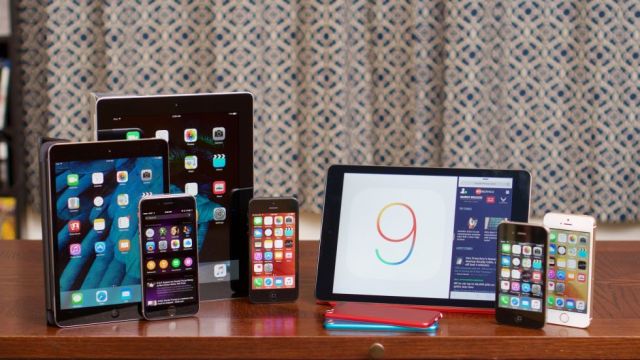
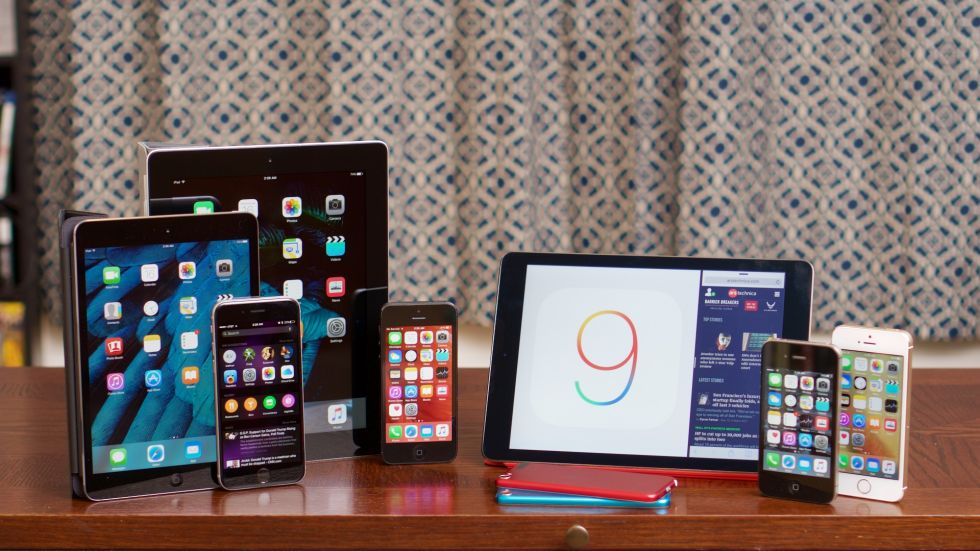
iOS 9.3.3 includes nonspecific bug fixes, as do the watchOS 2.2.2 and tvOS 9.2.1 updates for Apple's other iOS-adjacent platforms. iOS 9.3.3 is available for all devices that support iOS 9, including the iPhone 4S and newer; iPad 2 and newer; all iPad Minis and iPad Pros; and the fifth- and sixth-generation iPod Touches. A list of all security holes patched in OS X, iOS, tvOS, and watchOS can be found on Apple's security update page.

Read on Ars Technica | Comments

Now all of your emoji can be either male or female

New jobs and gender options won’t have to wait for a new version of Unicode.

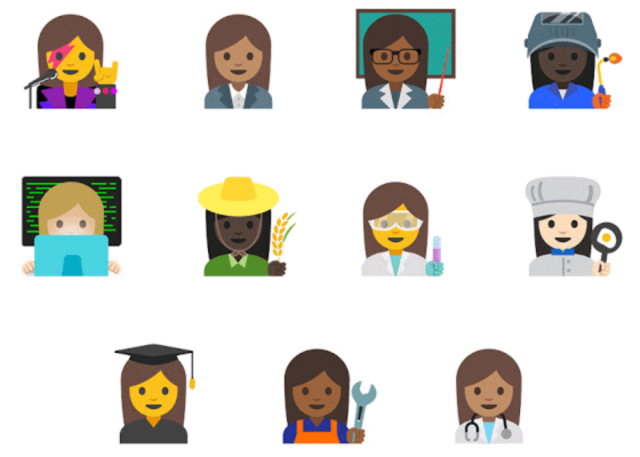
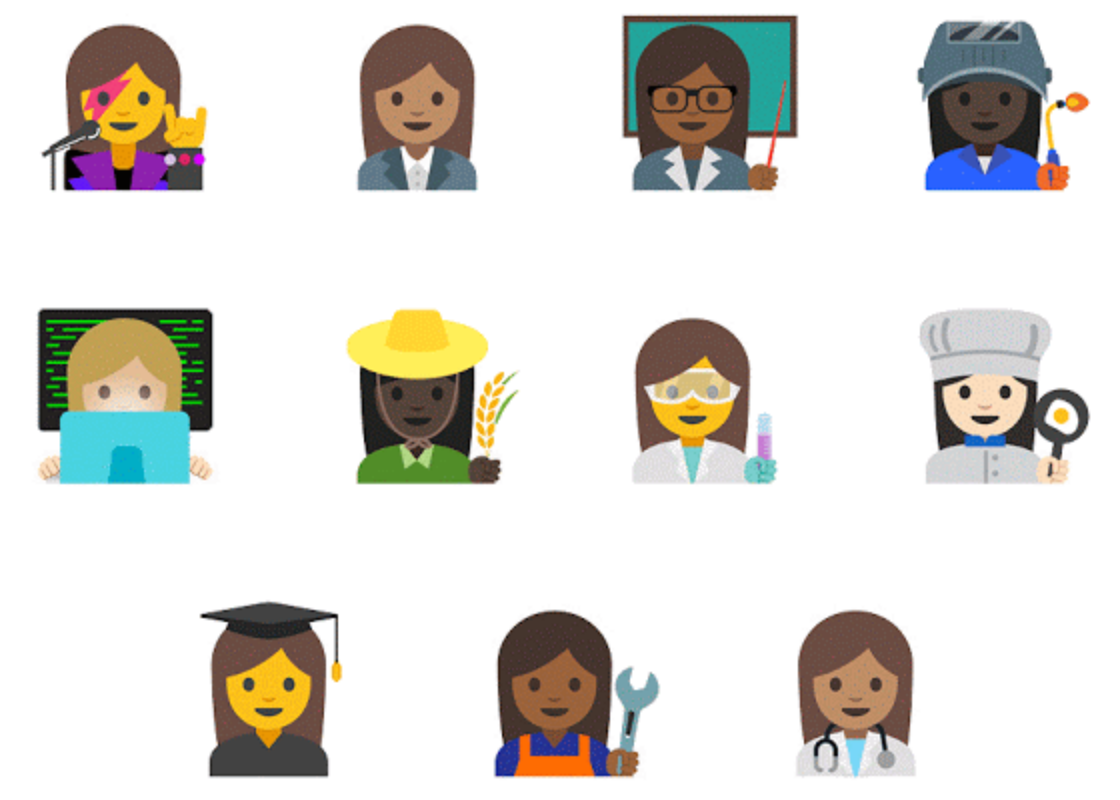
Enlarge / The new additions enable all kinds of different occupations for emoji women of many colors. (credit: Google)

The Unicode Consortium announced plans (PDF) to support new emoji aimed at promoting gender equality—11 new "professional" emoji will depict both men and women performing different jobs, and there will be both male and female versions of 33 existing emoji that currently depict either a man or a woman but not both. The plan is based largely on a proposal from Google, a prominent member of the Unicode Consortium, back in May (PDF).

The new professions include, in the Unicode Consortium's words: a farmer, welder, mechanic, health worker, scientist, coder, business worker, chef, student, teacher, and rockstar.

To avoid the normally lengthy wait time associated with new emoji—Unicode 9.0 was just finalized in June, and version 10.0 won't be finalized until June of 2017—Unicode is using combinations of existing emoji to create the new ones. The process is similar to, though not exactly the same as, the system for changing skin tones. A special character called a "zero-width joiner" (ZWJ) can be placed between two or more emoji, and operating systems that support it know to put out a different composite emoji rather than a series of separate emoji.

Read 2 remaining paragraphs | Comments
Learning to code as a 30-year-old kid with Apple’s Swift Playgrounds

A guided tour of the app and a chat with the team at Apple about its goals.

If you've installed the iOS 10 public beta since it came out last week, you’ll know that compatible iPads come loaded with the “Swift Playgrounds” app that Apple announced at WWDC.

The app is Apple’s first crack at anything that even resembles an iOS-native development environment—iPad hardware is now fast enough (and Swift is now stable and mature enough) to make such a tool palatable. But while Swift Playgrounds uses and executes actual Swift code, it’s not going to let you make actual apps. Its aim is educational, specifically for younger kids who are familiar with and comfortable around technology but who have never been exposed to coding before.

I played with the app for a few hours, working my way through the first few tutorials in the public beta—I’m a little older than the intended age group, but I still managed to learn a few things. I also spoke with the team at Apple to learn more about their goals and intentions when they designed the app and to learn how it will continue to develop throughout the public beta process up to the release of the iOS 10 Golden Master.

Read 30 remaining paragraphs | Comments
iOS version of Pokémon Go is a possible privacy trainwreck [Updated]

No user data has been accessed, and Google and Niantic are working on fixes.

If you sign into Pokémon Go on iOS, you may be giving it more access than it needs. (credit: Andrew Cunningham)

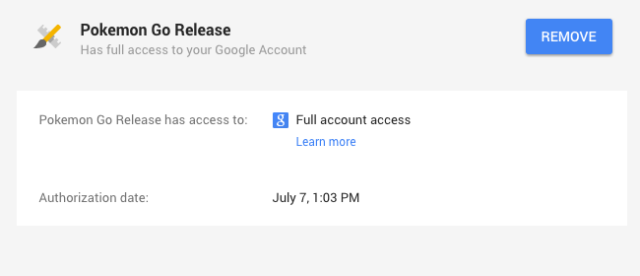
Update: Niantic has confirmed in a statement that the Pokémon Go app requests more permissions than it needs, but that it has not accessed any user information. Google will automatically push a fix on its end to reduce the app's permissions, and Niantic will release an update to the app to make it request fewer permissions in the first place. The full statement:

"We recently discovered that the Pokémon Go account creation process on iOS erroneously requests full access permission for the user's Google account. However, Pokémon Go only accesses basic Google profile information (specifically, your user ID and e-mail address) and no other Google account information is or has been accessed or collected. Once we became aware of this error, we began working on a client-side fix to request permission for only basic Google account information, in line with the data we actually access. Google has verified that no other information has been received or accessed by Pokémon Go or Niantic. Google will soon reduce Pokémon Go's permission to only the basic profile data that Pokémon Go needs, and users do not need to take any actions themselves.

Original story: A word of warning if you're playing Pokémon Go on iOS: signing into the app through Google currently gives the game full access to your Google account (hat tip to Adam Reeve for discovering the issue). External apps that you sign into with Google often ask for a small subset of permissions based on what they need to do—view your contacts, view and send e-mail, view and delete Google Drive documents, and so on. But Niantic's Pokémon Go iOS app doesn't ask, and with full account access, it can theoretically do all of those things and more. You can check on and revoke permissions for Pokémon Go and any other external app on this page.

We've independently verified that the game requests full account access on iOS, but the Android version doesn't appear to have the same problem; you can sign in with Google but the app doesn't show up on the permissions page. And, of course, you don't need to use a Google account to play Pokémon Goan account created through the Pokémon site will also work. However, that site is currently having server problems and you may not be able to create an account right now if you don't already have one.

Read 1 remaining paragraphs | Comments
Qualcomm Snapdragon 821 is a clock-bumped chip for fall’s flagships

Speed bump is exactly as impressive as the model number conveys.

(credit: Qualcomm)

Phone makers release new flagships every six to 12 months, which is a difficult pace to match if you're a chipmaker whose designs take between two and three years to make. That time gap is why chips like Qualcomm's new Snapdragon 821 exist—to give companies like Samsung and LG something "new" to use without going back to the drawing board and creating something from scratch.

The 821 is about as exciting a refresh as its model number implies: its Kryo CPU cores will run at a maximum clock speed of 2.4GHz, a roughly 10 percent increase from the 2.15GHz cores in the Snapdragon 820. There's no word on whether the 821's two slower cores in the CPU will be faster than the 1.6GHz in the current chip. Qualcomm's press release doesn't mention the GPU's speed increasing, and it says specifically that the 821 will use the same 600Mbps Snapdragon X12 LTE modem as the 820.

The clock-bumped Snapdragon 821 will be sold alongside the two Snapdragon 820 models. Qualcomm isn't saying which phones will use the 821, but rumors suggest that at least one of the two new HTC-made Nexus phones will include the faster chip. Enjoy your extra clock speed.

Read on Ars Technica | Comments

PSA: The macOS Sierra public beta comes out later today

You too can take Siri and the other features for a test drive.

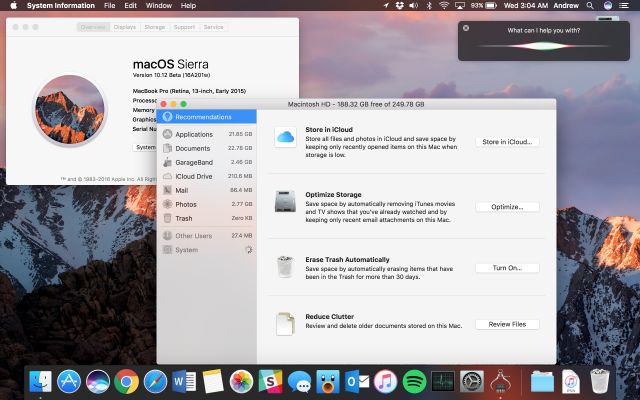
Enlarge / The first Sierra developer beta. (credit: Andrew Cunningham)

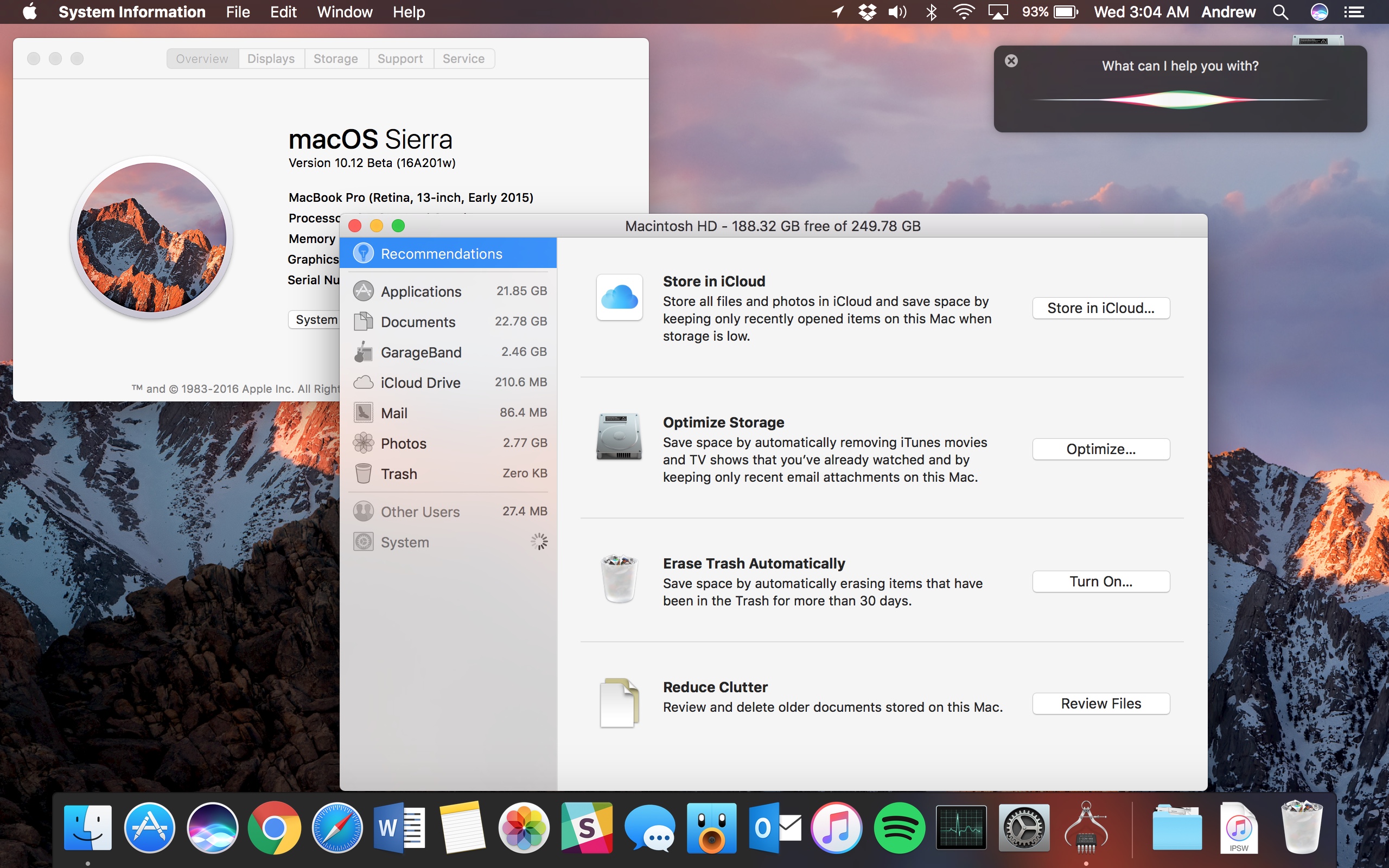
Both the iOS 10 and macOS Sierra public betas are being released today for testing by the brave and foolish souls who choose to live their lives on the bleeding edge. You'll be able to download the beta from here when it posts in a couple of hours. Sierra drops support for a handful of Macs for the first time in a few years, so here's the hardware support list again if you need it:

  • MacBook (late 2009 and later)
  • iMac (late 2009 and later)
  • MacBook Air (2010 and later)
  • MacBook Pro (2010 and later)
  • Mac Mini (2010 and later)
  • Mac Pro (2010 and later)

The first public beta build of Sierra should be identical or near-identical to the second developer build that was released earlier this week, so if you already have access to that, you won't need to install the public beta. You should be able to continuously upgrade any public beta install with new beta builds all the way up until the Golden Master build is released in the fall, though of course the standard warnings about running beta software on your primary Mac (and backing up your data before installing beta software on anything) all apply.

This build of Sierra should be broadly similar to the one we previewed last month except with a few more bug fixes and some other tweaks. The Siri keyboard shortcut, for example, has been changed from function-space to "hold down command-space," and people with access to the developer beta of WatchOS 3 should be able to use the Apple Watch unlocking feature as long as they have a compatible Mac. We'll continue to track the betas as they're released, and we'll do another comprehensive check-in with Sierra when the final version is released in the fall.

Read on Ars Technica | Comments

iOS 10 preview: Apple goes back to ignoring the iPad in a wide-ranging update

iOS 10 gives developers plenty to do and lets its users have a little fun, too.

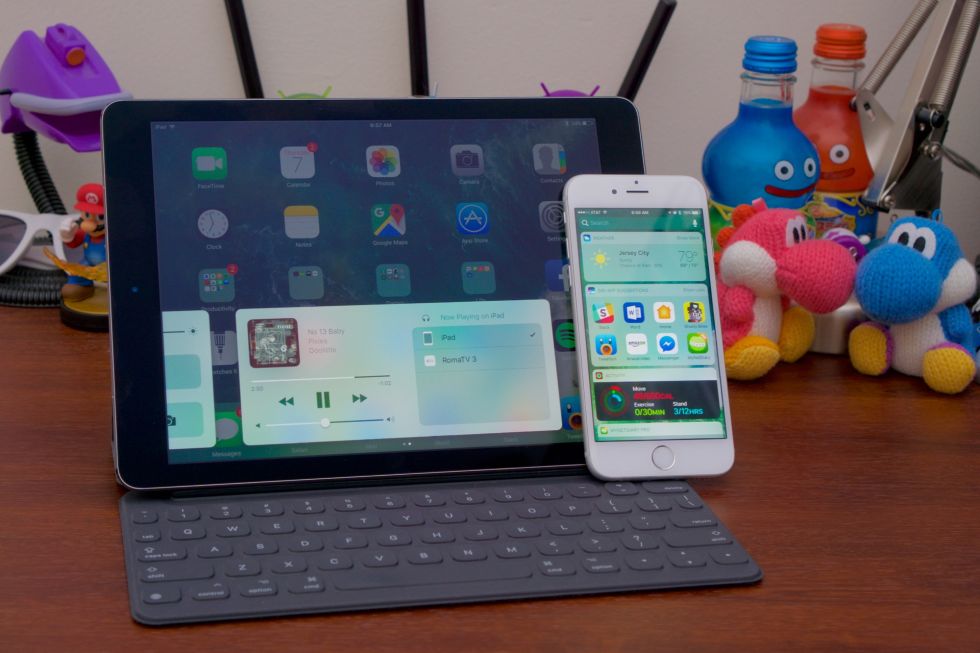
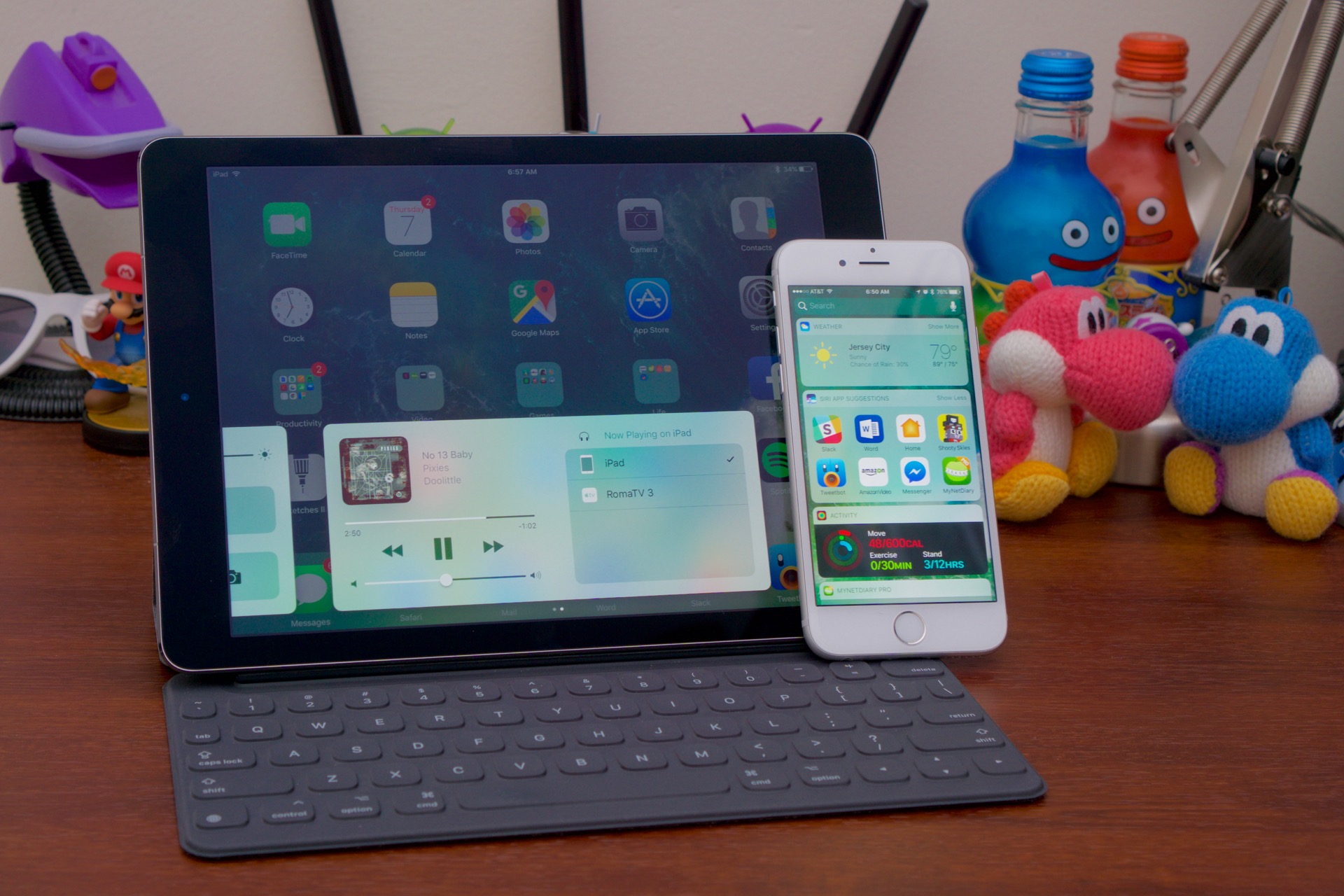
Enlarge / The iOS 10 beta on a 9.7-inch iPad Pro and an iPhone 6S. (credit: Andrew Cunningham)

I’ve spent most of the last six months buying a house, so you’ll need to forgive me if I have houses and house metaphors on the brain. I’ve found them helpful while trying to nail down iOS 10.

Imagine iOS 6 as a fundamentally solid house in need of some major remodeling. iOS 7 was largely a cosmetic update, putting on some new siding (or maybe a nice brick façade) and giving all the rooms a nice paint job. iOS 8 with its under-the-hood changes was roughly equivalent to replacing wiring and plumbing—stuff that’s harder to see but makes a big difference in everyday usage. iOS 9 gave an extensive makeover to one particular room (let’s call it “the iPad”) that had been basically fine for a while but wasn’t being used to its fullest potential.

In the context of this overextended metaphor, iOS 10 is best thought of as an effort to redo multiple other rooms in the house, knocking out some figurative walls and removing metaphorical ugly dropped ceilings. For the first time in a while, Apple is making notable changes to the way basic things like the lock screen, the notification center, and Siri look and work.

Read 97 remaining paragraphs | Comments
Report: The next iPhone may finally ditch the 16GB version

New flagship iPhones have started at 16GB since 2009.

Enlarge / The 16GB iPhone could be on its way out. (credit: Andrew Cunningham)

Speculation about the headphone jack has dominated most of the conversation about the next iPhone, but here's a rumor that should make everyone happy: citing "a person familiar with Apple's plans," The Wall Street Journal reports that the next iPhone will get rid of the 16GB storage option. The base model would reportedly jump up to 32GB—a more reasonable minimum for casual iPhone users who still want to store plenty of photos and apps (and install updates without running into storage problems).

Apple has made several changes to iOS in the last year or two to make 16GB (and, horror of horrors, 8GB) iPhones and iPads more livable. It has reduced the amount of storage space needed to install updates, it has introduced features like iCloud Photo Library that lean on the cloud to free up local storage, and App Thinning reduces the size of installed apps behind the scenes. But this stuff is countered in part by space-eating camera features like Live Photos, 12 megapixel images, and 4K video. Selling a 64GB model for $100 more than the 16GB models may have helped Apple's average iPhone selling price, but the user experience has gone downhill as time has gone on.

Apple bumped up its mid- and top-tier iPhone capacities two years ago when it introduced the iPhone 6 and 6 Plus, and there was never an 8GB version of the iPhone 5S at the low end. But that 16GB option has been the entry model since the iPhone 3GS came out in 2009 (an eternity ago in phone years). The report doesn't say whether the higher-end 64 and 128GB iPhones will also get a storage bump, but in any case it would be nice to be able to recommend an iPhone without also having to recommend that $100 upgrade.

Read on Ars Technica | Comments

Spotify update violated Apple’s developer guidelines

Apple general counsel: “We’re disappointed with the public attacks you’ve made.”

(credit: Spotify)

Yesterday, streaming music service Spotify went public with complaints that Apple had recently rejected an update to the the company's iOS app. The company's lawyers alleged that blocking the update "raises serious concerns under both US and EU competition law" and "[diminishes] the competitiveness of Spotify on iOS and as a rival to Apple Music." But Spotify offered up only a vague explanation for why the app had been rejected, citing "business model rules."

Today, Apple General Counsel Bruce Sewell responded, saying that Spotify's app update violated Apple's App Review guidelines and that the company would gladly approve and distribute the update once the problem had been fixed. The full letter is available in this Buzzfeed report.

"We're disappointed with the public attacks you've made and appreciate the opportunity to set the record straight," writes Sewell to Spotify General Counsel Horacio Gutierrez. "Our guidelines help competition, not hurt it. The fact that we compete has never influenced how Apple treats Spotify or other successful competitors like Google Play Music, Tidal, Amazon Music, Pandora, or the numerous other apps on the App Store that distribute digital music."

Read 4 remaining paragraphs | Comments