ZFS filesystem will be built into Ubuntu 16.04 LTS by default

Resilient filesystem is a popular choice for maintaining data integrity.

(credit: Canonical)

A new long-term support (LTS) version of Ubuntu is coming out in April, and Canonical just announced a major addition that will please anyone interested in file storage. Ubuntu 16.04 will include the ZFS filesystem module by default, and the OpenZFS-based implementation will get official support from Canonical.

ZFS support was already available "as a technology preview" in Ubuntu 15.10, where it's installable via an apt-get command and has to be compiled from source code first. This is no longer the case in 16.04, though you'll still need to download and install the zfsutils-linux package to create and manage ZFS volumes. Putting an official, installed-by-default, fully supported version into an LTS version of Ubuntu is a big vote of confidence, especially since people running Ubuntu-based servers often stick to LTS releases for maximum stability.

ZFS is used primarily in cases where data integrity is important—it's designed not just to store data but to continually check on that data to make sure it hasn't been corrupted. The oversimplified version is that the filesystem generates a checksum for each block of data. That checksum is then saved in the pointer for that block, and the pointer itself is also checksummed. This process continues all the way up the filesystem tree to the root node, and when any data on the disk is accessed, its checksum is calculated again and compared against the stored checksum to make sure that the data hasn't been corrupted or changed. If you have mirrored storage, the filesystem can seamlessly and invisibly overwrite the corrupted data with correct data.

Read 2 remaining paragraphs | Comments

Google CEO: Forcing Apple to comply with FBI may set “troubling precedent”

Sundar Pichai takes Apple’s side in encryption debate, more or less.

(credit: Google)

Google CEO Sundar Pichai took to Twitter (not Google+) on Wednesday night to comment on Apple CEO Tim Cook's post about hardware encryption and backdoors for law enforcement. Pichai opened by saying that Google does give data to law enforcement "based on valid legal orders," something outlined in the company's Transparency Report. But when it comes to creating backdoors to allow access to data stored on devices, Pichai was more hesitant:

Pichai's "could be" stance on the issue is milquetoast, especially in comparison to the multi-paragraph line in the sand that Apple drew on Tuesday. Though many tech companies—Google, Microsoft, and Apple included—have all spoken out against encryption backdoors in the past, most have become quieter about it in the wake of the San Bernardino attacks.

It's also worth noting that Google doesn't have nearly as much control over the Android ecosystem as Apple does over the iPhone. Phone makers and mobile network operators all have their fingerprints on the Android phones they sell, and AT&T has already said that it has no interest in fighting the government over encryption.

Read 1 remaining paragraphs | Comments
Samsung starts using its great 14nm process on cheaper mobile processors

The FinFET process is becoming more common in SoCs from Samsung and Qualcomm.

(credit: Samsung)

Mobile World Congress is approaching, and chip companies have already started making small announcements ahead of the show. Today, Samsung took the wraps off of the eight-core Exynos Octa 7870, a new SoC intended for midrange smartphones.

The chip itself looks solid but unexciting—it has eight 1.6GHz ARM Cortex A53 CPU cores, a 300Mbps Category 6 LTE modem, and an undisclosed GPU that supports up to 1920×1200 screens. More interesting is the fact that the chip will be made with Samsung's 14nm FinFET manufacturing process, which made the Exynos 7420 shine in Samsung's Galaxy flagships last year. Better manufacturing processes reduce the amount of heat produced and the amount of power used by these processors, which gives chipmakers the room to make the chips run faster, consume less power, or do a little of both.

The 14nm process is showing up in more and more places, which suggests that it's growing more mature—it will make an appearance in the new Exynos 8 Octa 8890 that's likely to ship in the Galaxy S7 and its variants. Qualcomm is using the same process for its upcoming Snapdragon 820 and 625 SoCs and the Snapdragon X16 modem.

Read 1 remaining paragraphs | Comments

Chrome OS distro for regular PCs can now dual-boot with Windows

You don’t need to erase your existing partition to try out CloudReady.

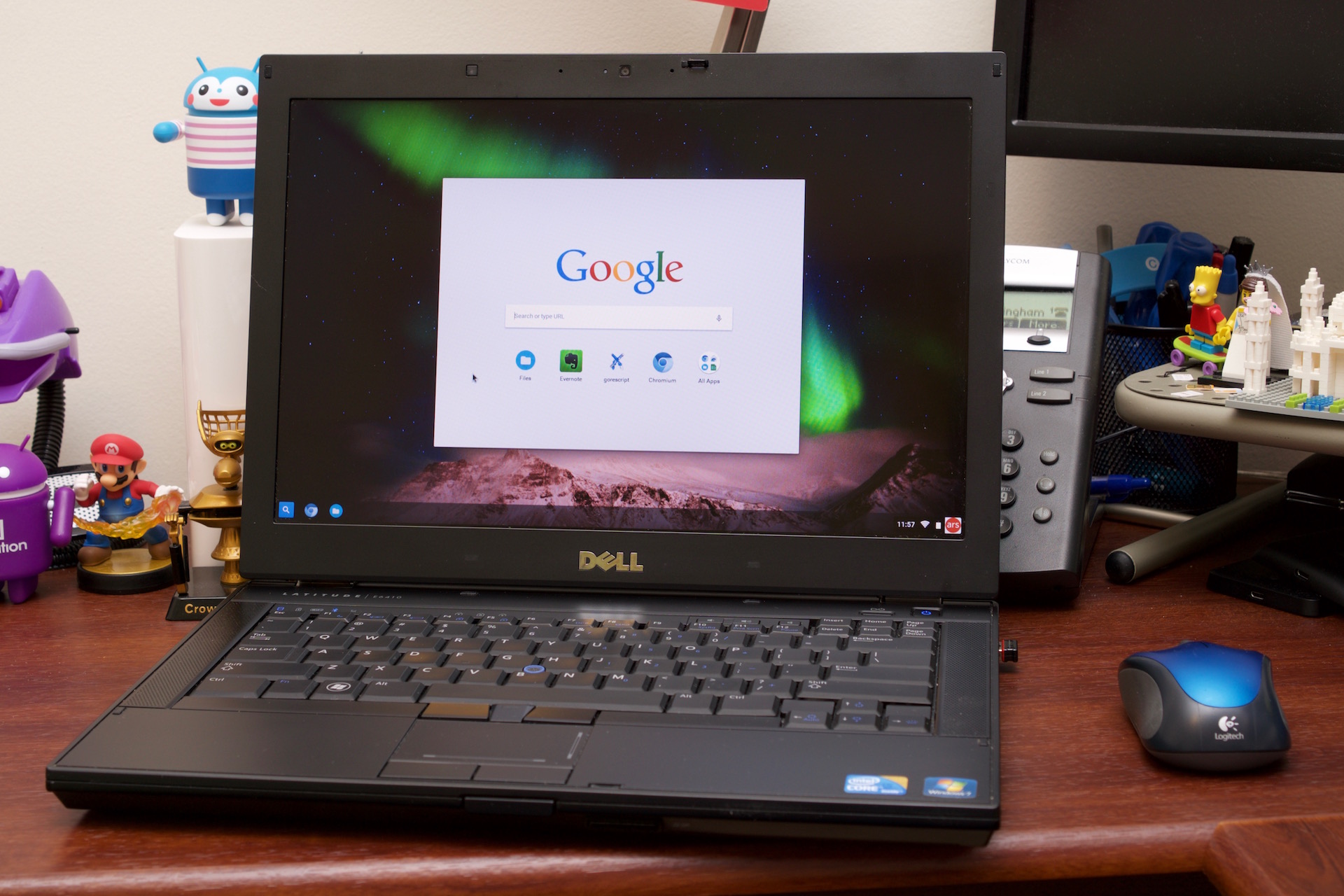
Enlarge / Dell's old Latitude E6410 becomes a modern Chromebook. (credit: Andrew Cunningham)

A few months ago, we wrote about CloudReady, a version of the open source Chromium OS from Neverware that can transform older Windows PCs into what are essentially Chromebooks (give or take a couple of media codecs and other features). Neverware takes the Chromium OS code provided by Google and does all the hard work of testing and maintaining driver compatibility and providing updates, the same things that Google handles for actual Chromebooks. The OS is aimed at schools that either want to move to Chromebooks but can't afford the cost of all-new hardware or schools that have already begun a transition to Chromebooks but want to repurpose old hardware they already have.

Today, Neverware announced a new version of CloudReady aimed at schools and individuals who want to try the software on their PCs without losing the capability to run Windows. CloudReady version 45.3 can be installed on any system with an existing UEFI-mode installation of Windows 7, 8, or 10 and 32GB of free disk space. You can find detailed installation directions on Neverware's site.

The UEFI requirement means that the list of PCs that support dual-booting is much shorter than the normal CloudReady support list, so this won't be of much use to people with older BIOS-based PCs and Windows installations. But if you happen to have a device on the list, and you want to give the software a spin, you can download the free version from Neverware's site. The fully featured version that supports Google's Chrome OS management console costs $59 per machine for an unlimited license or $25 for a one-year license.

Read on Ars Technica | Comments

New Monopoly edition goes paperless, ruins everyone’s fun

No more cheating, er, “house rules” in this ATM-driven Monopoly variant.

Enlarge / The Monopoly Ultimate Banking Edition replaces all cash with a battery-powered ATM and scannable cards. (credit: Hasbro)

Before Settlers of Catan and Ticket to Ride and Pandemic, there was Monopoly. I don't have the statistics in front of me, but it's safe to say that Hasbro's Depression-era riff on The Landlord's Game has caused more familial strife than all other board games combined.

No small part of that fighting has been caused by abusive bankers, unscrupulous individuals whose theft and double-dealing no doubt served as an inspiration for the modern US banking system. Hasbro now wants to cut down on this sort of cheating with the Monopoly Ultimate Banking Edition, which replaces all of the game's cash with credit cards and a battery-powered ATM that does all the math for you.

The difference between this game and past attempts to take Monopoly paperless is that everything in the game is swipeable or scannable—players' debit cards, property cards, and Chance cards all get swiped, too (Community Chest cards, for whatever reason, are no more in this edition). Gizmodo also reports that some of these Chance cards can also affect the cost of rents and other things in the game, on-the-fly modifications that are easier to pull off when you don't need to constantly remind your little brother how to calculate percentages.

Read 1 remaining paragraphs | Comments
Class-action suit over iPhone-bricking Error 53 filed in California

Error affects iPhone 6 and 6S handsets with replaced or damaged TouchID sensors.

The iPhone 6, 6 Plus, 6S, and 6S Plus don't like it when you replace their TouchID sensors. (credit: Andrew Cunningham)

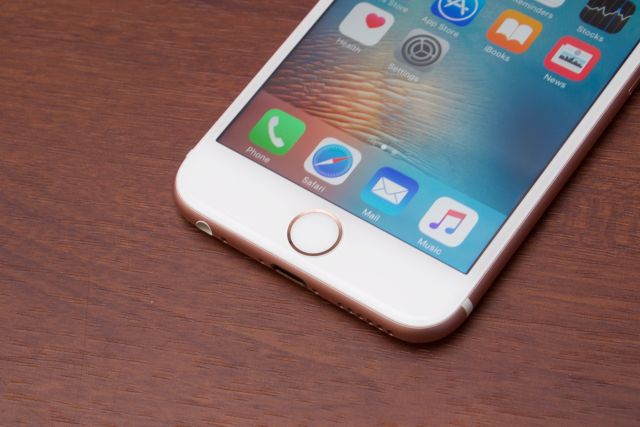
In recent weeks, you may have read about iPhone error code 53, a problem related to the fingerprint sensor that can keep iPhones with damaged or replaced TouchID buttons from installing updates or brick them entirely. Yesterday, a Seattle law firm filed a class-action lawsuit against Apple in the US District Court for the Northern District of California. It argues that preventing iPhones with damaged TouchID buttons from working normally otherwise is "abusive," that Apple did not adequately warn consumers of problems that could arise from a damaged or replaced TouchID sensor, and that "more than 62 million units" have been affected in the US as of November 2015.

Class-action status has yet to be granted by a judge; we'll continue to follow the story if it goes forward.

As much as it has inconvenienced some users, there is a technical reason why Error 53 exists. Every single TouchID sensor is paired to the phone that it ships with, a security measure Apple says is designed to "prevent a fraudulent TouchID sensor from being used." If every TouchID-iPhone pairing is unique, it makes it more difficult to use a bad fingerprint sensor to get into the phone or collect fingerprint or Apple Pay transaction information. Fine.

Read 4 remaining paragraphs | Comments

Qualcomm promises gigabit LTE speeds with its new Snapdragon X16 modem

And there are new low-end phone and wearable Snapdragon chips for later in 2016.

(credit: Qualcomm)

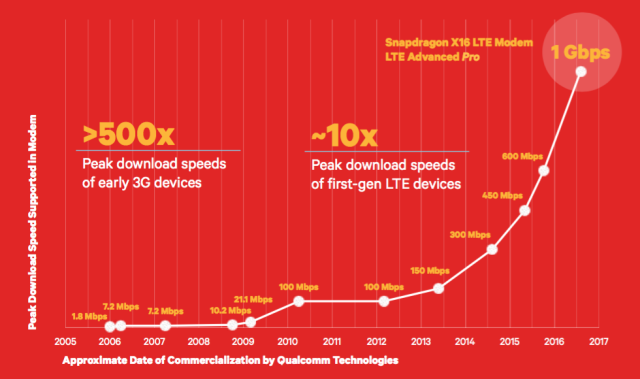
Qualcomm's lead in the mobile SoC and modem market is no longer as unassailable as it once was, but the company continues to be out in front when it comes to pushing new LTE technologies. Case in point: its new Snapdragon X16 modem, which together with the WTR5975 transceiver boasts Category 16 LTE download speeds of up to 1Gbps. Most of today's phones top out at 300Mbps or 450Mbps, and the upcoming Snapdragon 820 will only go up to 600Mbps. The X16 will also support upload speeds of up to 150Mbps, which is equal to or only slightly higher than upload rates supported by current LTE modems.

Most recent LTE speed increases have come via carrier aggregation, which essentially combines multiple chunks of spectrum across multiple antennas to improve bandwidth. Most of today's high-end phones use two or three chunks of 20MHz spectrum to achieve download speeds of up to 300 or 450Mbps, respectively. The Snapdragon X12 achieves its 600Mbps speeds by using three chunks of 20MHz spectrum plus a higher 256-QAM rather than 64-QAM, increasing the amount of data that can be transmitted over the same link from 75Mbps to 100Mbps (albeit at the cost of higher interference). The X16 uses a combination of technologies to hit its 1Gbps theoretical peak. From the press release:

The Snapdragon X16 LTE modem is designed to reach Gigabit Class LTE speeds using the same amount of spectrum as Category 9 LTE devices. By using carrier aggregation and 4x4 MIMO, the Snapdragon X16 LTE modem can receive 10 unique streams of data using only three 20 MHz carriers. Its support for 256-QAM boosts the peak throughput of each stream from ~75 Mbps to ~100 Mbps, with additional gains possible with modem data compression.

To increase the number of 20MHz chunks of spectrum available for use, the modem can also use licensed and unlicensed LTE spectrum simultaneously.

Read 7 remaining paragraphs | Comments

The ins and outs of planning and building your own home NAS

Come in knowing what you need and want, and you’ll have lots of flexibility.

Recently I began outgrowing my home file server. It's an older Mac Mini with 1TB of storage space, and though it has worked well enough for several years (and through more than one OS X Server review), it's not a great choice for someone who primarily uses it as a file server. It’s not as expandable as I'd like it to be, its Fusion Drive setup offers no redundancy, and as a general-purpose computer it is rendered unnecessary by the 27-inch 2012 iMac on my desk that's still happily humming away.

My first attempt to solve the problem was with a home NAS (or Network Attached Storage) unit, a basic model with just a couple of drive bays and the ability to run a handful of media and VPN server apps if necessary. I eventually settled on a Western Digital MyCloud EX2, a basic two-drive consumer NAS that I thought would satisfy my requirements. This model gave me 2TB of mirrored storage for just under $300. I actually really liked the box itself and WD’s browser-based management software, but the wimpy ARM processor was slowing down everything from file transfers to thumbnail loading, and that didn't fill me with confidence about its future-proofness.

At this point, I had a couple of options. I could spend more money on a better, faster NAS, one that wouldn't disappoint me with its performance. Or... I could go ahead and build my own, which would give me the flexibility to build basically whatever box I wanted. Inspired by our recent articles on building a living room gaming PC and a DIY router, I decided to take the more Ars option.

Read 49 remaining paragraphs | Comments

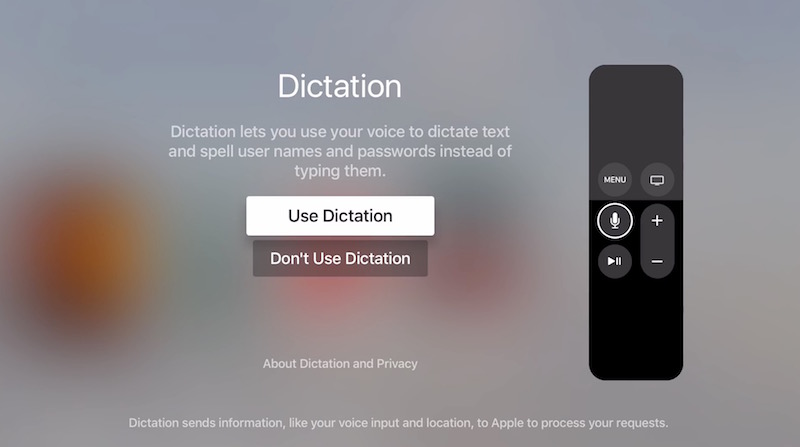
tvOS 9.2 beta includes voice dictation to replace annoying keyboard

Siri-driven feature will only work in countries where Siri is supported.

Enlarge (credit: MacRumors)

When we reviewed the new Apple TV and tvOS, one of our biggest complaints with the core experience was text entry with the Siri Remote. The scrolling and swiping was inaccurate and time-consuming—it's a big pain during initial setup and text-driven searches, and it is at best a step sideways from the old Apple TV software keyboard.

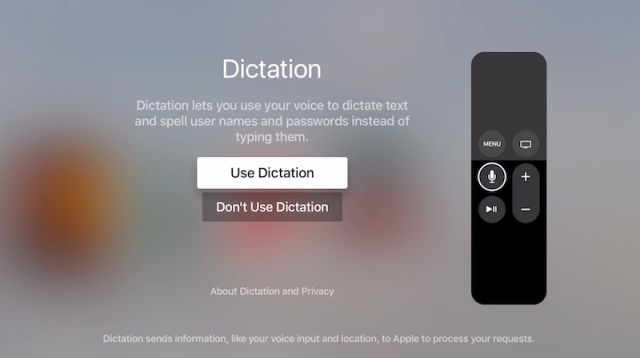
Apple released the third beta of tvOS 9.2 yesterday, and among its new features was a new text dictation feature that will let users spell out usernames and passwords letter by letter with their voices instead of the trackpad. The feature is driven by Siri, so it will only work in countries where Siri is available, but for those users it looks like a decent way to save time while typing things out.

This is all still subject to change—Apple has been known to test out new features in beta builds before removing them in the final version. That's pretty rare, though, and complaints about text entry were loud enough that it's not surprising to see Apple working on a fix. We'll be giving the final version of tvOS 9.2 a closer look when it's released, possibly at or soon after Apple's rumored product event in March. The update will also add Bluetooth keyboard support, folders for apps, and an updated multitasking switcher.

Read on Ars Technica | Comments