Report: Apple is approving apps more quickly to increase Services revenue

Approval that took 8.8 days a year ago now takes around 1.95 days.

Developers who want to sell applications in any of Apple's App Stores first need to submit their software to Apple for review, a process in which actual humans examine apps to ensure they comply with Apple's guidelines. One of the problems with this method is that it takes time for apps to move through the opaque review process, meaning users can potentially be stuck with bugs for a few days if something goes wrong with an update, even if the developer submits a new build to Apple as soon as the bug is discovered.

Lately, though, that wait time has decreased. According to user-submitted data at appreviewtimes.com, the average review time for iOS apps has decreased from around a week to about two days since this time last year. The reason, according to a report from Bloomberg, is revenue: Apple allegedly hopes to increase services revenue by reviewing apps more quickly, allowing developers to make changes and introduce features more quickly while "building developer loyalty."

Apple's iPhone sales have been soft so far this year (and are expected to stay that way next quarter, according to the company's own projections), but the Services division has shown healthy year-over-year growth during the same period. The Services division accounts for everything from iTunes music and video sales to Apple Music, iCloud subscriptions, software sales, and App Store revenue, and those numbers should all continue to improve as Apple sells more devices to more people.

Apple's app review processes occasionally cause problems, and rules aren't always enforced consistently. Apps can be approved only to be pulled days later or pulled and re-posted in response to user outcry or after minor changes have been made. This is especially evident after new versions of iOS launch, as developers discover the ways in which Apple wants them to use new APIs and features. Shorter app review times could at least reduce the amount of time that these apps take to return to the store in the cases where they are allowed to return.
Pokemon Sun and Moon arrive November 18 with new monsters and a big 3D world

Games push the series’ graphical boundaries despite debuting on the 3DS.

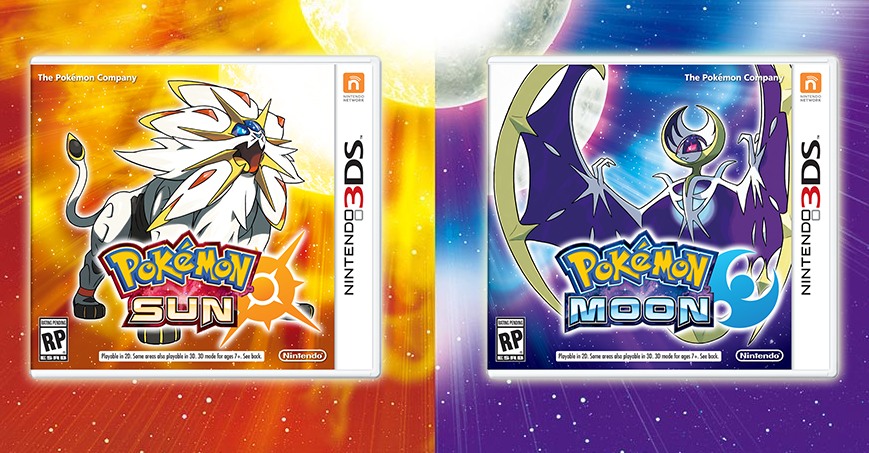
In a brief trailer released this morning, Nintendo gave eager Pokémon masters some important details on the forthcoming Pokémon Sun and Pokémon Moon: the games will launch on November 18th; as usual, each game will include a new as-yet-unnamed legendary mascot and new grass-, fire-, and water-type starter Pokémon.

The starters include Popplio, a water-type seal; Litten, a fire-type disinterested-looking cat (so, a cat); and Rowlet, a grass- and flying-type owl with an adorable little leafy bow tie (clearly the best of the three). Pokémon Sun's story will presumably revolve around the big sunny lion on the cover, where Moon will feature a big crescent-shaped bat.

The trailer also showed off snippets of the game's graphics, which are similar to those used in X and Y (they're launching on the same system, after all). The main Pokémon RPGs have always been conservative in the graphics department—Pokémon X and Y were the first in the franchise's then-17-year history to use 3D models for all people and Pokémon both inside and outside of battle. Sun and Moon's setting, the Hawaii-esque Alola region, appears to use larger maps with a greater sense of scale than in past games, and the region is shown off using more diverse and dynamic camera angles. The game's worlds have all been rendered in 3D since Pokémon Diamond and Pearl hit the DS back in 2006, but even X and Y mostly stuck to the top-down camera view the series has used since Red and Blue on the original Game Boy.

Read 1 remaining paragraphs | Comments

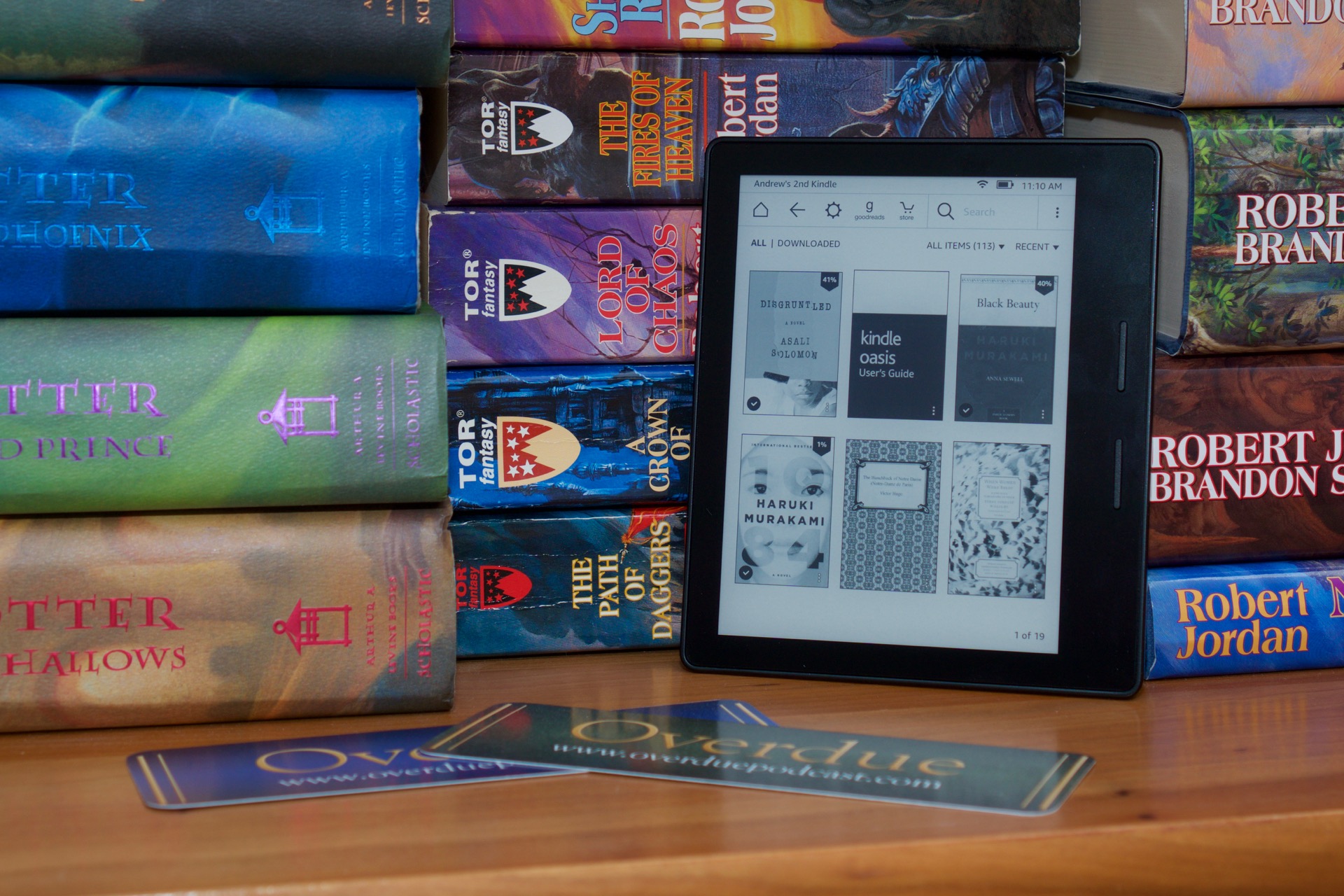
Amazon’s beautiful, functional, impractical Kindle Oasis reviewed

$290 Oasis doesn’t do anything Paperwhite doesn’t do, it just does it better.

Amazon’s Kindle has gone through roughly two different design phases. The first began with the original Kindle in 2007 and ended, roughly, with the Kindle DX and Kindle Keyboard in 2010 and 2011. The second phase began with the fourth-generation Kindle and the Kindle Touch in 2011, which got rid of the keyboard and remodeled the devices in the vein of smartphones and tablets.

Amazon has built a bunch of features on top of the foundation laid by the Kindle Touch, but everything up to and including last year’s $200 Kindle Voyage has been a riff on the same basic idea. The Kindle Paperwhite added a backlight, and the Voyage was the first with a super-sharp 300 PPI screen (which the latest Paperwhite later inherited). So what comes next?

The Kindle Oasis is a major departure. It’s an asymmetrical design that’s dramatically thinner and lighter than the Touch design, but with one wider, thicker edge that contains the battery and doubles as a handle. The device itself sacrifices battery life, but it comes with a leather battery case that effectively doubles your reading time.

Read 17 remaining paragraphs | Comments

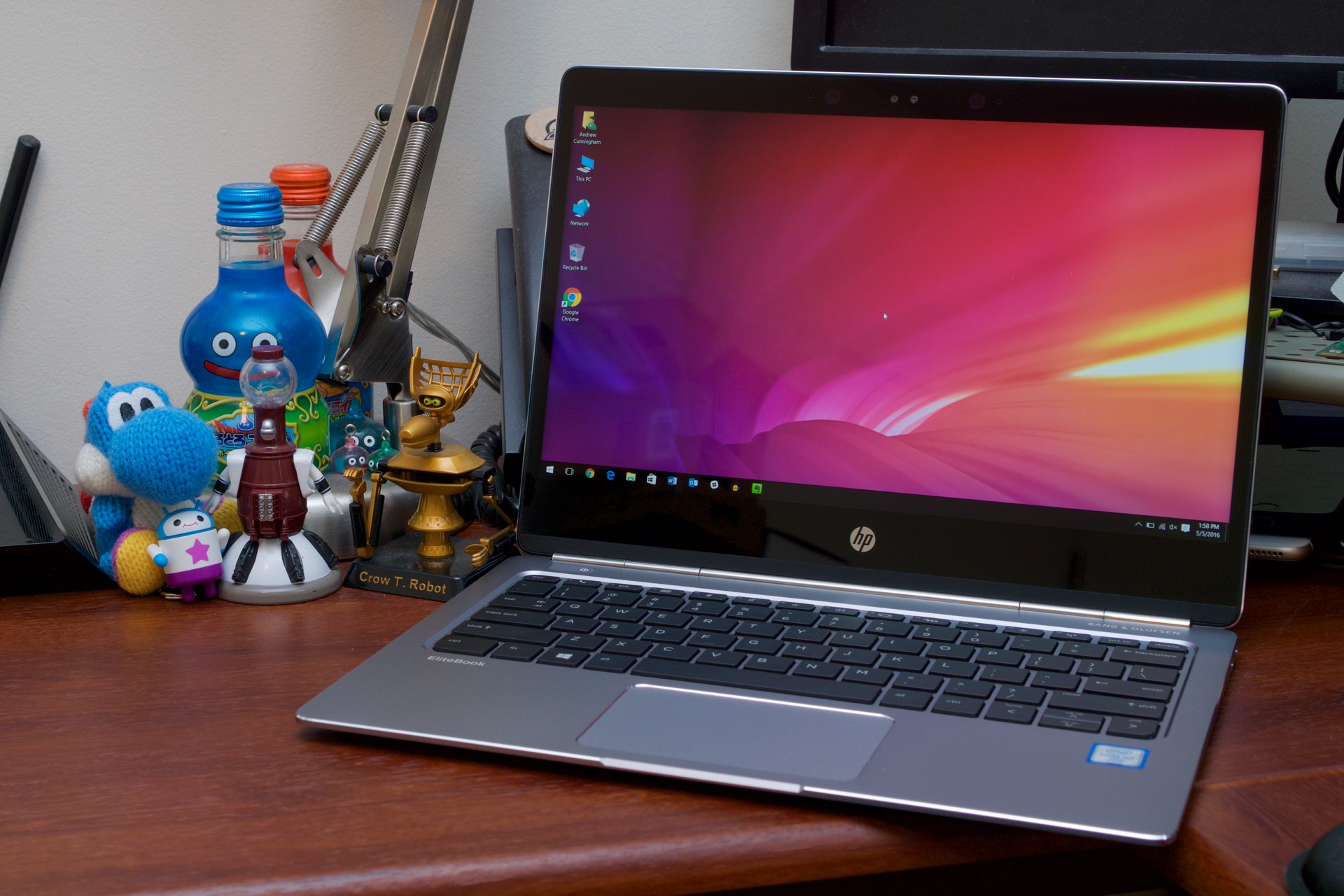
Review: HP’s EliteBook Folio G1 is the MacBook as it could’ve been

Review: Two Thunderbolt 3 ports and a great keyboard and trackpad help it excel.

Apple’s laptop designs used to feel like they were a few years ahead of the curve. When the company introduced things like the aluminum unibody MacBook Pros or both the first- and second-generation MacBook Air designs and even the 15- and 13-inch Retina MacBook Pros, they were impressive because none of the PC makers were doing anything quite like them.

That’s not so much the case in 2016, in part because designs like the MacBook Air and Pro have stood still as the PC OEMs have dramatically improved their own mid-to-high-end offerings. You no longer need to buy a Mac to get good build quality, a nice-looking display, respectable battery life, or a non-terrible trackpad. And thanks in part to Windows 10, PCs are offering biometric authentication options and voice assistants that OS X and the Mac don’t have, even if the Mac is still much better at sharing data and interacting with the iPhone.

Apple’s latest laptop design is the MacBook, which is an impressively thin-and-light laptop that makes some key compromises in its pursuit of said thin-and-lightness. HP’s business-focused EliteBook Folio G1 isn’t the first MacBook-alike from the PC OEMs, but it might be the Windows laptop that best marries the virtues of the MacBook to the extra expandability and flexibility of a traditional Ultrabook. It’s on the expensive side, but it’s also the most impressive high-end laptop this side of Dell’s XPS 13.

Read 27 remaining paragraphs | Comments

Apple hires Google X founder and former Nest technology VP for health projects

Yoky Matsuoka has worked on new and experimental products

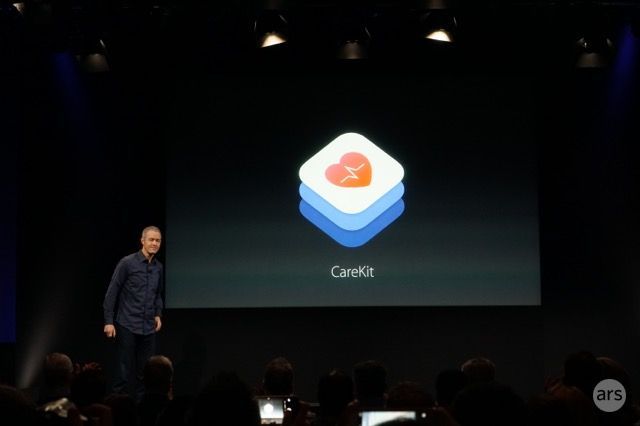
Apple's Jeff Williams announces CareKit in March. (credit: Andrew Cunningham)

Apple has hired Yoky Matsuoka, a cofounder of Google's experimental Google X division and former vice president of Technology at Nest, to work on some of its health initiatives. Fortune reports that Matsuoka is working under Chief Operating Officer Jeff Williams on the company's health initiatives, which include HealthKit, ResearchKit, and the recently announced CareKit.

Matsuoka has worked on multiple tech and health initiatives at several big-name companies. After leaving Google X for Nest, Matsuoka helped develop the algorithm for the company's flagship thermostat; her departure from Nest about a year after its 2014 acquisition by Google is one among many. For about a year after leaving the search giant, she worked at Quanttus, a troubled startup working on blood pressure monitoring technology. And shortly before being diagnosed with an apparently cured illness in May, she was headed to Twitter to take a VP position, though this ultimately didn't end up happening.

HealthKit and the Health app were introduced as part of iOS 8 in 2014, and are intended to store and share health tracking information collected from HealthKit-compatible apps with other HealthKit apps and with healthcare professionals. ResearchKit, announced and launched in early 2015, is meant to help researchers gain in-depth data about participants over a longer period of time than would normally be possible. And CareKit, unveiled by Apple in March of this year and officially launched just a few days ago, is meant to help patients recover from major procedures and manage chronic illnesses.

Read on Ars Technica | Comments

Report: India won’t let Apple sell refurbished iPhones in the country

Apple is competing with multiple established competitors with dirt-cheap phones.

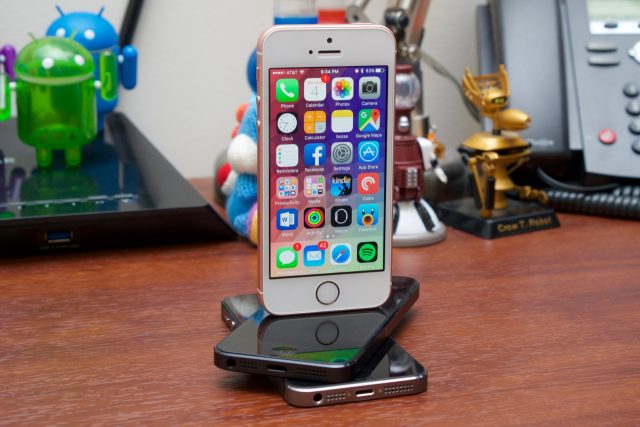
Enlarge / The iPhone SE is Apple's best cheap iPhone ever, but in India even it may be too expensive. (credit: Andrew Cunningham)

The Indian government won't allow Apple to sell refurbished iPhones in the country, according to a report from Bloomberg. Apple is currently working to open retail stores in India to expand its market presence, and selling low-cost refurbished iPhones is another part of that strategy. Apple's opponents claim that allowing the company to sell used phones in the country could undermine the successful government-sponsored Make in India program, which encourages companies to manufacture their products in the country.

As Apple's iPhone growth slows, the company will be looking to new markets to fuel future growth—the strategy certainly worked in China, where Apple's sales grew by leaps and bounds in 2014 and 2015 before leveling off and declining in the first two quarters of 2016.

"India will be the most populous country in the world in 2022," Apple CEO Tim Cook told CNBC's Jim Cramer in an interview yesterday. "And this year, the first year, LTE begins to roll out. And so many of your viewers here in the United States, they're used to using LTE and streaming video. And hopefully they're getting a good experience there. In India you can't do that long—there is no LTE. And so that's changing. Huge market potential."

Read 1 remaining paragraphs | Comments

The Wheel of Time turns… into a “cutting-edge TV series”

“Look for the official announcement coming soon from a major studio.”

Cover art for the first Wheel of Time novel. (credit: Tor Books)

After a rough false start, it looks like Robert Jordan's fantasy epic The Wheel of Time will be coming to television after all. The news was delivered on the series' Google+ page by Jordan's widow, Harriet McDougal, who owns the copyright to the novels and has controlled the franchise's direction since Jordan's death in 2007.

We have few details about the project at this point, aside from assurances that a "major studio" will have more to share soon:

Wanted to share with you exciting news about The Wheel of Time. Legal issues have been resolved. The Wheel of Time will become a cutting edge TV series! I couldn’t be more pleased. Look for the official announcement coming soon from a major studio —Harriet

Optioning The Wheel of Time makes sense, given the appetite for TV adaptations of dense, sprawling fantasy series. HBO's Game of Thrones and Starz's Outlander have both been successful, and Wheel of Time is a firmly established property that has the added benefit of actually being a finished story already.

Read 1 remaining paragraphs | Comments

Hands-on: HP’s Chromebook 13 isn’t cheap, but it’s high-quality hardware

There may not be a big audience for $500+ Chromebooks, but it’ll like this one.

The low end of the Chromebook market is well-served, partly because Chromebooks do best in the cash-strapped education market and because the simplicity (and limitations) of ChromeOS are a better fit for budget hardware. For people who want something high-end, there’s always the $999 Chromebook Pixel, but that leaves a big space in between for people who want to make something that looks and feels nice but doesn’t cost a ton.

Certainly, there have been efforts. The Toshiba Chromebook 2 had a gorgeous 1080p IPS screen but a relatively weak Intel CPU. Dell’s Chromebook 13 is solidly mid-range, though the best features (including a 1080p screen, faster chips, and more RAM) are reserved for the higher-end models. And now there’s the HP Chromebook 13, which is merely a decent Chromebook at its $499 starting price but a full-on Chromebook Pixel competitor if you’re willing to pay more.

At $499, you get a 13.3-inch 1080p screen, a Skylake-based 1.5GHz Pentium 4405Y (which despite its name is a relative to the low-power Core M), 4GB of 1866MHz DDR3 RAM, and a 1080p screen, which isn’t bad for the price. A Core M-derived Pentium is still going to deliver stronger performance (particularly in the single-threaded CPU and the graphics departments) than the Atom-derived Celerons and Pentiums that ship in many low-end Chromebooks.

Read 9 remaining paragraphs | Comments

Google and HP make a Chromebook Pixel replacement for half the price

3200×1800 IPS screen, up to 16GB of RAM, and Skylake Core M CPUs all sound good.

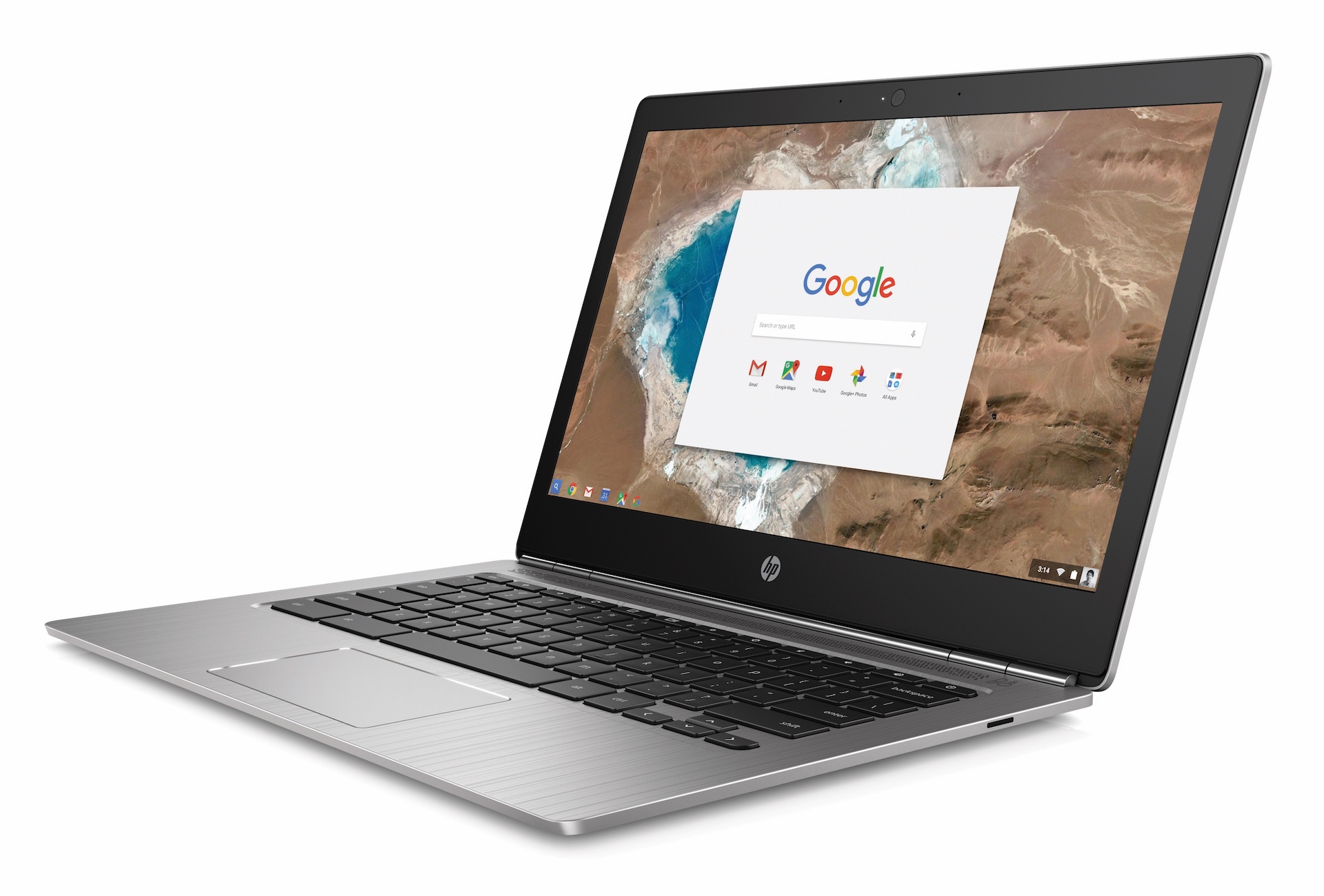
People who like Chrome OS but don't like the cheap low-end hardware it normally comes on or the expensive, aging Chromebook Pixel take note: HP and Google have announced a new 13-inch Chromebook that includes many of the Pixel's best features, but does it for a starting price of $499. That's half the $999 starting price of the Pixel, though it's still about twice as expensive as the cheapest Chromebooks.

The Chromebook 13's specs definitely deliver, though you'll need to drop more money to get the really impressive specs. It's got an aluminum enclosure with a soft-touch material on the bottom, and its rounded hinge is more than a little evocative of the Pixel. Higher-end models have a 3200×1800 IPS display, even higher than the 2560×1700 of the Pixel, while lower-end models get a still-reasonable 1080p panel. It has two USB Type-C ports for charging, data, and display output, which also makes it compatible with HP's Elite USB-C Docking Station (PDF), and it includes one standard USB Type-A port for compatibility with existing accessories.

Base models use 4GB of RAM, though 8GB and 16GB configurations are also available, and all models include 32GB of internal eMMC storage and an SD card reader. It also uses a range of Skylake Core M processors, from the Pentium 4405Y at the low end to the m7-6Y75 at the high end. All of these chips ought to provide more performance than the cheaper Atom-derived Celeron and Pentium chips in cheaper Chromebooks but should still allow for a fanless design while maintaining decent performance. It's 0.51 inches (12.9mm) thick, comparable to other Core M laptops, and it weighs 2.89 pounds (1.29 kg). 802.11ac Wi-Fi and Bluetooth 4.2 round out the wireless capabilities, and HP promises 11.5 hours of battery life while browsing.

Read 1 remaining paragraphs | Comments

Slower iPhone, iPad, and Mac sales drive Apple’s revenue down in Q2 2016

Pretty much anything would look bad compared to Q2 of 2015, though.

Apple's two biggest moneymakers, the iPhone and iPad, are down year-over-year. (credit: Andrew Cunningham)

Apple has just released its earnings report for the second quarter of fiscal 2016, which runs from the beginning of January to the end of March. As CEO Tim Cook and CFO Luca Maestri warned in last quarter's earnings call, iPhone sales were down year-over-year for the first time since the product's launch in 2007. Since the iPhone accounts for around two-thirds of Apple's revenue, this means that Apple is also reporting its first year-over-year quarterly revenue decline since 2003, something CEO Tim Cook referred to as a "pause in [Apple's] growth." iPad and Mac sales are also down, though the Services and "Other products" categories ticked upward.

Apple made $10.5 billion in profit and $58 billion in revenue, compared to $13.6 billion in profit and $58 billion in revenue in Q1 of 2015. Its gross margin was 39.4 percent. These results beat the low end of Apple's guidance for the quarter, which predicted revenue between $50 billion and $53 billion and a profit margin between 39 and 40 percent.

The company predicts that the year-over-year quarterly decline will continue next year—Apple expects it will make between $41 and $43 billion in revenue in the third quarter of fiscal 2016 with profit margins between 37.5 and 38 percent. This is well below the $49.6 billion in revenue that Apple made in Q3 of 2015.

Read 7 remaining paragraphs | Comments