With iPhone 7, Apple breaks tradition, won’t say how many sold at launch

Company officially cites larger distribution network and supply constraints.

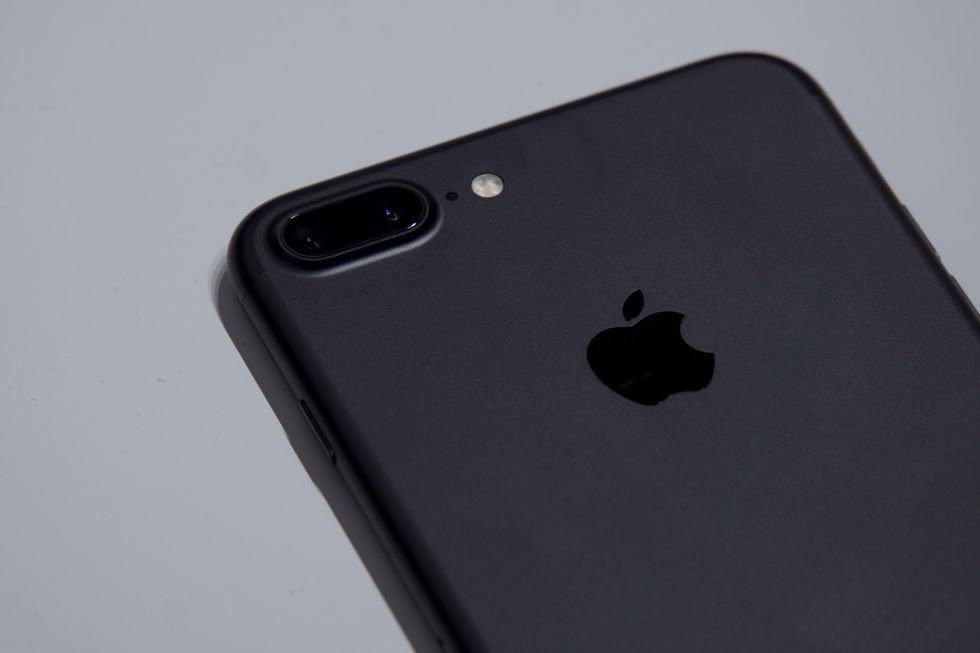
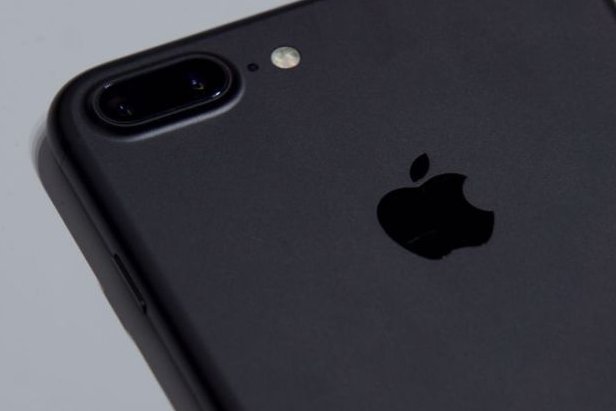
Enlarge / The iPhone 7 Plus and its dual-lens camera. (credit: Andrew Cunningham)

Every year when it launches a new iPhone, Apple has trumpeted the hardware's first-weekend sales numbers. And every year, those numbers have climbed, painting a picture of an increasingly successful device. This year, Apple will break with that tradition, according to a Reuters report.

Apple says that it won't disclose sales because its distribution network is expanding, and the total number of phones sold will reflect supply rather than demand. "We know before taking the first customer pre-order that we will sell out of iPhone 7,” says Apple, "...and we have decided that [first-weekend sales are] no longer a representative metric for our investors and customers.”

The move comes as iPhone sales have begun to fall year-over-year, a reflection of just how many iPhone 6 and 6 Pluses Apple was able to sell in 2015. The 6S was able to outsell the 6 in part because of a longer pre-order period and availability in China, which had never been on the list of round-one launch countries before. It's probably not a coincidence that Apple won't announce first-weekend sales for the first year in which those numbers might actually be lower than the year before.

Read on Ars Technica | Comments
The $10,000 golden Apple Watch is no more

There’s still an Apple Watch Edition, it’s just less expensive and less golden.

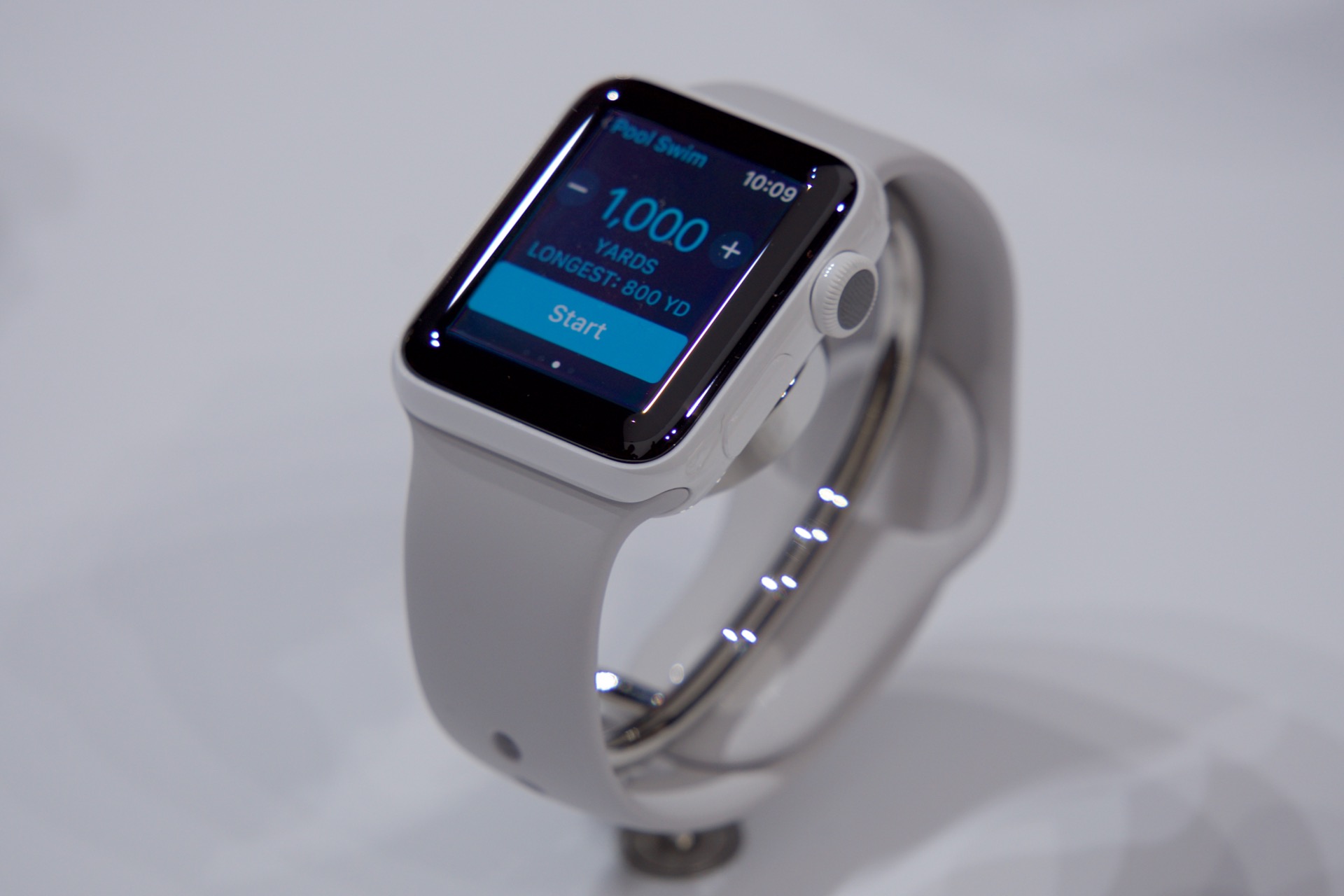
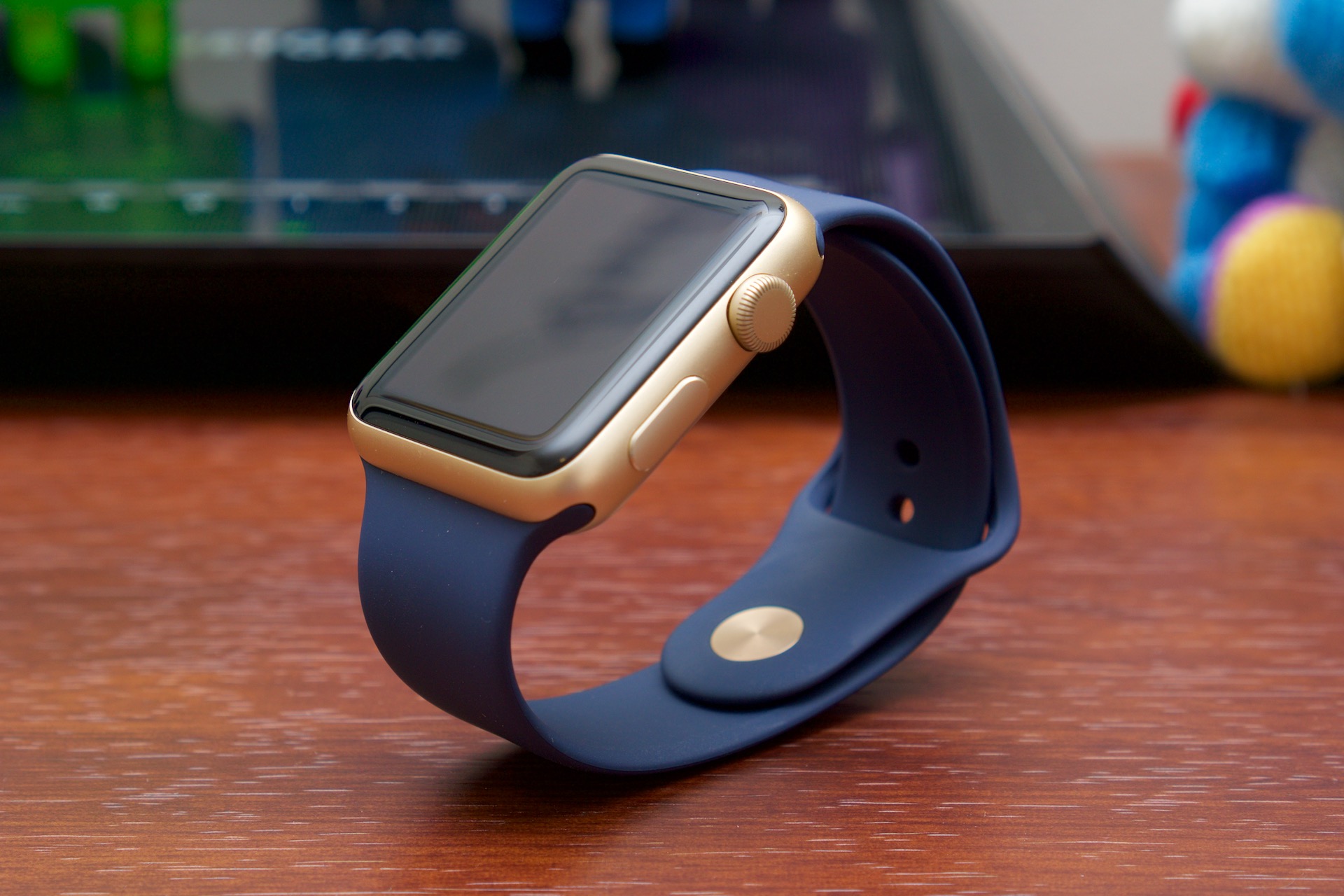
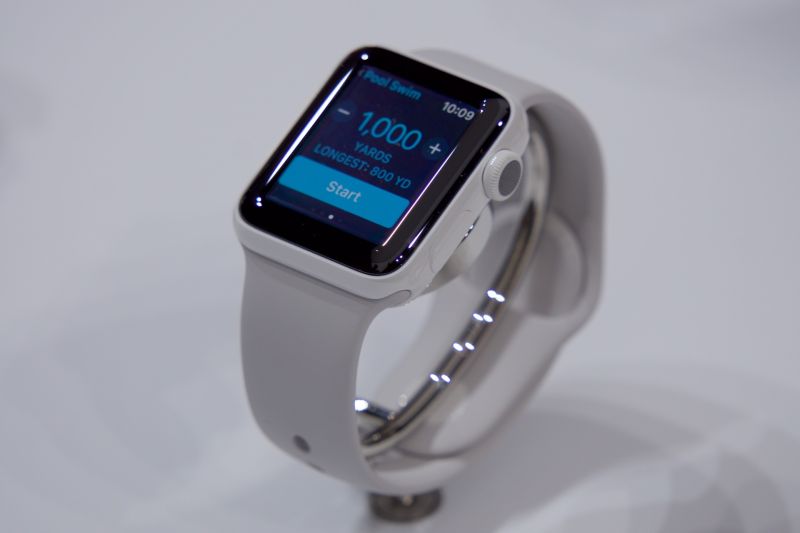
Enlarge / The Apple Watch Edition is now ceramic, and also like $9,000 cheaper. (credit: Andrew Cunningham)

When Apple announced its Watch Series 2 earlier today, it said that the watch would come in a new ceramic white finish to complement the returning aluminum and stainless steel finishes. Completely absent was any mention of the Apple Watch Edition branding, which Apple used last year to launch a pair of $10,000-and-up Apple Watches that worked the same way as the cheap ones but were made out of actual gold instead of workaday, plebeian metals.

It turns out that the new ceramic watch is the Apple Watch Edition, and all mentions of the gold versions have been scrubbed from Apple's site. The company began downplaying the gold watches earlier this year, removing them from the main Apple Watch product page circa the iPhone SE launch.

The "reimagined" ceramic Apple Watch Edition starts at $1,249, roughly twice the cost of a stainless steel Series 2 and three times the cost of an aluminum Series 2 (the Sport branding also seems to have disappeared from the watches themselves, though it still applies to some of the bands). The Edition is still more expensive than the other models and is still intended as a sort of status symbol, but is no longer the hulking monument to conspicuous consumption that it once was. And on Apple's end, giving buyers an upmarket option they can actually afford is probably a good way to drive up the average selling price. Everyone wins.

Read on Ars Technica | Comments
Hands on with the iPhone 7: A brief peek at the wireless future

The headphone jack conversation overshadows some really useful changes.

The rumors got a lot right about the iPhone 7 and 7 Plus. Its design isn't too far off from the 6S and 6S Plus, it has an immovable Home button, the Plus has a dual-camera setup to simulate optical zoom, and (crucially) that headphone jack is gone.

But aside from that sticking point, the new iPhones offer a lot of the solid technological improvements that we've come to expect. The battery life is a little better. The camera is a little better. It's faster by a significant margin. We were able to take a look at some of these things in our brief hands-on time with the phone today. Some details will have to wait for the full review, but until then, here's everything you can find out about the phone after holding it for 15 or 20 minutes.

Key comparisons to the iPhone 6S

Apple didn’t talk about things like screen size and resolution or measurements and weight onstage today and I’ve received a lot of questions about it, so let’s lay those facts out up front.

Read 24 remaining paragraphs | Comments

Siri, Apple Watch unlocking, and more comes with macOS Sierra on Sept 20th

Sierra will be a free upgrade for all Macs made after 2009 or 2010.

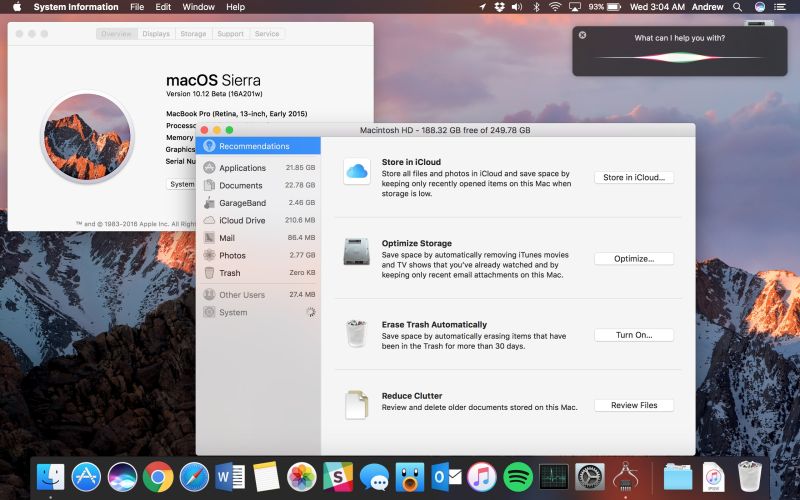
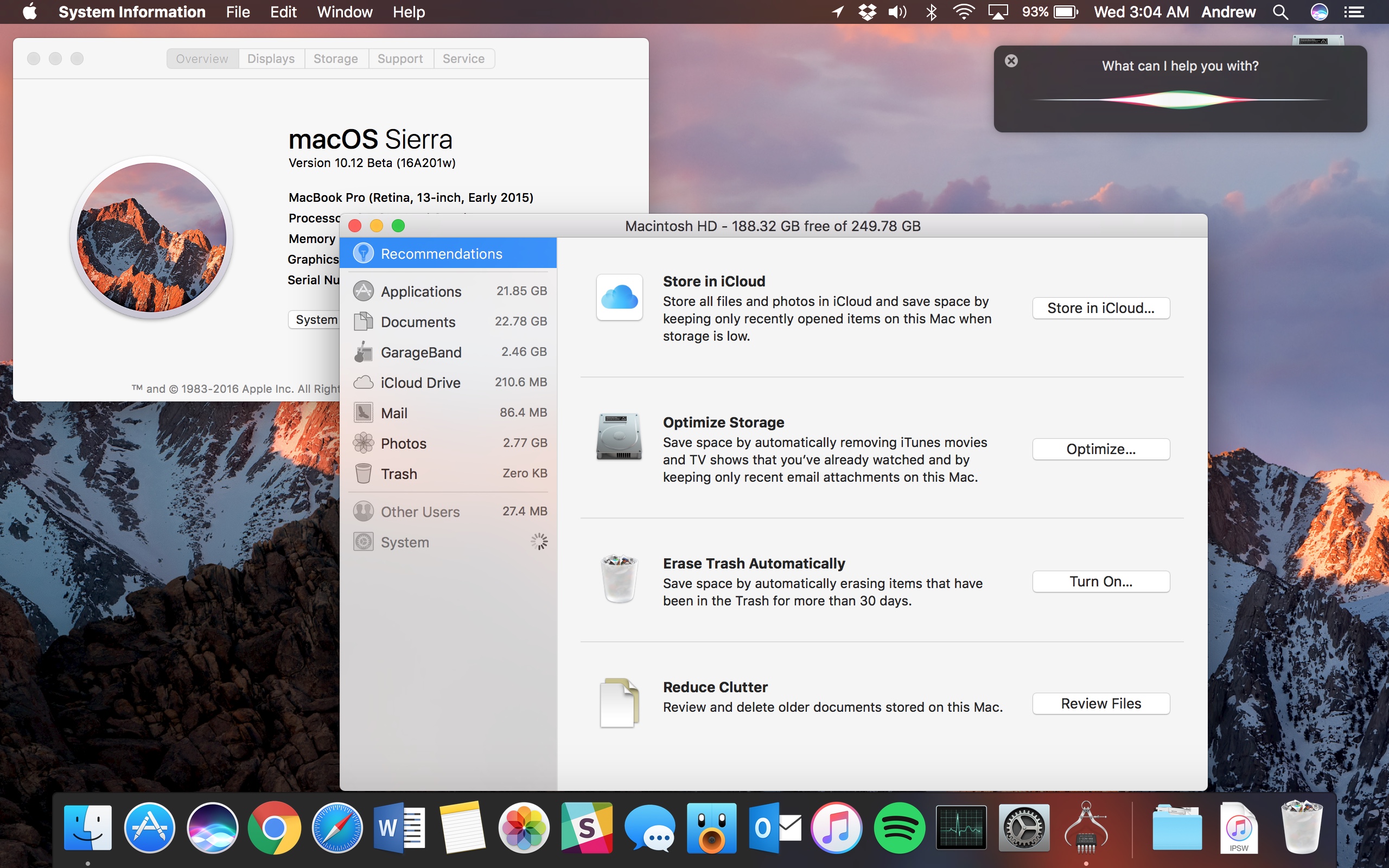
Enlarge / The macOS Sierra beta running on a MacBook Pro. (credit: Andrew Cunningham)

SAN FRANCISCO—Apple will release the final version of macOS 10.12 Sierra to the public on September 20th. The company made the announcement on its web site during its September product event today.

Aside from being called "macOS" now, Sierra brings a handful of big new features and a longer list of minor tweaks. We covered most of that ground in our preview of the developer build of the software (and we'll cover it all again in more depth in our full review), but the short list includes Siri, proximity-based Apple Watch unlocking, Apple Pay on the web, and more.

Sierra runs on many current Macs, but for the first time since OS X 10.8 Mountain Lion launched in 2012 Apple is leaving some older hardware behind. The affected hardware is mostly from 2007, 2008, and 2009, so if you've bought something since the turn of the decade you should generally be safe. The full supported list is below:

Read 3 remaining paragraphs | Comments

WatchOS 3 will try to speed up your Apple Watch on September 13

New release makes some big changes to WatchOS 2.

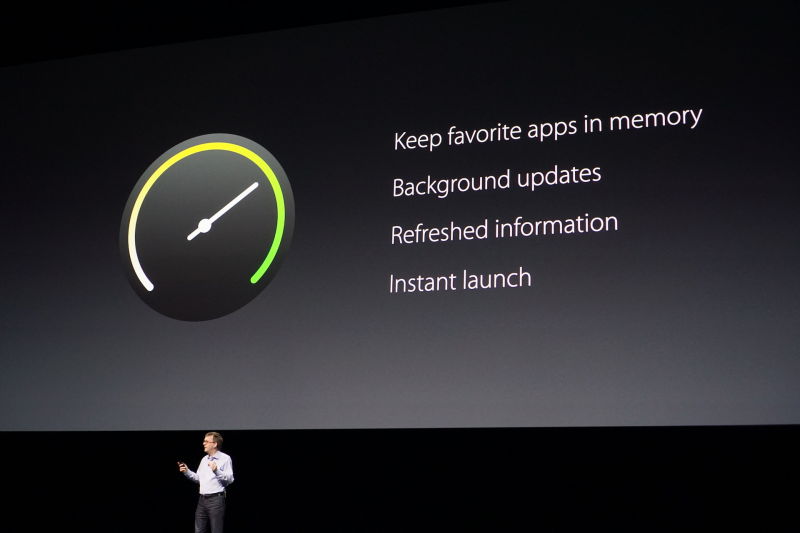
Enlarge / Apple outlined the core benefits of WatchOS 3 at WWDC in June. (credit: Andrew Cunningham)

SAN FRANCISCO—Apple will release WatchOS 3 to all current Apple Watch users on September 13. The company announced the official release date as part of its September product event.

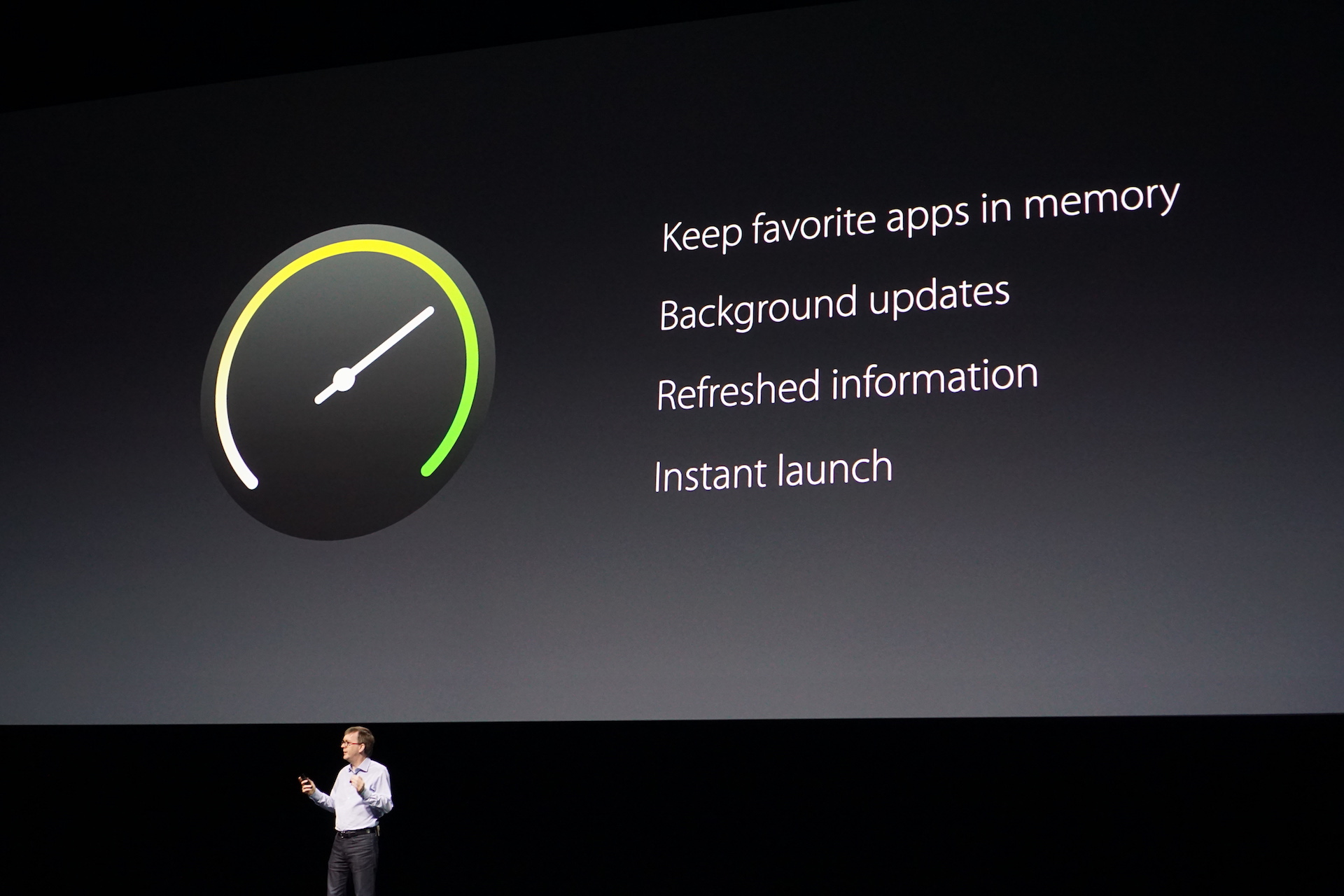
The update builds on the foundation laid in WatchOS 1 and 2 but also makes some major changes to the way the Apple Watch works. Apple has worked to make it easier to swipe between watch faces, has introduced an iOS-esque Control Center, and has introduced a “dock” of up to 10 apps that are loaded in memory and updated behind-the-scenes to make launching and using apps quicker. Docked apps have also killed “Glances,” which were similarly intended to make watch interactions faster but mostly failed because of communication and processing lag.

WatchOS 3 is intended to make the most of first-generation Apple Watch hardware, which Apple had optimized for battery life at the expense of some performance. Before you can update to WatchOS 3, you’ll also need to update your tethered iPhone to iOS 10.

Read on Ars Technica | Comments

iOS 10 launches September 13 with iMessage apps, Siri API, and more

Update coming to iPhone 5 and newer, iPad 4 and newer, sixth-gen iPod Touch.

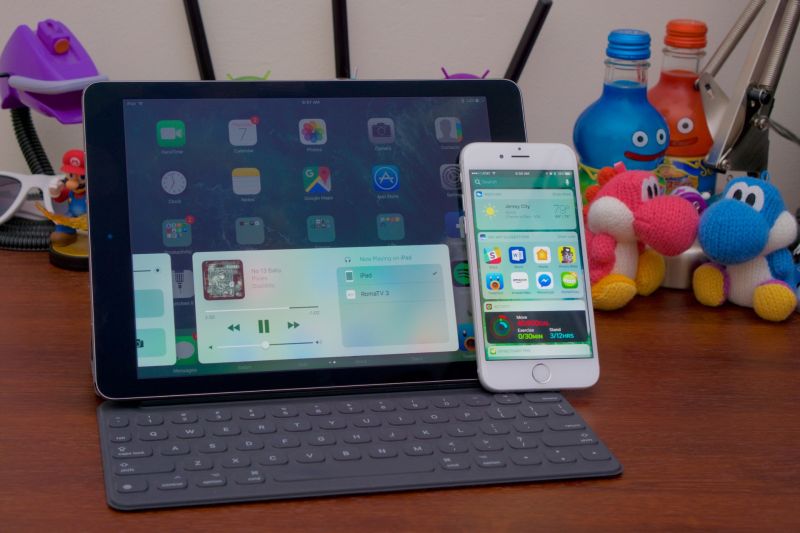
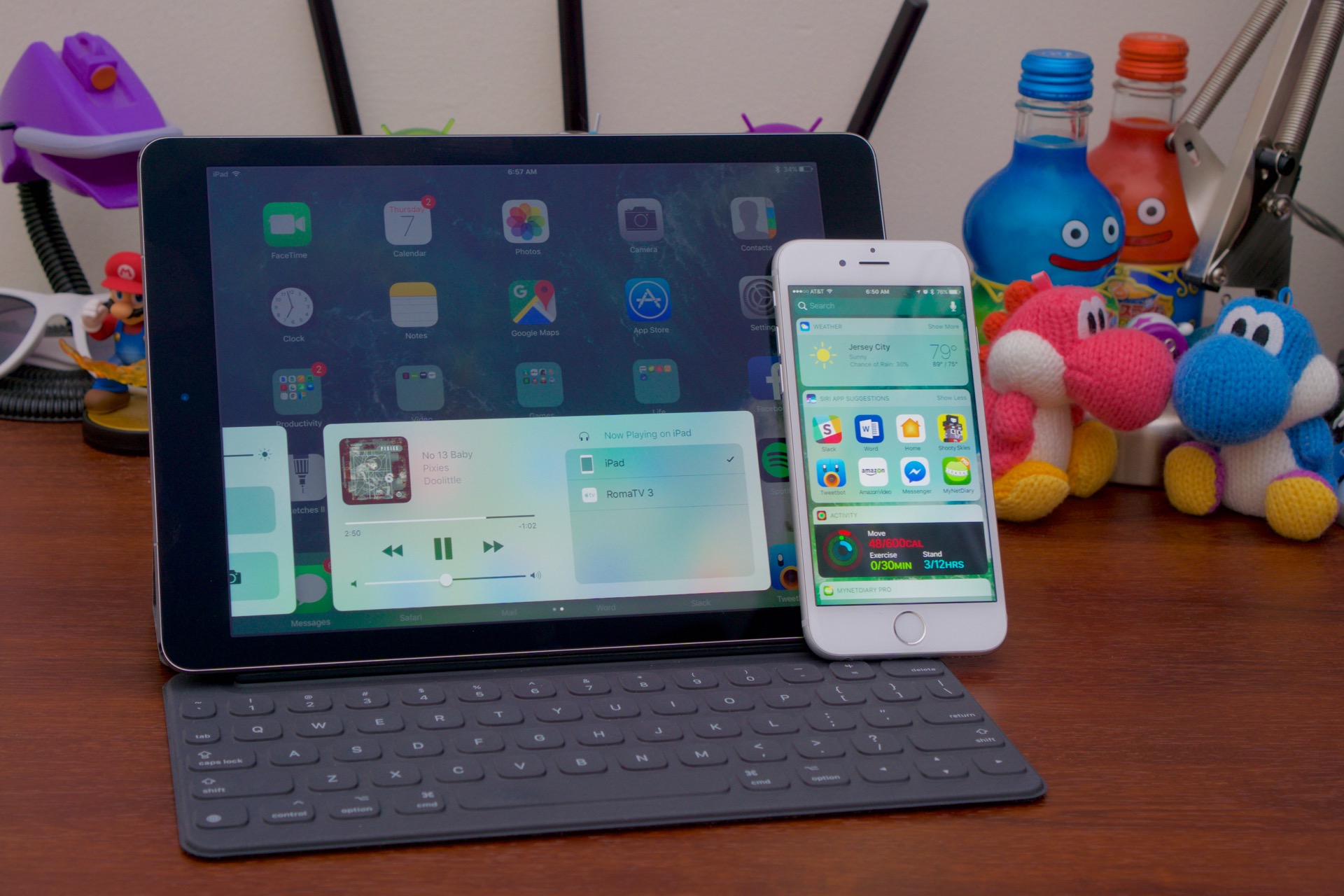
Enlarge / The iOS 10 beta running on an iPhone 6S and iPad Pro. (credit: Andrew Cunningham)

SAN FRANCISCO—Apple will release the final version of iOS 10 to the public on September 13. The company made the announcement as part of its September 7 product event.

iOS 10 makes wide-ranging changes to the way the operating system looks and works—the lock screen, notifications, the Today View, and the Control Center have all been substantially rejiggered. CallKit gives VoIP app makers the ability to look and work just like Apple's built-in Phone and FaceTime apps, while SiriKit gives developers some (admittedly limited) hooks into Apple's virtual assistant. And the Messages app has gotten a big overhaul—not only is it getting its own mini-App Store, but it has also been remade in the mold of richer and more "fun" platforms like Facebook Messenger and WhatsApp.

The update drops support for a handful of older iPhone hardware, mostly from 2011 and 2012. The iPhone 4S, iPad 2, iPad Mini, and fifth-generation iPod Touch will all be left behind. The full support list is below:

Read 2 remaining paragraphs | Comments

Apple reveals new “swim-proof” Apple Watch Series 2

Starting at $369, the second-generation watch will be available on September 16.

Enlarge

SAN FRANCISCO—About a year and a half after releasing the first model, Apple has announced that it will release a second-generation model: the Apple Watch Series 2. The biggest new feature for the watch is its swim-proof design, which is water-resistant up to 50 meters.

Apple explained the hardest part of making a device like the Apple Watch water-resistant is the speaker, since it's just another entryway for water to get into the watch. The company designed the Apple Watch Series 2's speaker to eject water that comes into it, so it won't stay inside the watch and potentially damage the internals. In addition to specially designing the water-rejecting speaker, Apple also developed two custom swimming workouts for those who swim regularly as part of an exercise routine. It's quite hard to estimate calorie burn for any exercise, let alone swimming, but Apple seems confident that their research and testing of swimming workouts has helped it develop an algorithm that can accurately measure caloric burn from swimming strokes.

Aside from the swim-proof feature, the most significant internal upgrades are the “S2,” the catch-all term for everything from the watch’s CPU, GPU, and RAM to its wireless, storage, and motion controllers. Apple says the S2 should be 50 percent faster than the Apple S1 in the first Apple Watch and the GPU should be two times faster than the previous, which should hopefully cut down on the amount of time it can take for the watch to respond to input. The Apple Watch Series 2's display is also getting a bump in brightness and will be two times brighter than before, which Apple says will make a big difference when viewing it in sunlight.

Read 8 remaining paragraphs | Comments

Apple introduces iPhone 7 and iPhone 7 +

New high-end phones replace the iPhone 6 and 6 Plus.

Enlarge (credit: Apple)

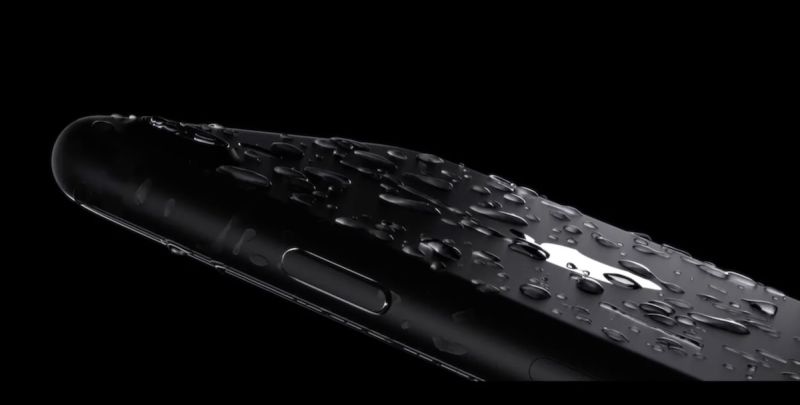
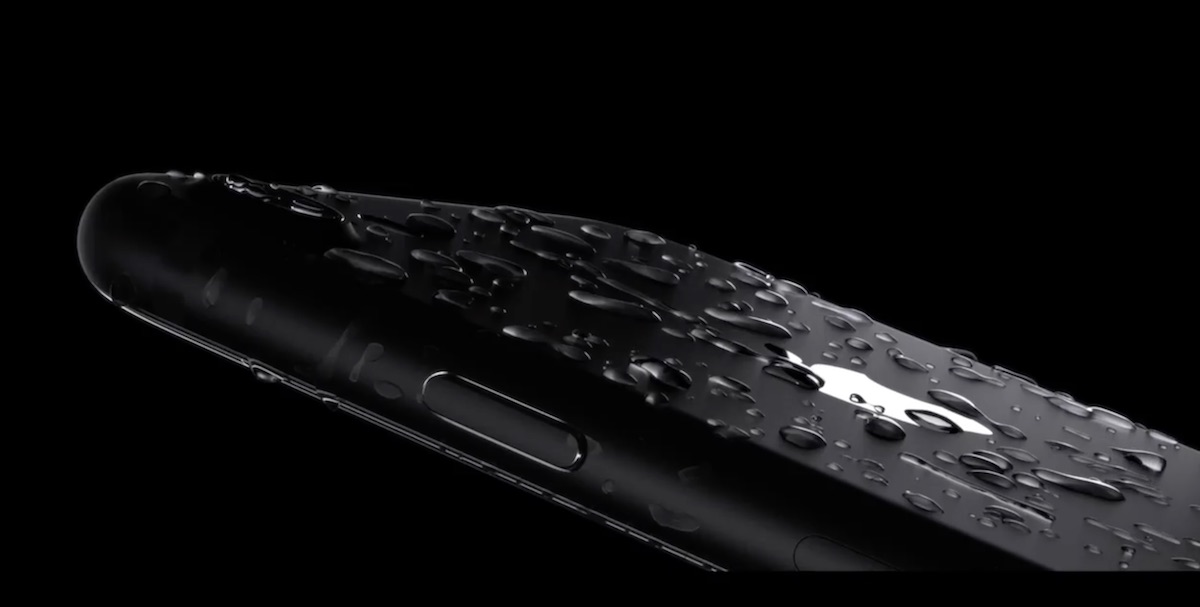
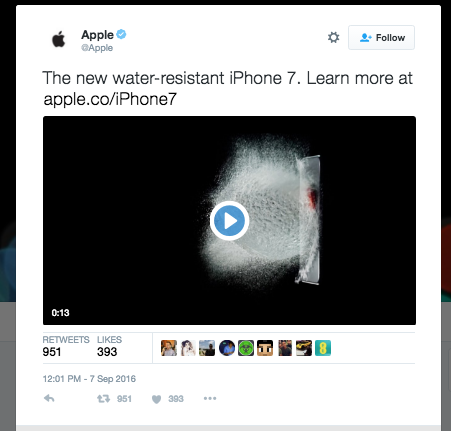
SAN FRANCISCO—As expected, Apple has taken the wraps off of its next-generation iPhones at today's September product event. Apple confirmed the devices on Twitter with a post about the waterproof nature of the iPhone 7 and iPhone 7 Plus. The post came down quickly as today's event rolled on, but it is screenshotted below.

Whoops, this tweet seemed to mysteriously disappear after today's Apple event got rolling.

Whoops, this tweet seemed to mysteriously disappear after today's Apple event got rolling. (credit: https://twitter.com/Apple/status/773566883366711296)

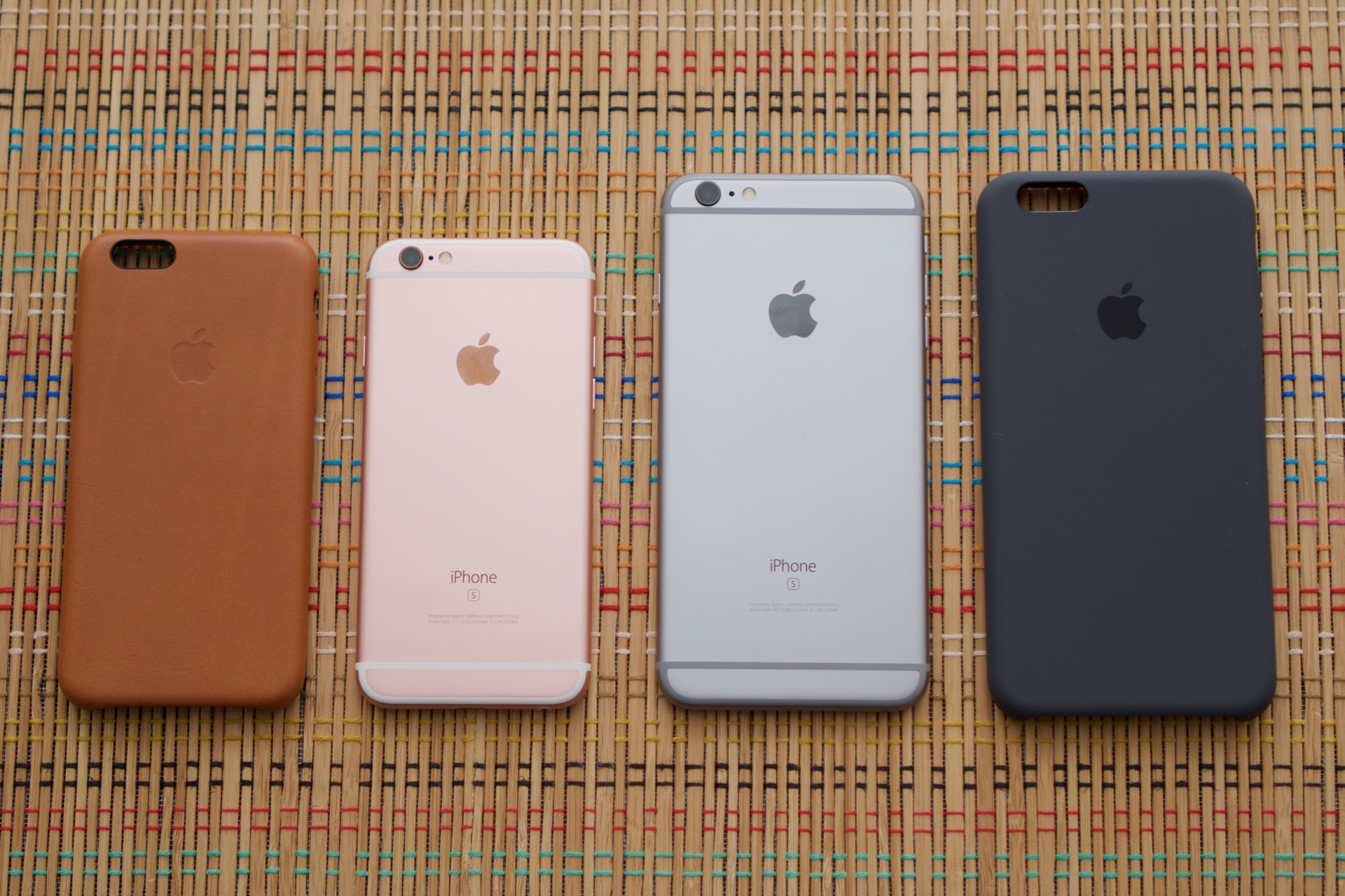
Externally, the new phones are broadly similar to the iPhone 6S and 6S Plus that they’ll be replacing. The iPhone 7 has a 4.7-inch display and the larger 7 Plus has a 5.5-inch screen, and both phones retain the curved edges and camera bumps that helped define the iPhone 6 and 6S design. The antenna cutouts on the back of the phone have been tweaked to be less obvious, however, which gives the phone a somewhat cleaner look as long as you don’t have it in a case.

Both phones will come in a slightly wider range of color options than before. In addition to silver, gold, and rose gold, the phones will come in a “dark black” finish to replace the “space grey” color that Apple has been using (and changing) since 2013. There’s also a “piano black” finish that’s glossy rather than matte.

Read 2 remaining paragraphs | Comments

Liveblog in progress: Apple’s September 2016 iPhone event

Join us for live coverage and commentary.

Enlarge / A new Apple Watch may be among the announcements we see at the event. (credit: Andrew Cunningham)

It's September again, and you know what that means: another big Apple keynote with plenty of product announcements, a bunch of short product videos, and hopefully at least one sighting of Craig Federighi's hair. The fun at the Bill Graham Civic Auditorium in San Francisco begins at 10am Pacific/1pm Eastern/6pm UK on September 7th, and we'll be in the room where it happens to provide our usual stream of live news and commentary.

If you want to know what to expect, we've covered the most current and reliable rumors in depth. The short version is that we'll probably get a pair of new, possibly headphone jack-free iPhones, an updated Apple Watch with GPS, and a whole bunch of software update announcements.

For full details on the new stuff, plus any other details or announcements that Apple happens to make, follow along with our liveblog below.

Read on Ars Technica | Comments
What to expect from Apple’s September 7th event

Everything we know to expect, and a few things we know not to expect.

Enlarge / The Apple logo onstage at WWDC 2016. (credit: Andrew Cunningham)

Apple’s big September product presentation is happening on Wednesday—WWDC in June is when we find out about software, but when it comes to the hardware that the company makes most of its money from, September is Apple’s biggest event of the year.

Last year’s event was especially huge and wide-ranging. Apple launched its new tvOS platform, tweaked the hardware and software of the still-new Apple Watch, introduced the iPad Pro and the iPhone 6S series, and provided software updates for everything across all of its product lines. Wednesday will still be a busy day, but relatively speaking it ought to be quieter.

The iPhone

Most rumors still call the next iPhone the “iPhone 7,” but unlike past years it doesn’t sound like the latest model will get a big external redesign. Expect this to look a lot like the current 6 and 6S design, but with tweaked or removed antenna cutouts to give the back of the phone a cleaner look. The new phone will still come in two sizes, one 4.7-inch version and one 5.5-inch version.

Read 20 remaining paragraphs | Comments