Can an ISP be held liable for piracy simply by “doing nothing”? Yesterday, the Supreme Court addressed this billion-dollar question. While record labels argued that Cox turned a blind eye to “habitual abusers,” the ISP warned that expanding liability without proof of active intent would turn internet providers into “Internet Police” and threaten essential access for hospitals, schools, or even entire towns.
From: TF, for the latest news on copyright battles, piracy and more.
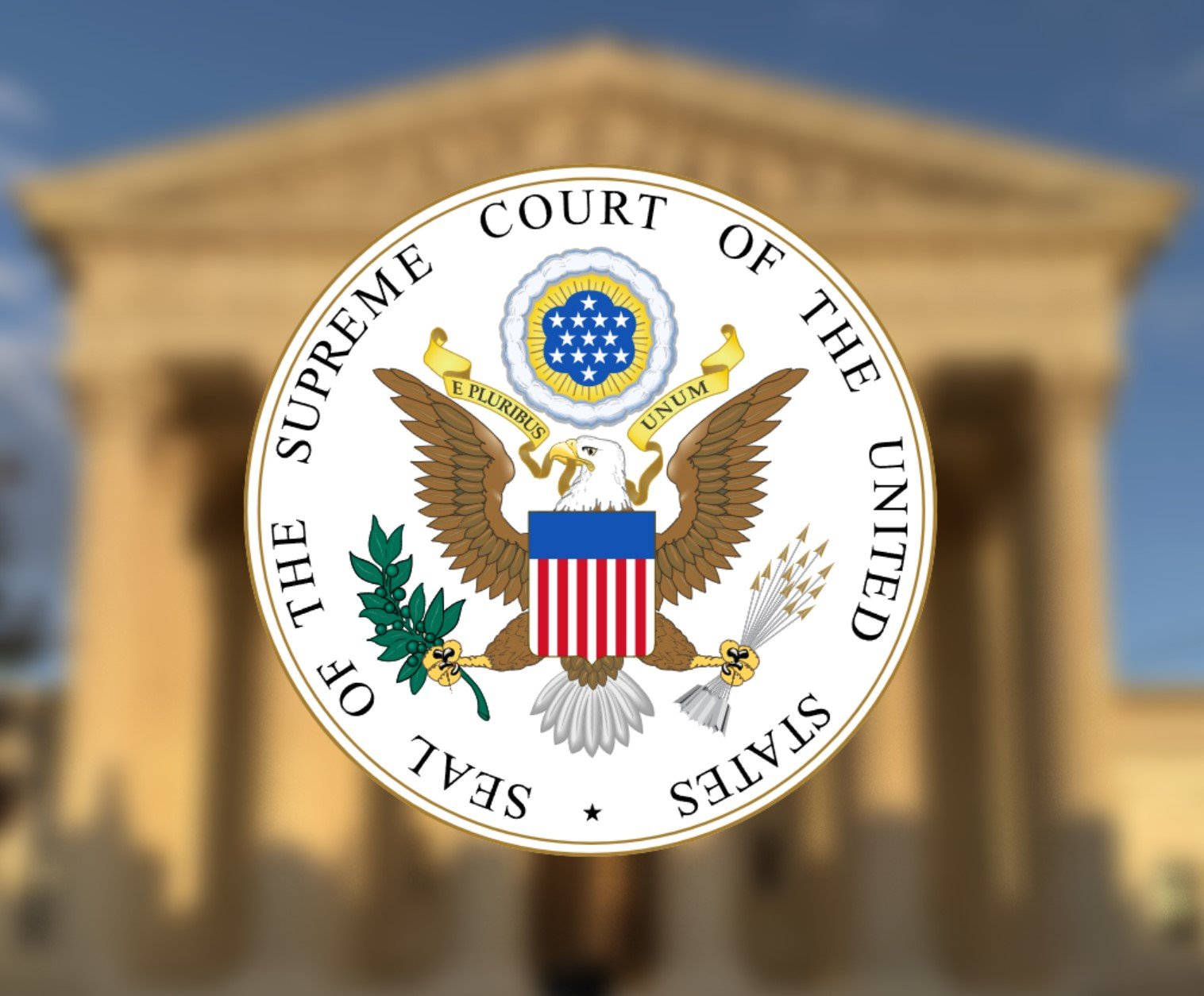 The Supreme Court case between several major record labels and Internet provider Cox Communications is one of the landmark copyright battles of this decade.
The outcome will determine how Internet providers should deal with pirating subscribers on their networks.
The Supreme Court must decide whether an ISP can be held liable for failing to disconnect repeat copyright infringers. In addition, it must determine if this ‘inaction’ amounts to willful copyright infringement, even if the ISP wasn’t aware that its specific conduct was illegal.
Supreme Court Hearing
Yesterday, the Supreme Court heard oral arguments in the case, grappling with these questions for nearly two hours. The justices critically questioned all sides in their effort to form a final opinion.
Cox’s attorney, E. Joshua Rosenkranz, began by arguing that it would be a dangerous expansion of the law to hold an ISP liable for the actions of its subscribers.
He argued that under the “purpose” standard, liability should only apply if an Internet provider takes “affirmative steps” to facilitate copyright infringement. For example, by advertising piracy services.
Cox Communications’ key arguments
- The “Purpose” Standard: Liability requires proof of “affirmative intent” to foster piracy (e.g., advertising illegal uses), not just knowledge that it is happening.
- Passive Utility: An ISP shouldn’t be liable for “passive non-feasance” (doing nothing). Treating them as “Internet Police” would force them to disconnect innocent users, including schools and hospitals, to avoid risk.
- The “Twitter” Defense: Relies on the Supreme Court’s Twitter v. Taamneh ruling, arguing that providing general services to bad actors isn’t aiding and abetting.
Rosenkranz added that, under the record labels’ theory, Cox would be liable for failing to take action against alleged crimes. That would essentially turn ISPs into the “Internet police” with devastating consequences.
“[T]he consequences of Plaintiffs’ position are cataclysmic,” Rosenkranz said, noting that universities, hospitals, and entire towns would risk being disconnected from the Internet.
“Turning Internet providers into Internet police for all torts perpetrated on the Internet will wreak havoc with the essential medium through which [the] modern public engages in commerce and speech,” Rosenkranz added.
The “Gun Dealer” Analogy
At the hearing, several justices seemed skeptical of Cox’s claim that inaction is fine. Justice Sonia Sotomayor was particularly aggressive, stressing that Cox could know exactly which subscriber accounts were infringing but simply opts to do nothing.
To illustrate her point, Justice Sotomayor challenged Rosenkranz with a vivid analogy.
“If I’m a gun dealer and I’m selling to someone who says to me, ‘I’m going to kill my wife with this gun,’ I think the common law would say you knew what he was going to do with the gun; you joined in. Why isn’t your continuing to provide Internet service the same?”
Cox’s attorney responded by noting that, unlike a murder weapon, an internet connection has substantial legal uses. However, the challenges were not over yet.
Justice Ketanji Brown Jackson continued to test Cox’s theory that “inaction” does not create liability. She presented an even more extreme hypothetical scenario featuring an addicted infringer.
“Suppose I come to you and I want to buy your services. I tell you that I as a customer am addicted to infringing on the Internet. I’ve been sued before. I know what I’m doing is illegal, but I just keep doing it. And not only that, Cox, based on where I live, is my only option.”
Rosenkranz replied that even in that extreme scenario, selling internet access would not create liability for Cox, adding that the music companies or other rightsholders could sue this hypothetical piracy addict instead.
The “Meaningless” Safe Harbor
Representing the record labels, attorney Paul Clement stressed that Cox was not an innocent bystander but a “willfully blind” party that profited from piracy. He pointed to Cox’s internal communication, in which employees expressed contempt for the law, including a now-infamous “f*** the DMCA” email.
The attorney, backed by Justice Kagan, argued that Cox’s legal theory is fatally flawed. If an ISP can never be liable without taking affirmative steps to encourage piracy, then the DMCA’s “safe harbor” would be unnecessary.
“Why would anybody care about getting into the safe harbor if there’s no liability in the first place?” Justice Kagan asked. And after follow-up questioning, Cox’s attorney agreed that the safe harbor is not doing anything under their suggested liability rule.
The Record Labels’ key arguments
- Willful Blindness: Cox isn’t neutral; it knew specific subscribers were “habitual abusers” and continued profiting from them.
- The Safe Harbor Paradox: If ISPs are never liable without affirmative intent, the DMCA’s “Safe Harbor” (which protects ISPs only if they terminate repeat infringers) would be legally meaningless.
- Material Contribution: Providing the essential means (internet access) to a known infringer with “substantial certainty” of future infringement constitutes liability.
“Mass Evictions” & “BitTorrent Throttling”
While Cox was grilled on the ‘inaction’ vs. ‘intent’ issue, the record labels faced tough questions over the requested Internet disconnections. Justices Alito and Gorsuch appeared concerned that the record labels’ liability standard would force ISPs to disconnect thousands of innocent people.
Justice Alito specifically asked attorney Clement how an ISP is supposed to respond to repeated piracy notices if their customer is a university with 50,000 students.
Clement argued that ISPs and rights holders could simply “have a conversation” to resolve such issues, a suggestion Cox’s attorney later dismissed as a “terrible answer” for a company facing “crushing liabilities”.
Since it is impractical for a university to be disconnected from the Internet, or for a university to disconnect thousands of students, the record labels’ attorney suggested that bandwidth throttling could also be a viable anti-piracy measure.
“I don’t think it would be the end of the world if universities provided service at a speed that was sufficient for most other purposes but didn’t allow the students to take full advantage of BitTorrent. I could live in that world,” Clement answered.
U.S. Government Backs Cox
The U.S. Government appeared as an amicus curiae and largely supported Cox’s legal interpretation. Deputy Solicitor General Malcolm Stewart urged the Court to adopt a strict “purpose” requirement, arguing that unless an ISP provides “targeted assistance” specifically to pirates, it shouldn’t be liable for the actions of subscribers.
Stewart warned the Justices that expanding liability beyond this “purpose” test would be dangerous. He argued that forcing ISPs to disconnect allegedly pirating subscribers would clash with the essential role the internet plays in society.
“The approach of terminating all access to the Internet based on infringement… seems extremely overbroad given the centrality of the Internet to modern life and given the First Amendment,” Stewart told the Court.
The U.S. Government’s key arguments
- Supports Cox: Urges the Court to adopt a strict “purpose” requirement.
- Limited Liability: Argues that unless an ISP provides “targeted assistance” specifically to pirates, it shouldn’t be liable for the general misuse of its network by the public.
What’s Next?
The Supreme Court now has to decide whether the $1 billion verdict will stand, or if the case will get a do-over at the lower court.
If the court sides with the record labels, ISPs across the United States will continue to need strict “repeat infringer” termination policies to avoid legal liability. If Cox wins, rightsholders will have a hard time holding ISPs liable for pirating subscribers.
The justices are expected to cast their preliminary votes in a private conference later this week, but a final written opinion is not expected before the summer of 2026.
—
A copy of the oral arguments hearing transcript and the audio is available at the Supreme Court’s website.
From: TF, for the latest news on copyright battles, piracy and more.
 Die digitale Zeitschaltuhr-Steckdose im Dreierpack spart Strom, erhöht den Komfort und ist heute zum neuen Amazon-Bestpreis zu haben. (
 Die Bildgenerierungsmodelle von Black Forest Labs werden bereits von Adobe, Meta und Microsoft eingesetzt. (
 Nach fast zwei Jahrzehnten meldet sich Metroid Prime zurück und verbindet vertraute Atmosphäre mit frischen Elementen (Nintendo Switch/2). Ein Test von Peter Steinlechner (
 Eine automatisierte Drohne schickt Bilder vom Einsatzort, bevor die Feuerwehr München eintrifft. So soll die Brandbekämpfung beschleunigt werden. (
 Bei Back Market ist der Black Friday noch nicht vorbei. Aufbereitete Technik von Apple, Samsung oder Google ist stark reduziert. (
 Der Mobilfunkdiscounter im Telekom-Netz bietet bei seinen 5G-Tarifen mehr Datenvolumen ohne Aufpreis. Die Jahrestarife bleiben unverändert. (