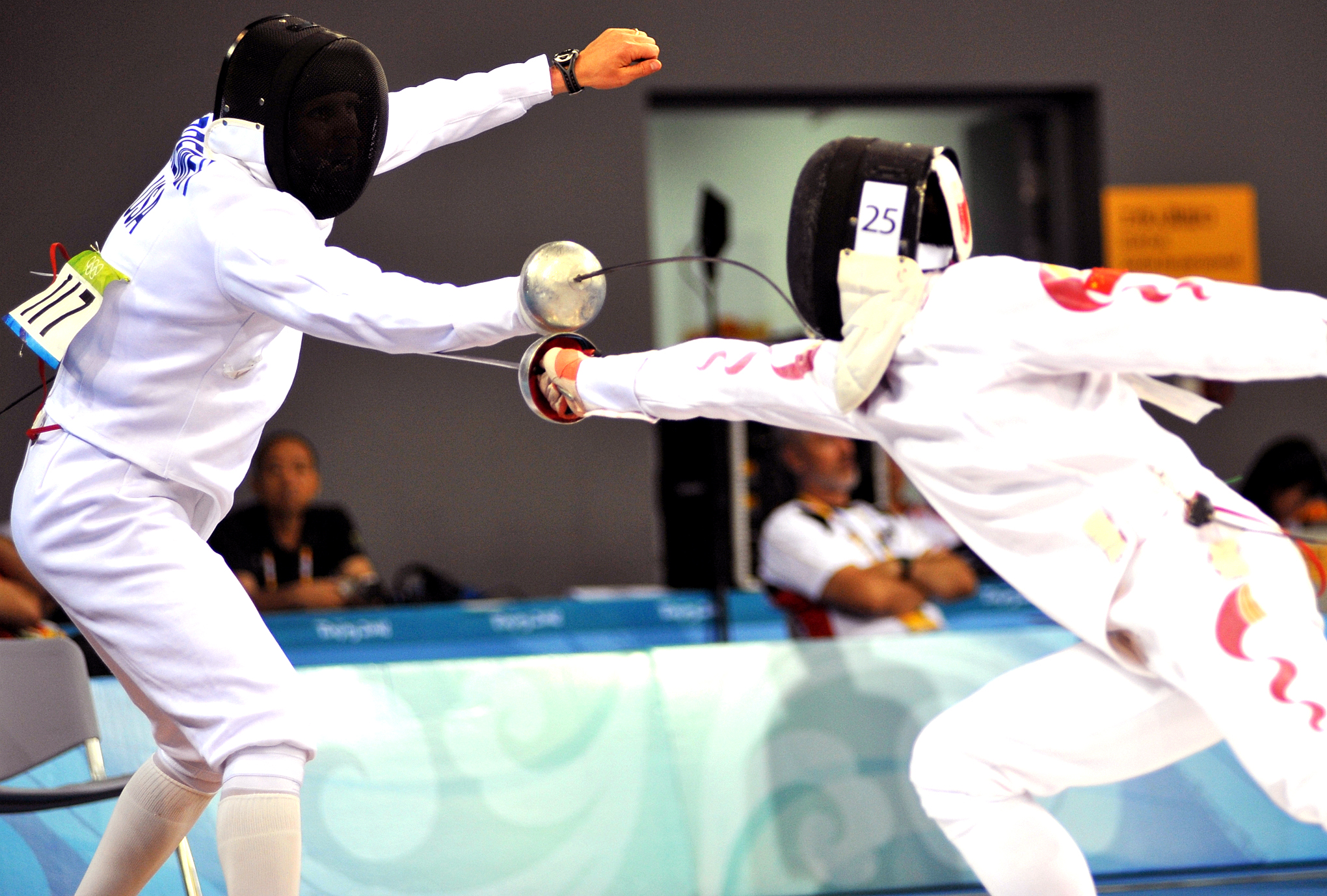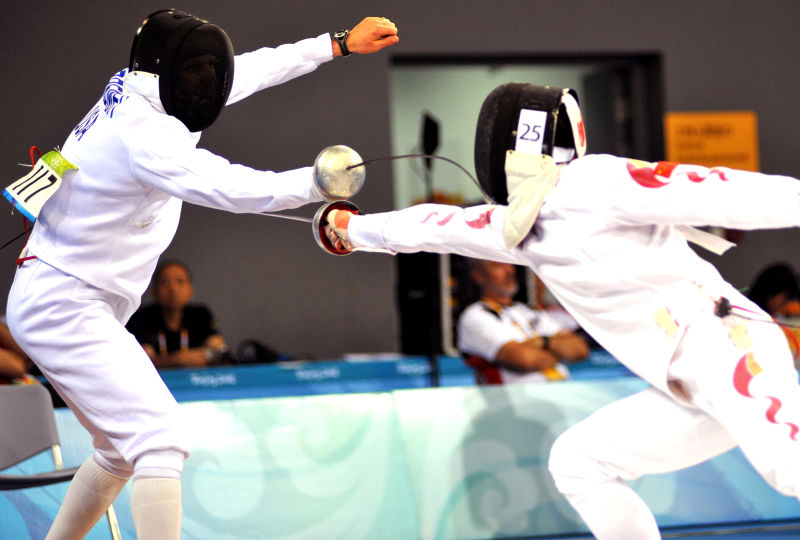
Technology has changed sports by offering things like instant replay and the ability to determine precisely where a ball is relative to lines on the field and court. But these offerings don’t always sit well with players and fans, who may worry about the loss of some human influence on the run of play. It has been said that no technology is value-neutral, that it will-—in undetermined ways—influence anything it is applied to. Technology has now been applied to many sports, which have changed as a result, as evidenced by one of the oldest sports around.
Fencing is an old sport. The earliest evidence of it comes from Egypt during the reign of Ramses III. A relief carving from roughly 1190 BCE in the temple of Madinat Habu depicts combatants wearing masks and wielding weapons as part of a bout or tournament. The modern sport has its earliest roots in 15th century Spain, where Diego de Valera wrote Treatise on Arms, a manuscript discussing swordsmanship for duels and self-defense.
Fencing can be traced through the European Renaissance. Eventually, dueling weapons and blade weapons fell out of favor, replaced by black powder and guns. For swords, this was reflected in a change in nature from a cutting to a thrusting action coupled with more skilled swordsmanship. These changes favored using agility and speed as opposed to brute force.
Read 16 remaining paragraphs | Comments
 Ein Bus ohne Fahrer: In Helsinki sind versuchsweise zwei Minibusse unterwegs, die Passagiere selbstständig zu ihrem Ziel bringen. Die Gesetzeslage in Finnland erleichtert diesen Test. (
 Der Fahrdienst-Vermittler Uber testet in Pittsburgh demnächst 100 selbstfahrende Volvos. Das Besondere daran: Normale Passagiere dürfen kostenlos mitfahren. (
 Als Teil seiner Initiative GPU Open hat AMD sein Media-Framework offengelegt. Damit lassen sich unter anderem die Video-Engines von AMD-Karten programmieren. Der Code nutzt das freie FFmpeg. (
 Eine schwerwiegende Sicherheitslücke befindet sich offenbar seit 1998 im Code von GnuPG und der dazugehörigen Bibliothek Libgcrypt. Unter bestimmten Umständen lassen sich Zufallszahlen voraussagen, die genauen Auswirkungen sind allerdings unklar. (
 Wer eine Internetdomain treuhänderisch auf einen fremden Namen registriert, kann diese schnell wieder los sein. Der BGH verlangt eine "einfache und zuverlässige Möglichkeit", den Auftrag zu überprüfen. (