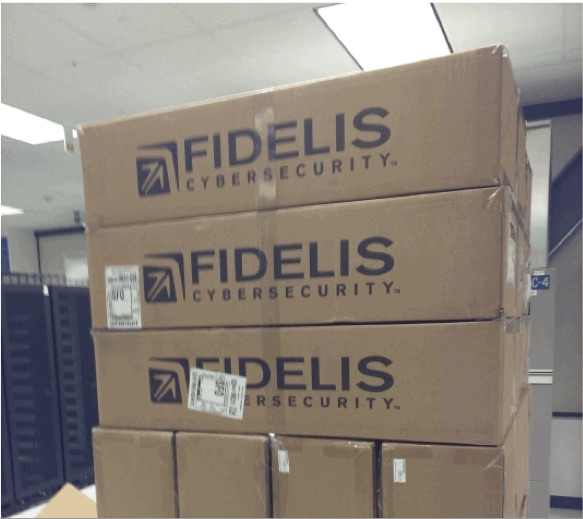
(credit: Ethan Ligon)
BERKELEY, CALIF.—Days after a group of concerned professors raised alarm bells over a new network monitoring system installed at the University of California, Berkeley and the other nine campuses of the University of California system, a separate committee of system-wide faculty has now given its blessing. Some Berkeley faculty remain concerned that their academic freedom has been threatened by the new full packet capture system that sits on each campus network’s edge, however. They say that retaining such information could be used as a way to constrain legitimate discussion or research on controversial topics.
Last summer, the University of California Office of the President ordered that a Fidelis XPS system be installed at all 10 campuses at a total estimated cost of at least a few million dollars. The Fidelis hardware and software is designed to "detect attacks" and analyze "every single packet that traverses the network."
The move came in response to a July 2015 attack against the University of California Los Angeles Health System, which resulted in 4.5 million records being stolen. Following that attack, University of California President Janet Napolitano, the former Secretary of Homeland Security, moved quickly to bring more digital monitoring onto the campuses, which stretch from Berkeley to San Diego. The UC Regents, the governing board of the entire UC system, now face 17 separate lawsuits as a result of the breach at UCLA. Similar network monitoring hardware has also been installed at other universities nationwide.
Read 10 remaining paragraphs | Comments

 Einem UN-Gutachten zufolge handelt es sich bei dem Botschaftsasyl Julian Assanges um eine willkürliche Haft. Der schwedischen Regierung zufolge kann der Wikileaks-Gründer jedoch jederzeit die Botschaft verlassen. (


 Im Mai ist es vorbei: Nach Firefox OS 2.6 stellt Mozilla die Entwicklung für Smartphones endgültig ein. Mozillas Browser Firefox erhält einen flexibleren Release-Zyklus. (
 Mit dem ersten Patch für die PC-Version von Rise of the Tomb Raider können Spieler unter anderem die unbeliebten Grain-Effekte abschalten, um ein klares Bild zu erhalten. Auch sonst tut sich durch das Update einiges bei der Grafik des Vorzeigetitels. (
 Seite an Seite mit einem Pliosaurus durch die Meere des Vergangenheit schwimmen: Time Machine VR ist mehr interaktive BBC-Doku denn Spiel und macht uns gerade deshalb richtig viel Spaß. (
 Während ARD und ZDF mehr Geld wollen, hält die zuständige Kommission eine Senkung des Rundfunkbeitrags für möglich. Allzu viel würden die Haushalte allerdings nicht sparen. (
 Das Smartphone-SoC werde nicht zu heiß: Mediatek bestreitet Hitzeprobleme beim Helio X20. Der Hersteller gab zwar an, dass der Chip bei Last Kerne abschaltet - wie die Konkurrenz auch. Beim Helio X20 handelt es sich aber um eine clevere Implementierung. (
 CoreOS konzentriert sich auf Sicherheit: Die Linux-Distribution hat die stabile Container-Laufzeitumgebung Rocket (rkt) 1.0 veröffentlicht. (