 Last October saw the much hyped public release of Aurous, a music player that tapped into a library of pirated music.
The major record labels were not happy with the emergence of the “Popcorn Time for Music” and wasted no time trying to take it down.
Just days after Aurous’ alpha launch, Florida-based developer Andrew Sampson and his company were targeted by the major music labels. The RIAA accused the owners of copyright infringement and demanded millions in damages.
Initially Aurous seemed determined to put up a fight. The court shut down the application through a preliminary injunction but Sampson was convinced that his application was not breaking any laws.
After several scathing replies from the RIAA, who went into full attack mode, things went quiet. Behind the scenes both parties agreed that it was best to settle their dispute which they officially announced a few minutes ago.
In a filing submitted at a Florida federal court both parties agree that Aurous did indeed violate the copyrights of the major labels. They agree to settle the dispute for $3 million, which is described as a reasonable damages award.

The filing (pdf) also includes a permanent injunction preventing Sampson and Aurous co-founder Danielle Astvatsaturova from committing any infringing actions in the future.
In addition, Aurous agreed to sign over its domain name and all intellectual property to the music labels.
The consent judgment is only part of the full settlement. The RIAA and Aurous signed a separate agreement outside of court. It is not uncommon for the true settlement amount to be much lower than the figure stated in court, as we’ve previously seen in an MPAA case.
Commenting on the announcement, RIAA Chairman & CEO Cary Sherman says the RIAA is happy with the settlement.
“Aurous appropriately agreed to shut down. It was the right thing to do. We hope this sends a strong signal that unlicensed services cannot expect to build unlawful businesses on the backs of music creators,” Sherman says.
Aurous’ creator, meanwhile, accepts his losses but is not done developing just yet. Sampson informs TF that he has moved on to a new project which will see the light of day in the near future.
“It’s still music related, but more centered around live performances. I will be showcasing it soon,” he says.
Taking the past few eventful weeks into account, we assume that his new creation is lawsuit proof. In any case, the RIAA is bound to watch his every step.
Source: TorrentFreak, for the latest info on copyright, file-sharing, torrent sites and ANONYMOUS VPN services.

 Die EU-Kommission legt erste Pläne für einen digitalen Binnenmarkt vor. Das Geoblocking soll damit abgeschafft werden. Aber nur für sehr bestimmte Inhalte. (


 Schon im kommenden Jahr soll der Firefox-Browser einige Teile der neuen Rendering-Engine Servo nutzen. Um den in Rust geschriebenen Code verwenden zu können, muss Mozilla den Browser aber vorher noch weiter umbauen. (

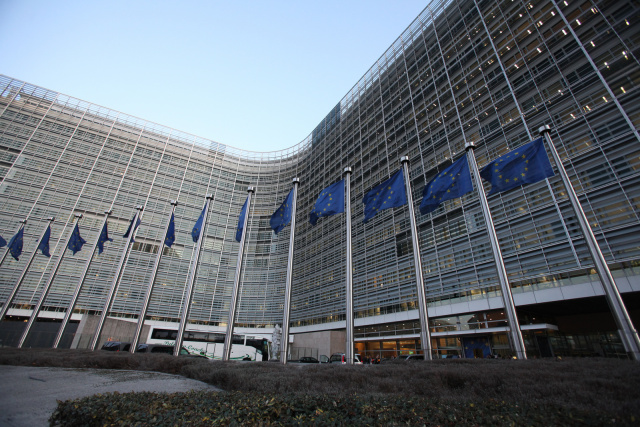
 Noch immer ist unklar, ob es ein Leistungsschutzrecht auf europäischer Ebene geben wird. Die Verlinkung von Inhalten solle davon jedoch nicht betroffen sein, versichert die EU-Kommission. Aber möglicherweise nicht bei kommerziellen Diensten. (